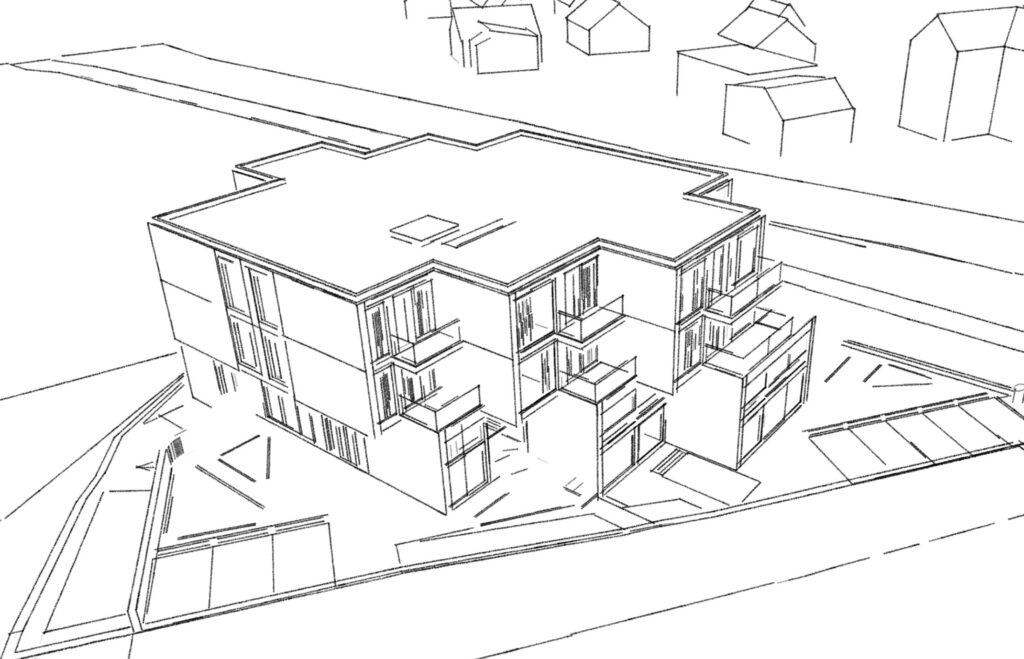
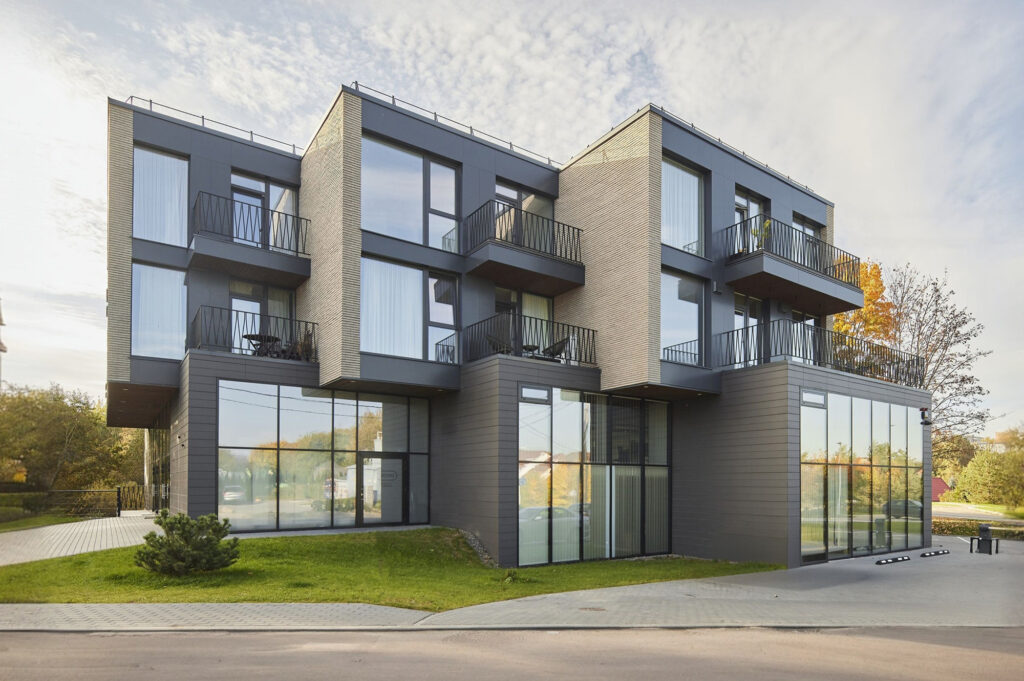
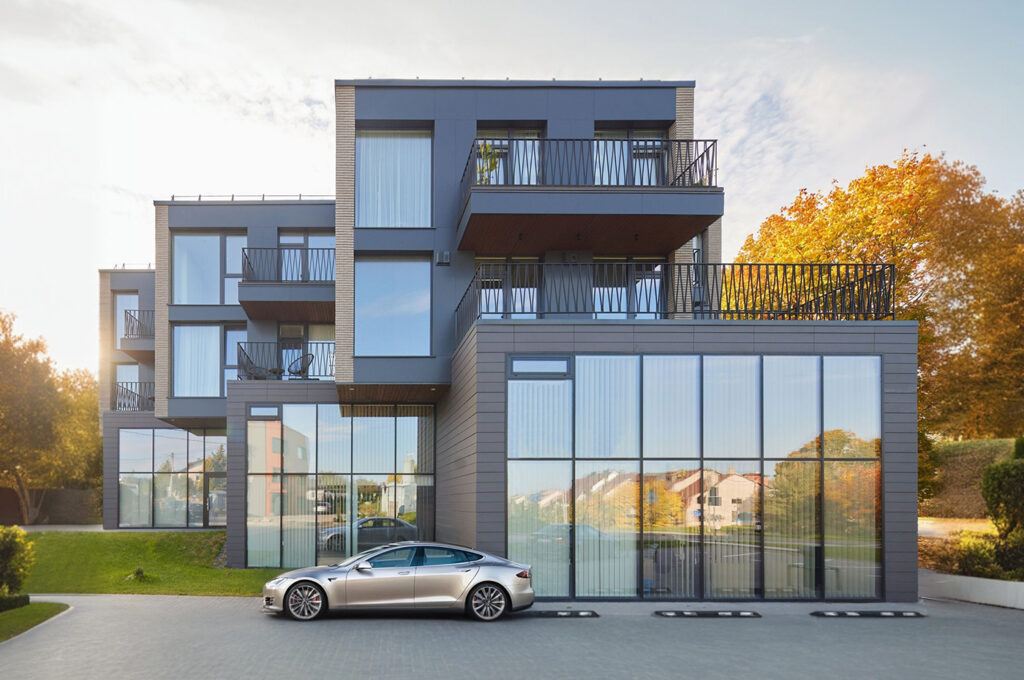
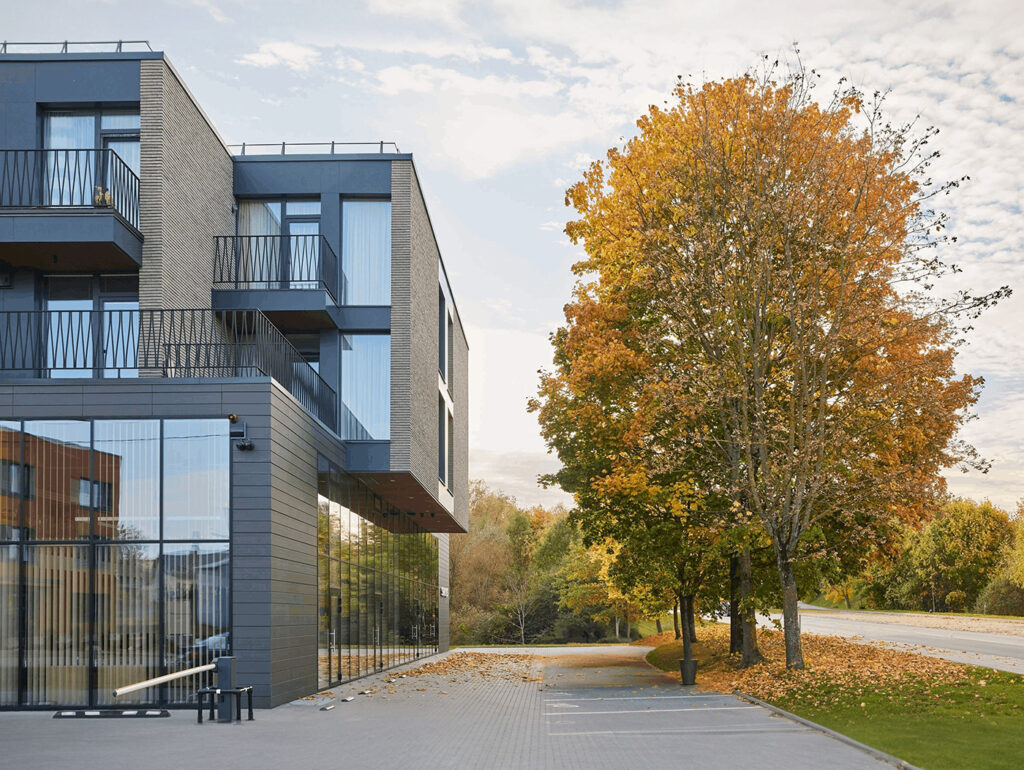
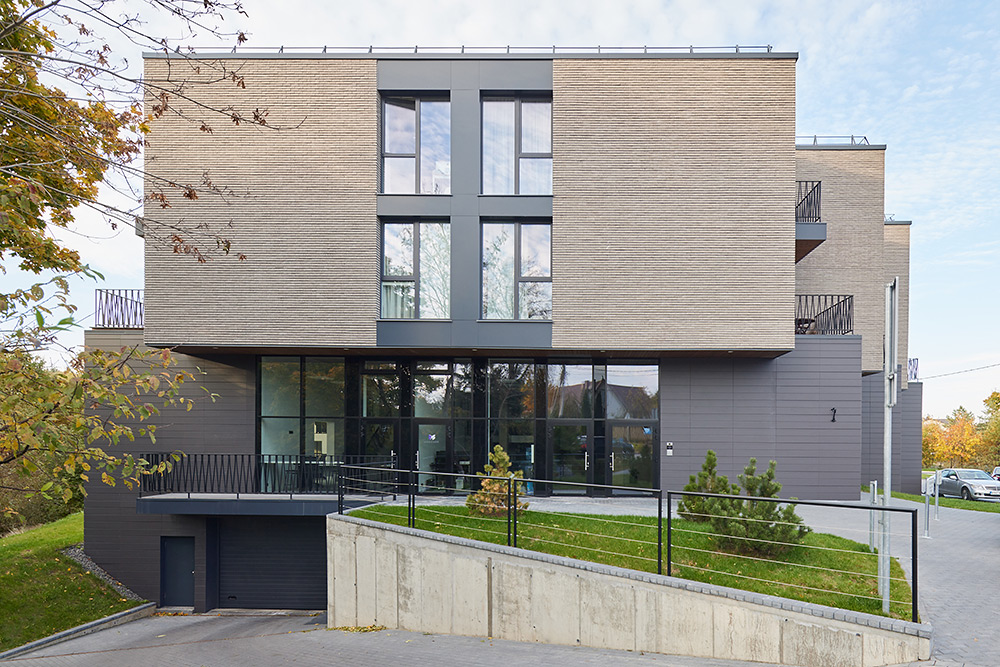
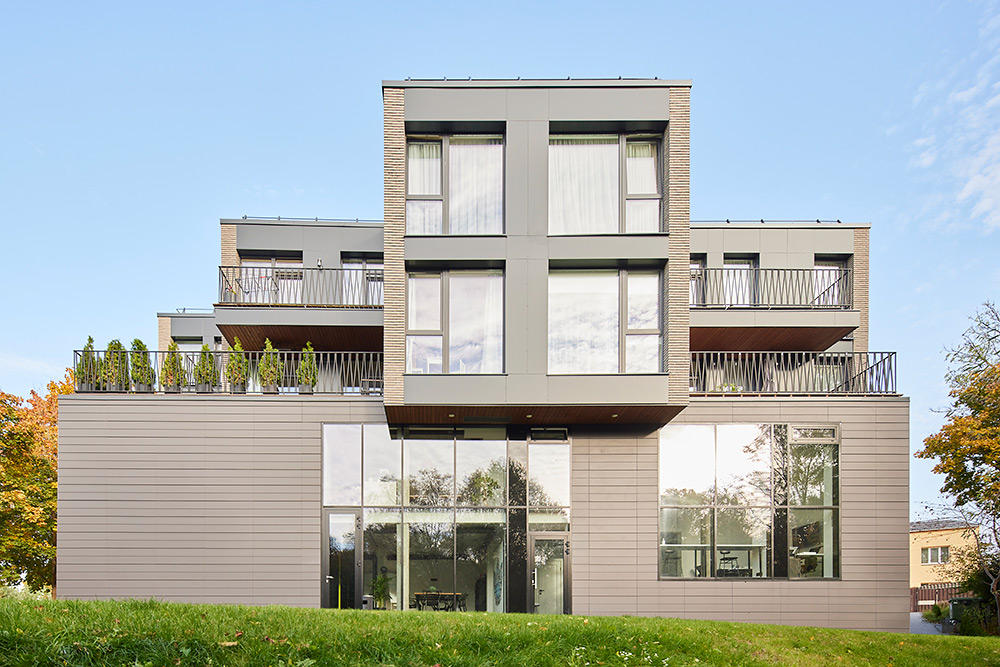
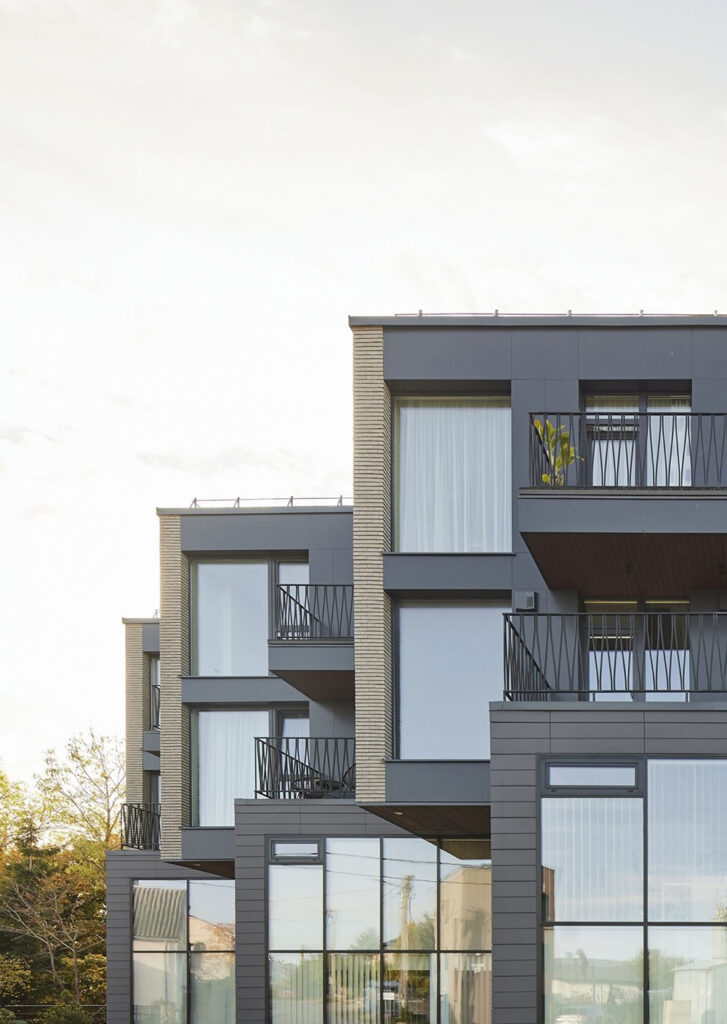
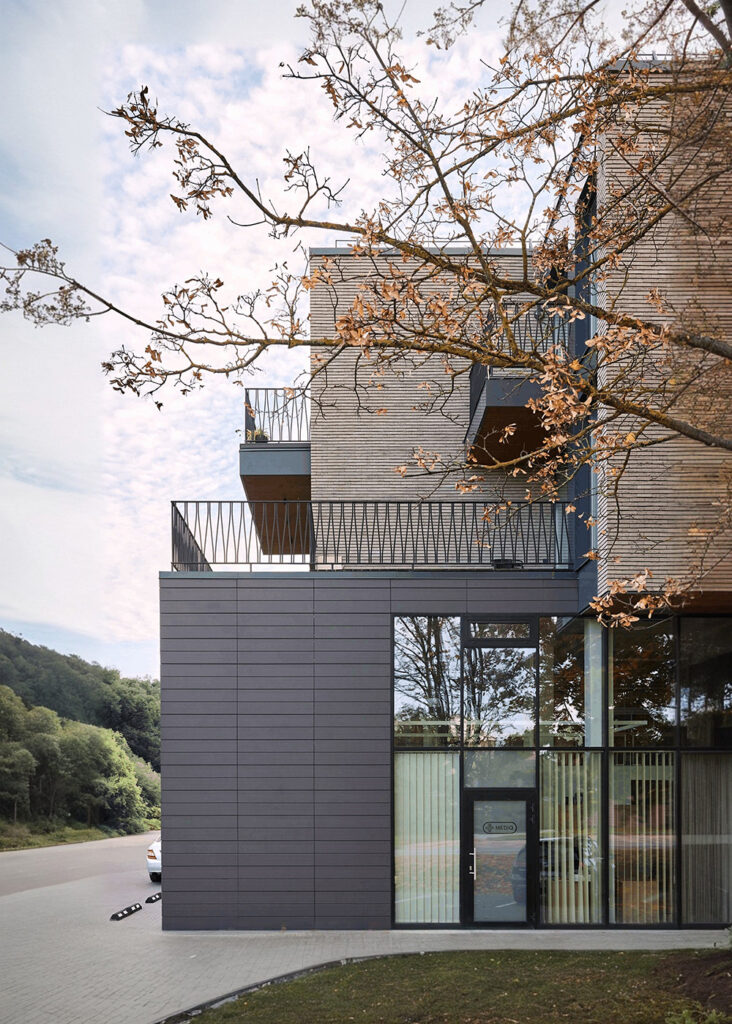
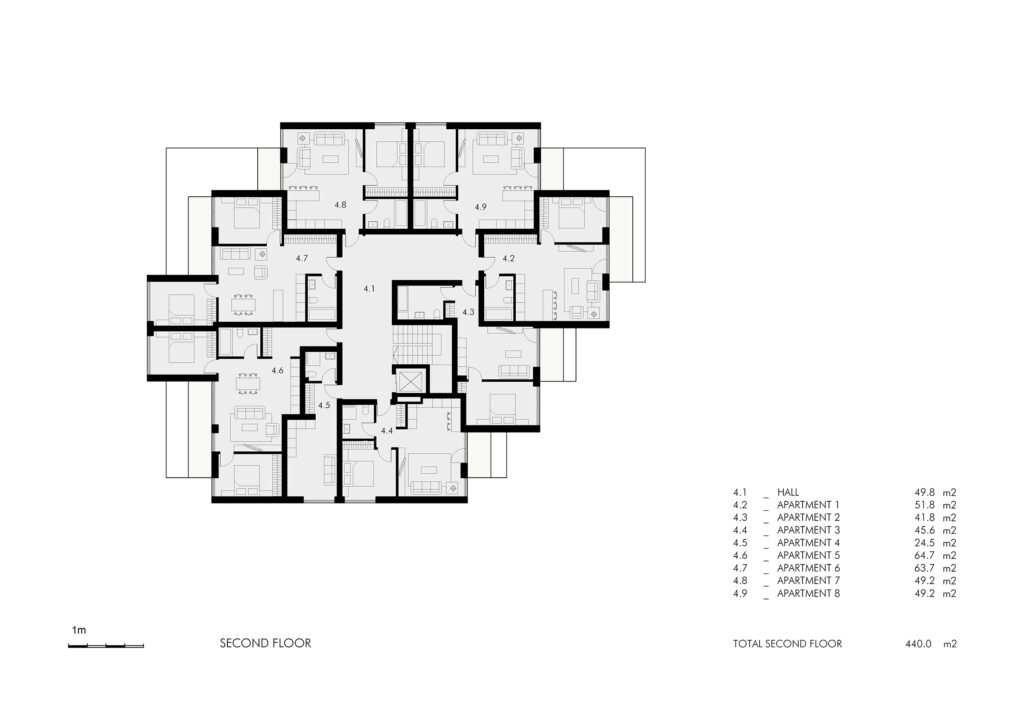
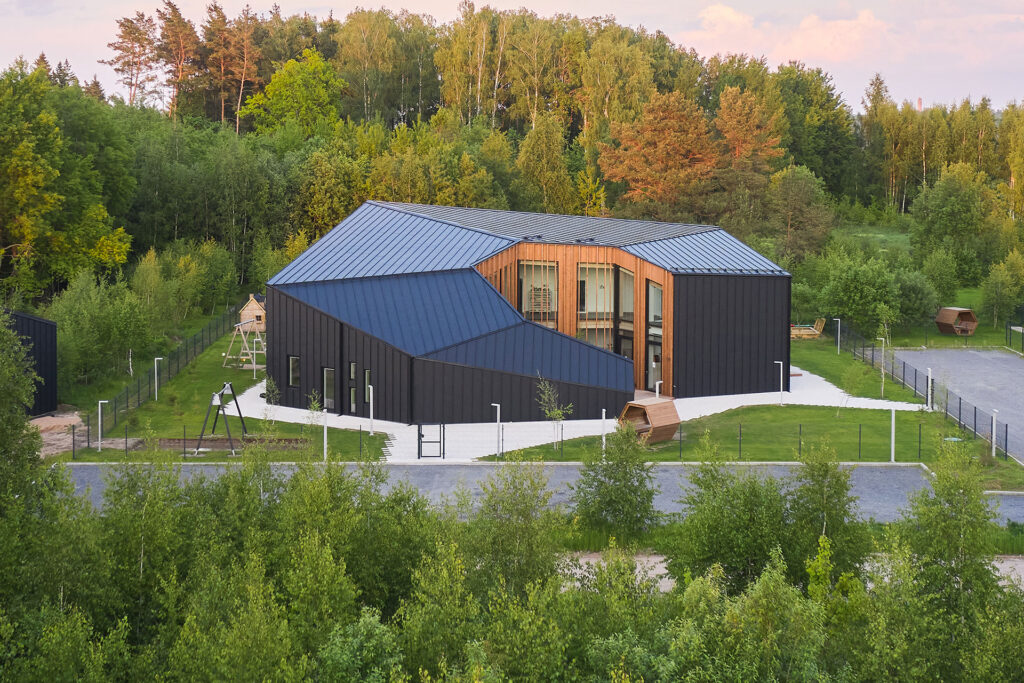
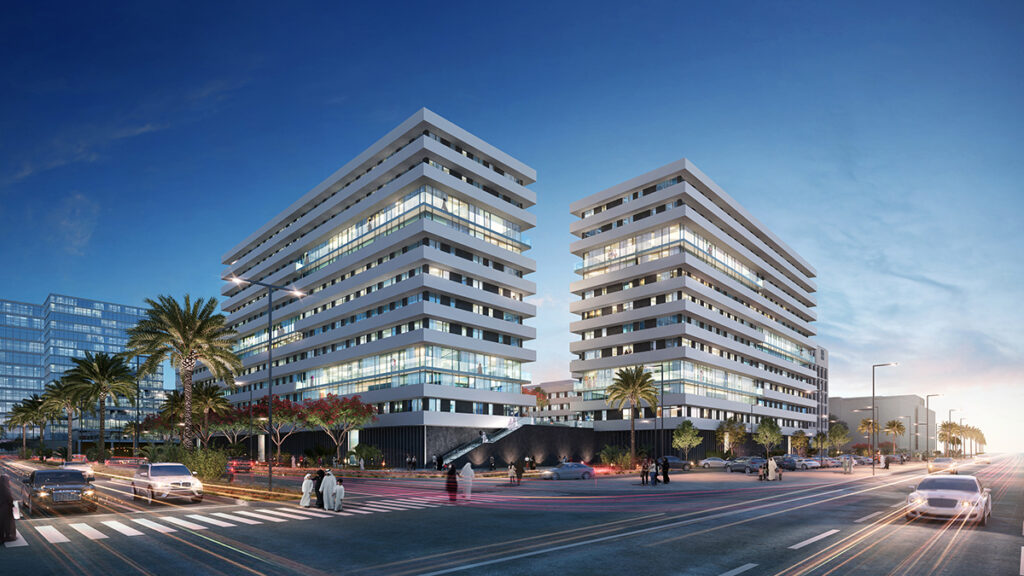
Šis daugiabutis pastatas Vilniuje jungia gyvenamąją funkciją su aktyvia komercine pirmojo aukšto paskirtimi, sukuriant kompaktišką urbanistinę struktūrą, harmoningai įsiliejančią į aplinką. Projektą sudaro komercinė zona pirmame aukšte ir papildomas lygis, virš kurių išdėstyti du gyvenamieji aukštai. Iš viso viršutiniuose aukštuose suprojektuota šešiolika butų, pasižyminčių efektyviais planavimo sprendiniais ir stipriais vizualiniais ryšiais su miestu. Architektūrinę išraišką apibrėžia aiški tūrinė kompozicija, ekspresyvūs fasadai ir subalansuota viešųjų bei privačių funkcijų sąveika.
CONTEXT
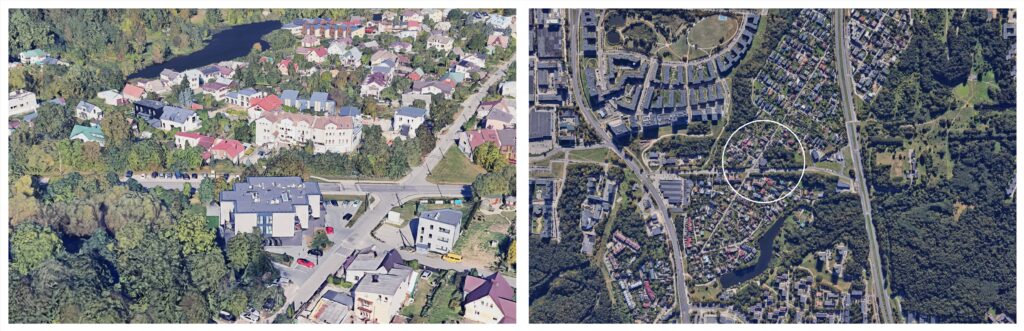
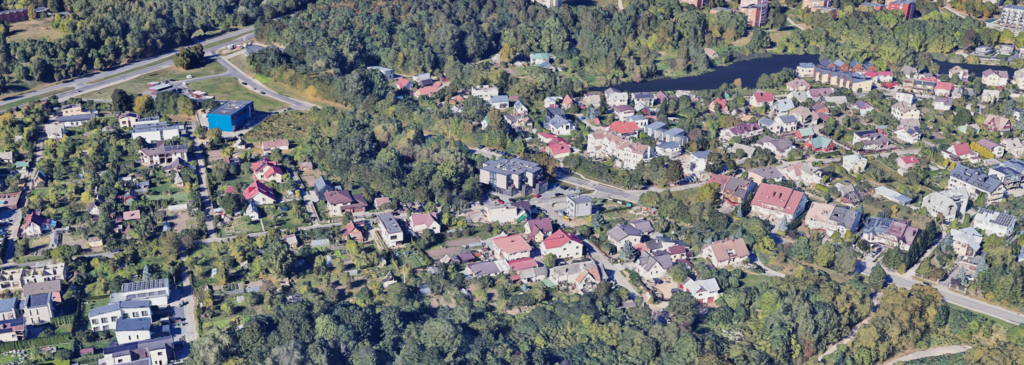
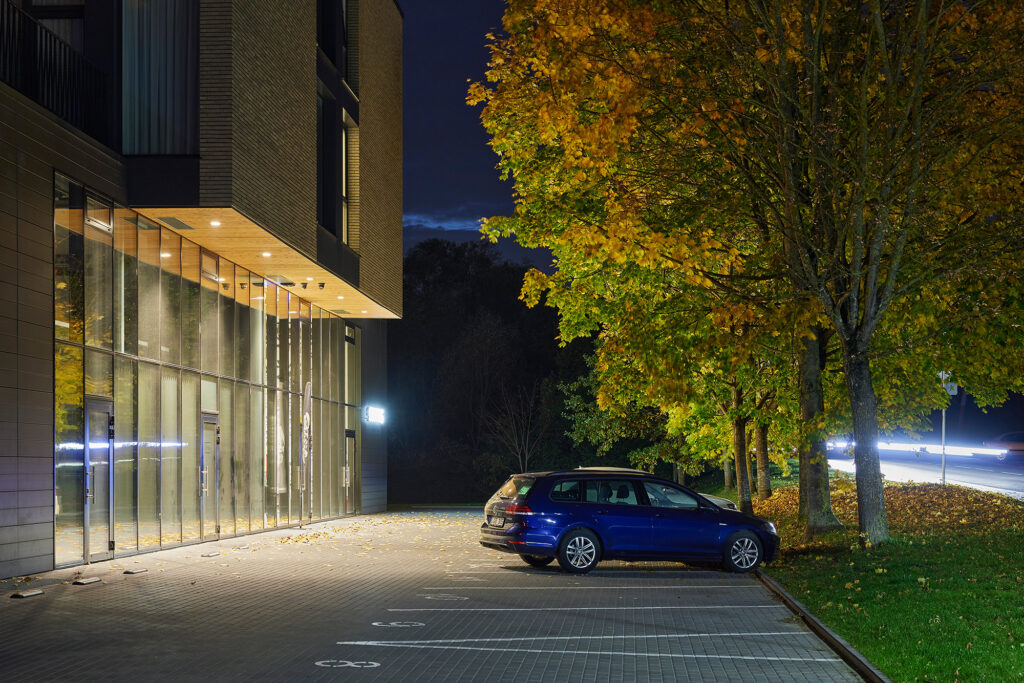
Located within an established urban fabric of Vilnius, the building responds to its corner position and surrounding street life. The ground-floor commercial spaces activate the public realm, while the residential volumes above are set back to create a clear spatial hierarchy. This layered approach allows the building to engage with the city at street level while maintaining privacy and comfort for residents above.
CONCEPT
The concept is based on vertical stratification. Public, semi-public, and private functions are clearly separated through volume, material, and proportion. Commercial spaces form a transparent and accessible base, while the apartments above are expressed as stacked residential volumes, creating a dynamic yet coherent architectural composition.
ARCHITEKTURA
The building is organised into three primary layers. The ground floor and loft level accommodate commercial spaces, benefiting from increased ceiling heights and direct street visibility. Above, two residential floors house a total of sixteen apartments, with eight units per floor. Circulation cores are efficiently positioned to ensure clear access and optimal apartment layouts. Large openings and balconies provide natural light and outdoor connections, while the stepped massing reduces the perceived scale of the building within its urban context.
MATERIALITY
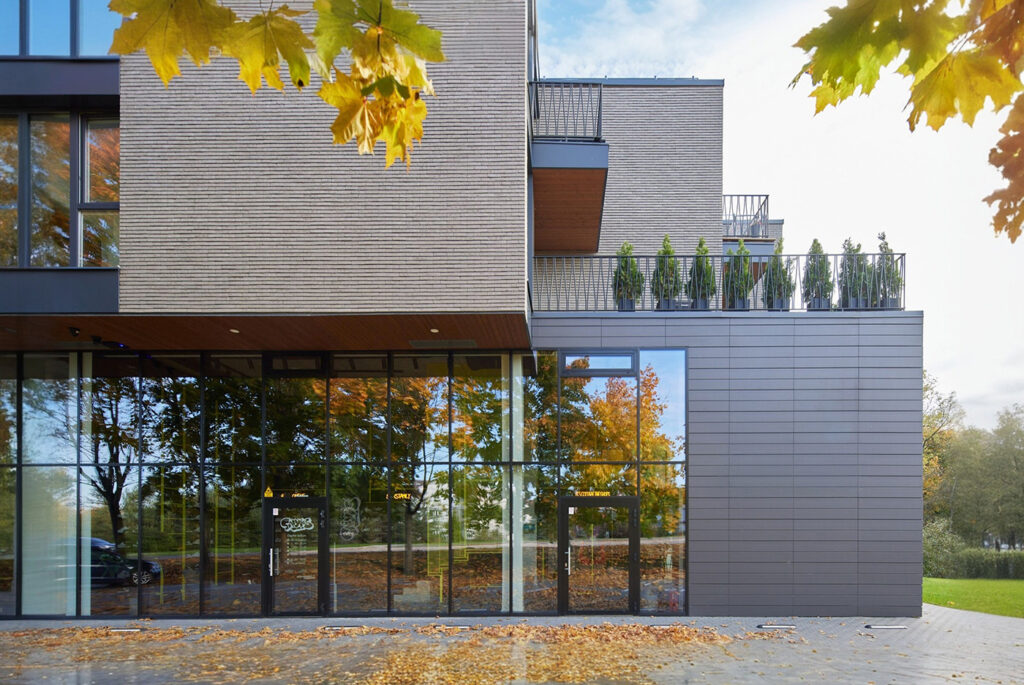
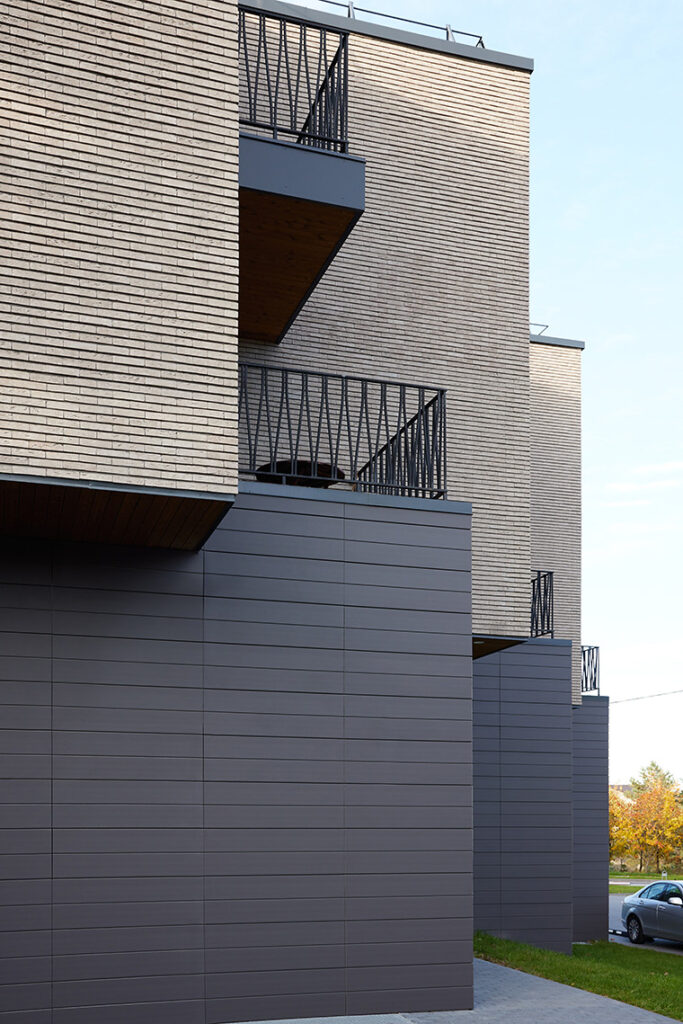
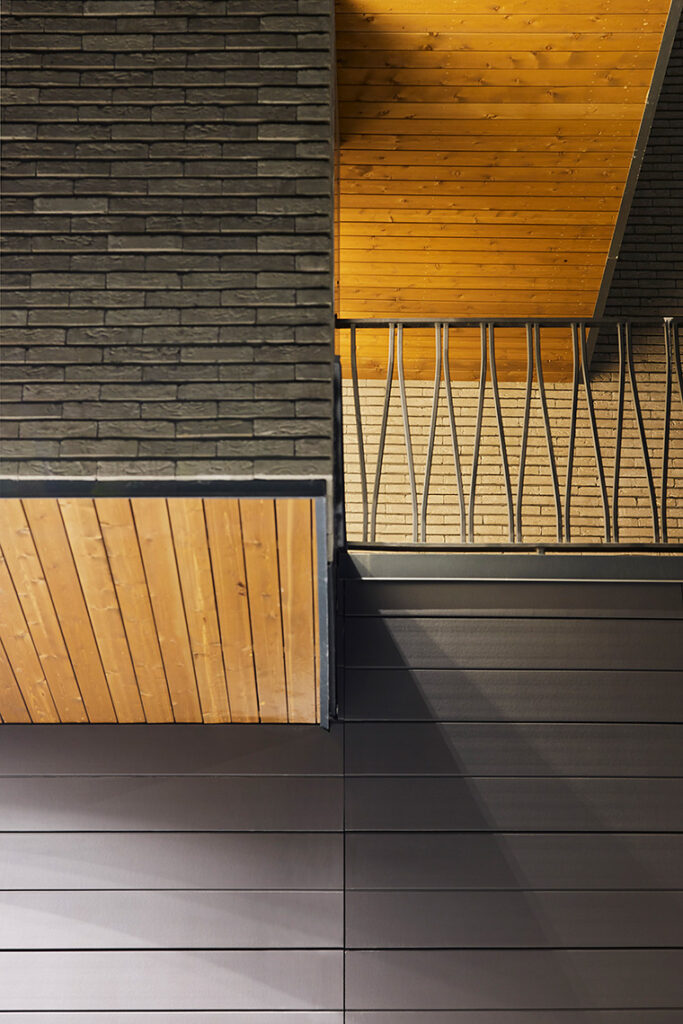
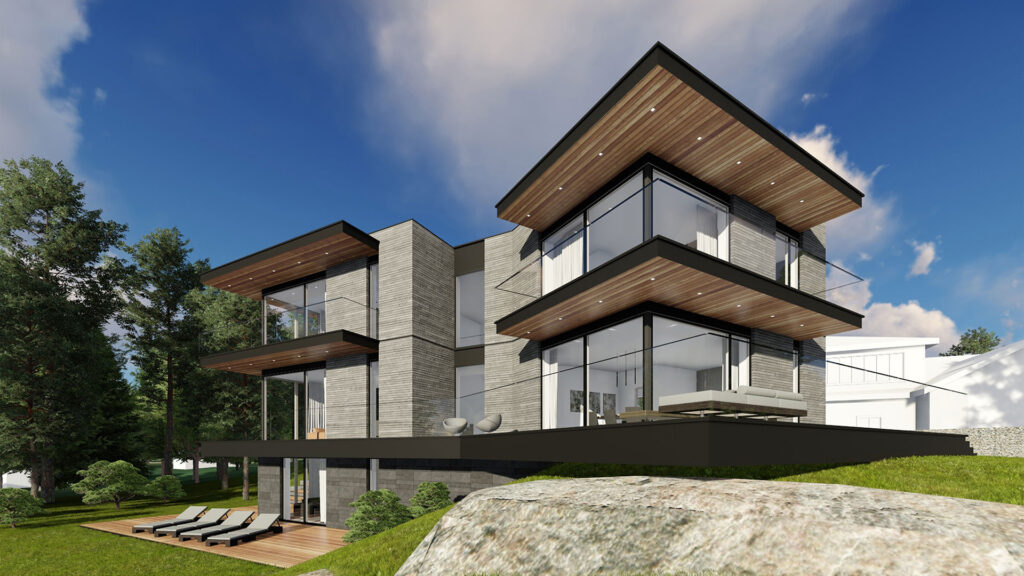
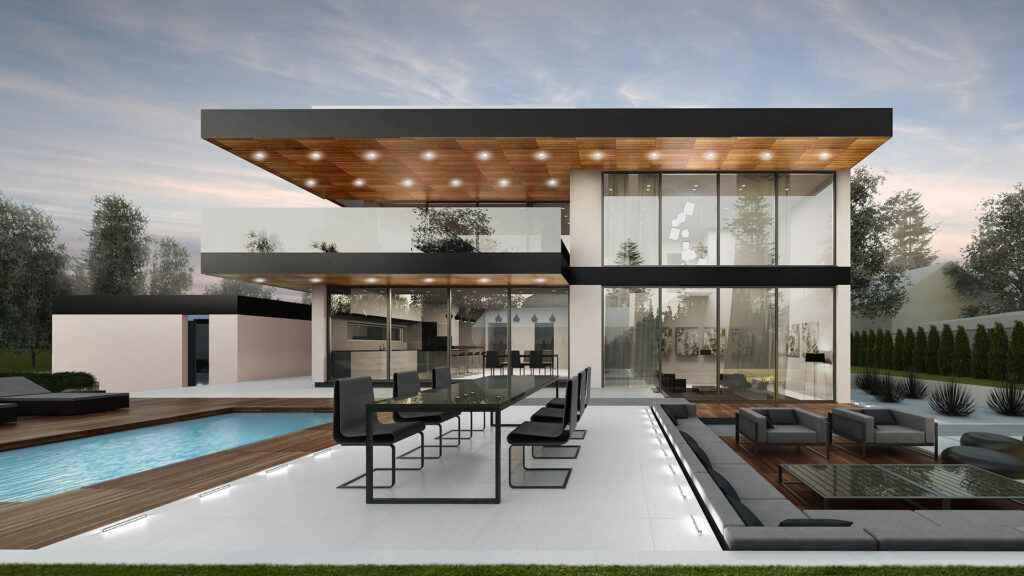
The façades combine plaster surfaces, dark brickwork, and timber elements to articulate the different programmatic layers. Material contrasts are used to visually separate commercial and residential zones, while maintaining a consistent architectural language. The warm texture of timber softens the building’s urban character and adds depth to the elevations.
MATERIALITY
The façades combine plaster surfaces, dark brickwork, and timber elements to articulate the different programmatic layers. Material contrasts are used to visually separate commercial and residential zones, while maintaining a consistent architectural language. The warm texture of timber softens the building’s urban character and adds depth to the elevations.
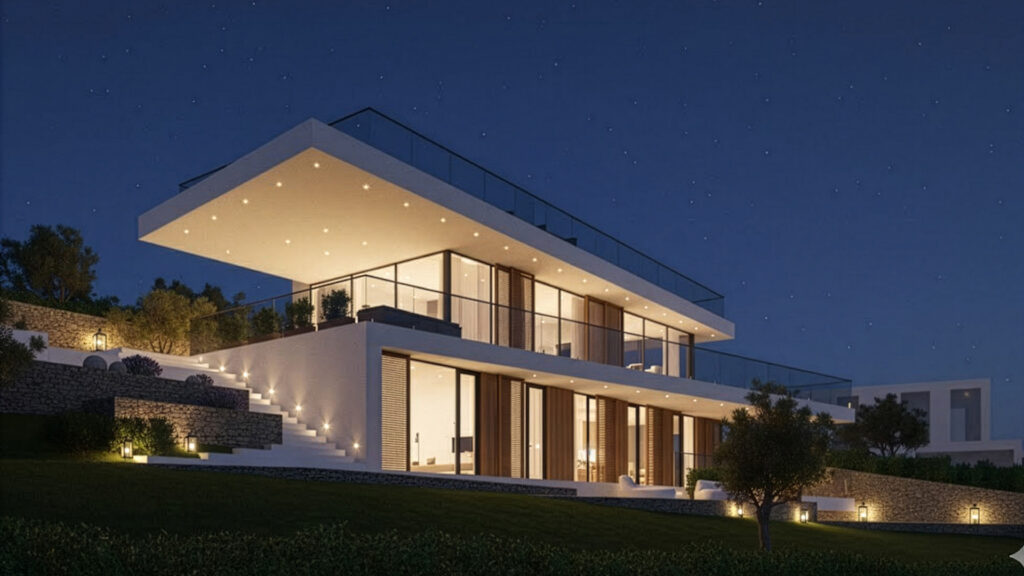
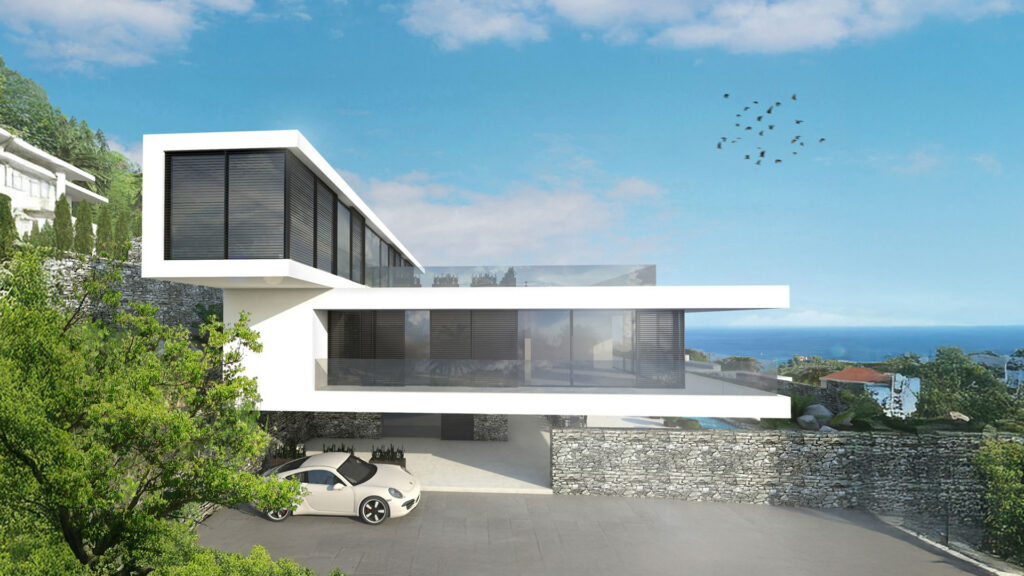
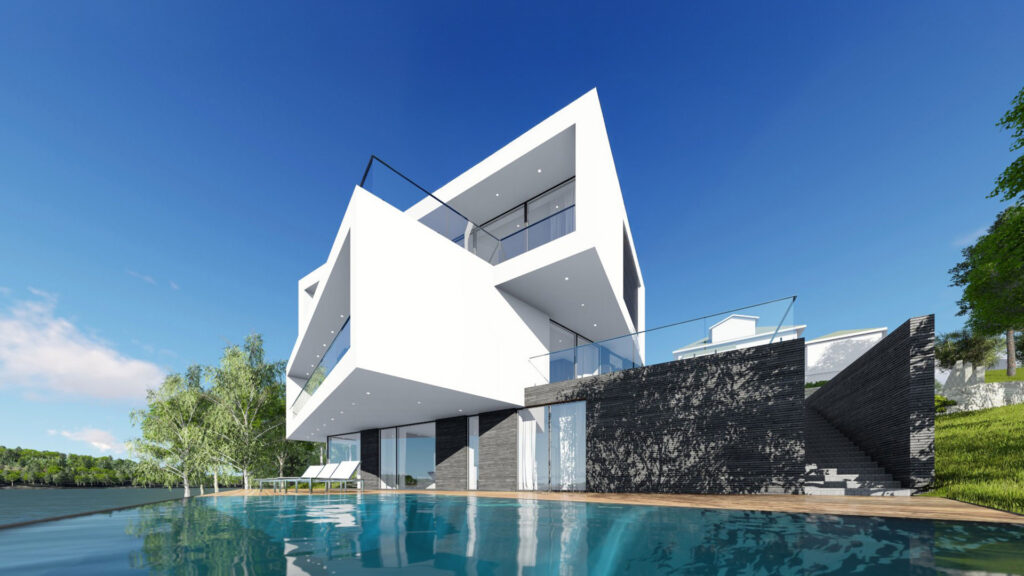
The architecture of the villa takes its clues from the horizontal lines of the landscape: the river with the woods in the background on its both sides.
EXTERIOR CHARACTER
Vilos architektūra įkvėpta horizontalios kraštovaizdžio struktūros – upės ir abipus jos esančių miškų, kurie formuoja natūralų fono horizontą. The villa is therefore designed in three long white horizontal planes that almost seem to be floating due to the neutral black wall tiles that blend to the dark woods behind the house. The South facade is designed with vertical timber slates in betwee black wall tiles that blend to the dark woods behind the house. The South facade is designed with vertical timber slates in between the glazing that he South facade
Vilos architektūra įkvėpta horizontalios kraštovaizdžio struktūros – upės ir abipus jos esančių miškų, kurie formuoja natūralų fono horizontą. The villa is therefore designed in three long white horizontal planes that almost seem to be floating due to the neutral black wall tiles that blend to the dark woods behind the house. The South facade is designed with vertical timber slates in betwee black wall tiles that blend to the dark woods behind the house. The South facade is designed with vertical timber slates in between the glazing that he South facade
APDOVANOJIMAI
Tarptautiniu mastu pripažinti už išskirtinę šiuolaikinės architektūros kokybę