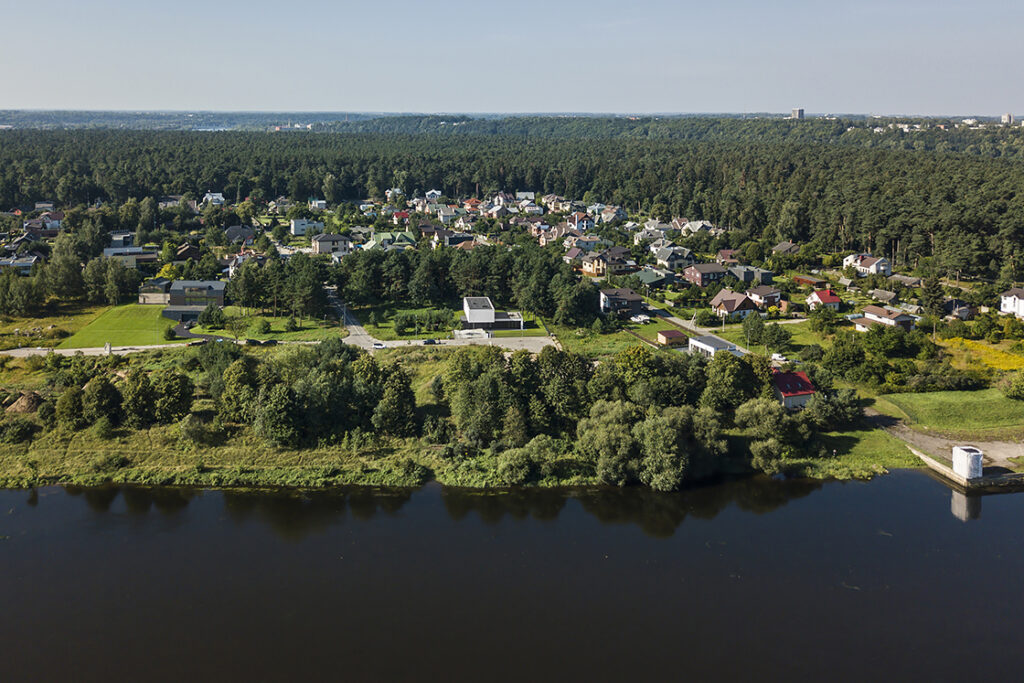
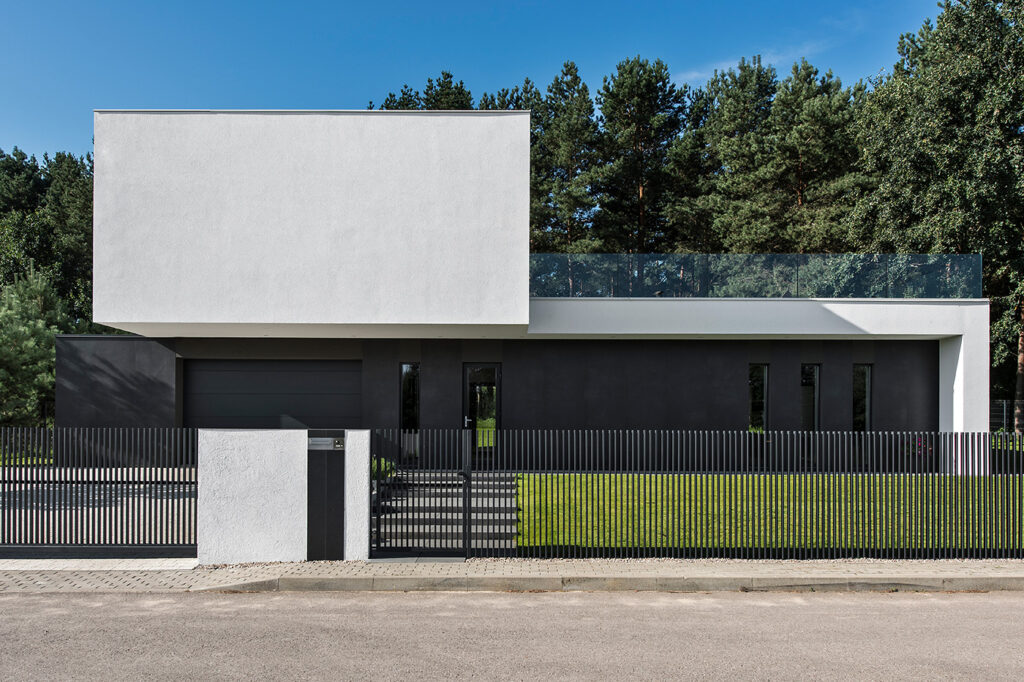
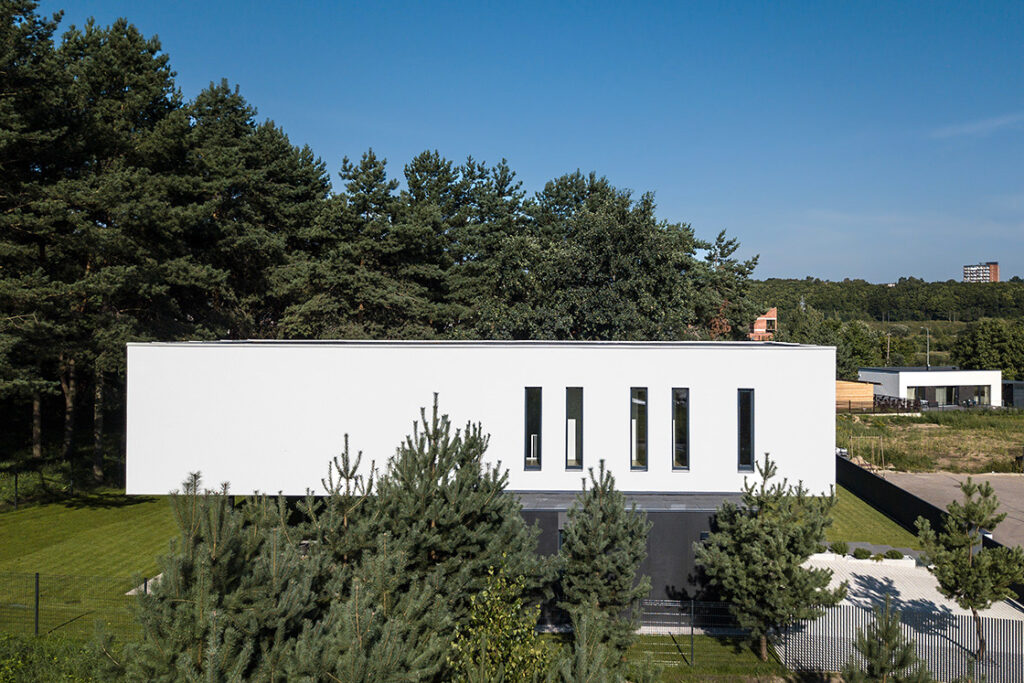
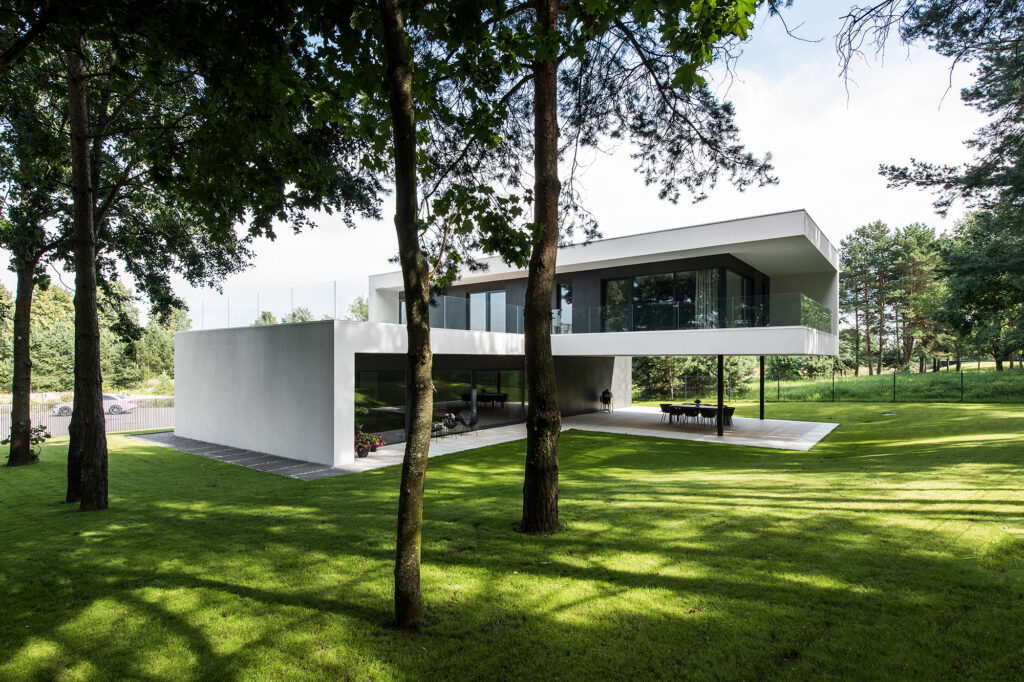
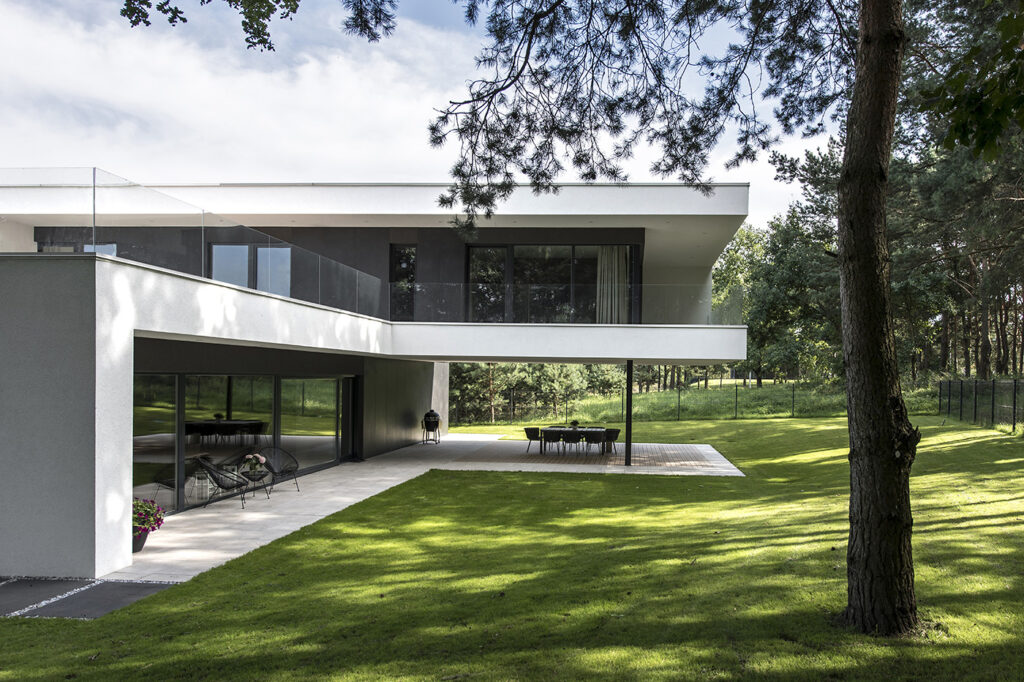
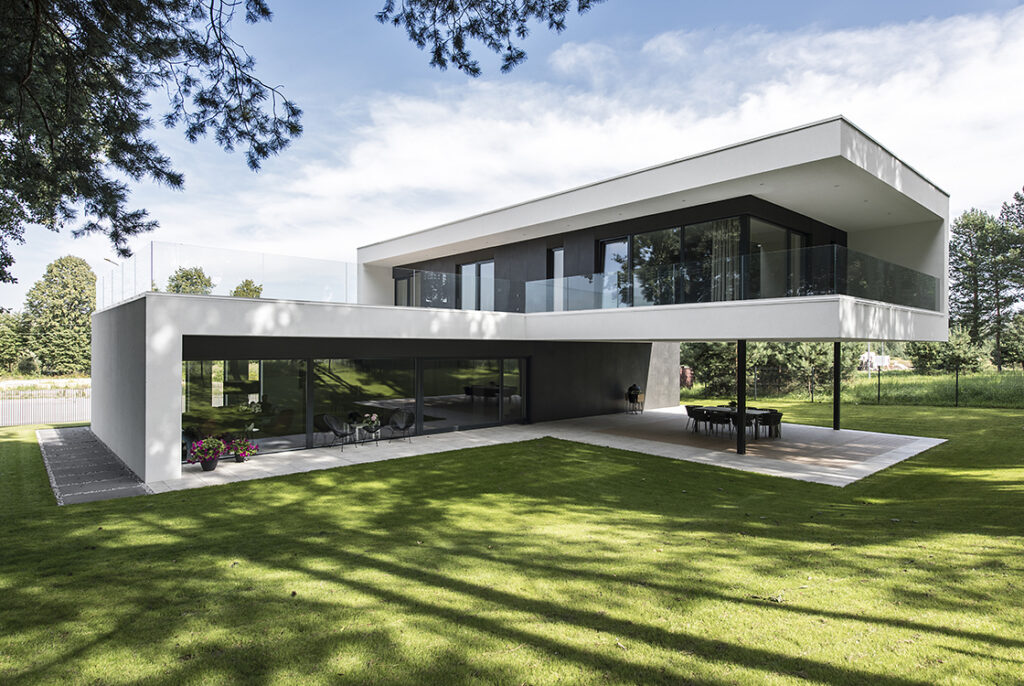
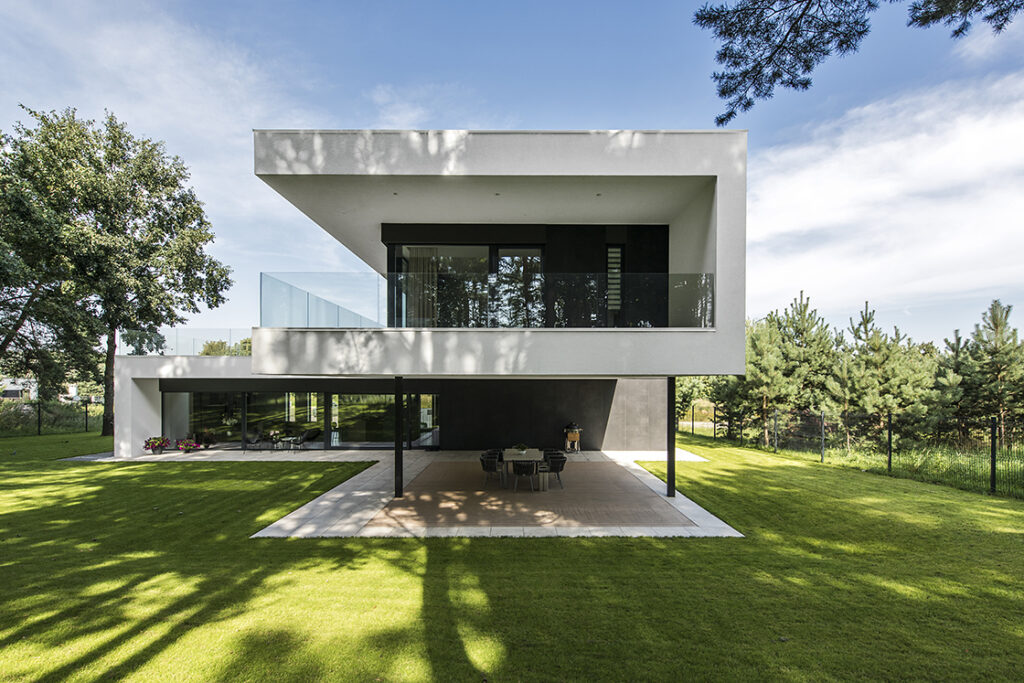
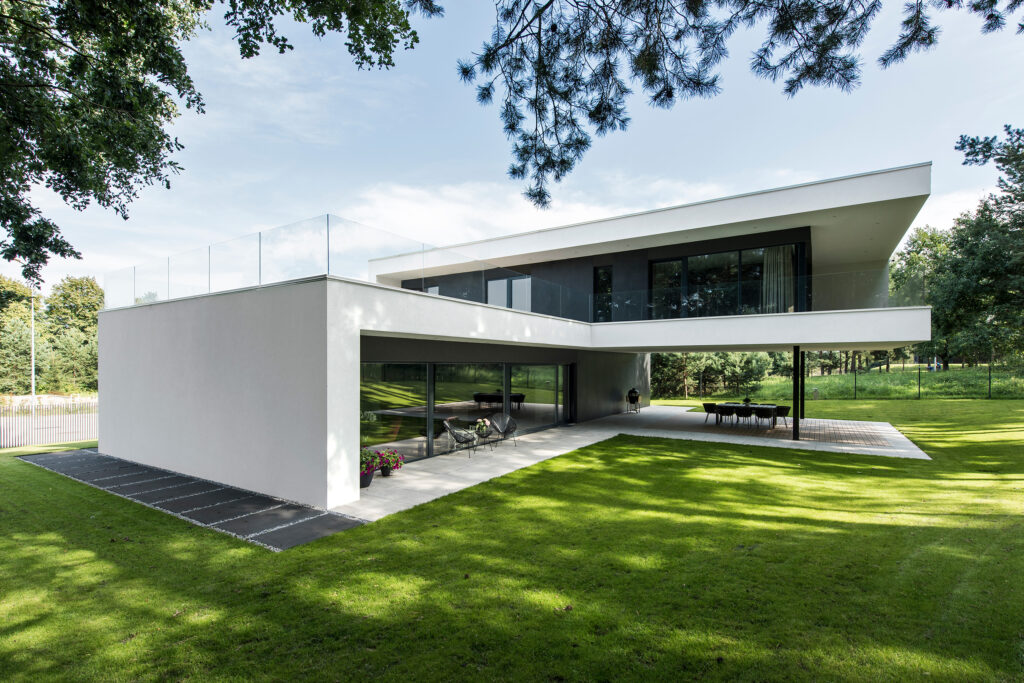
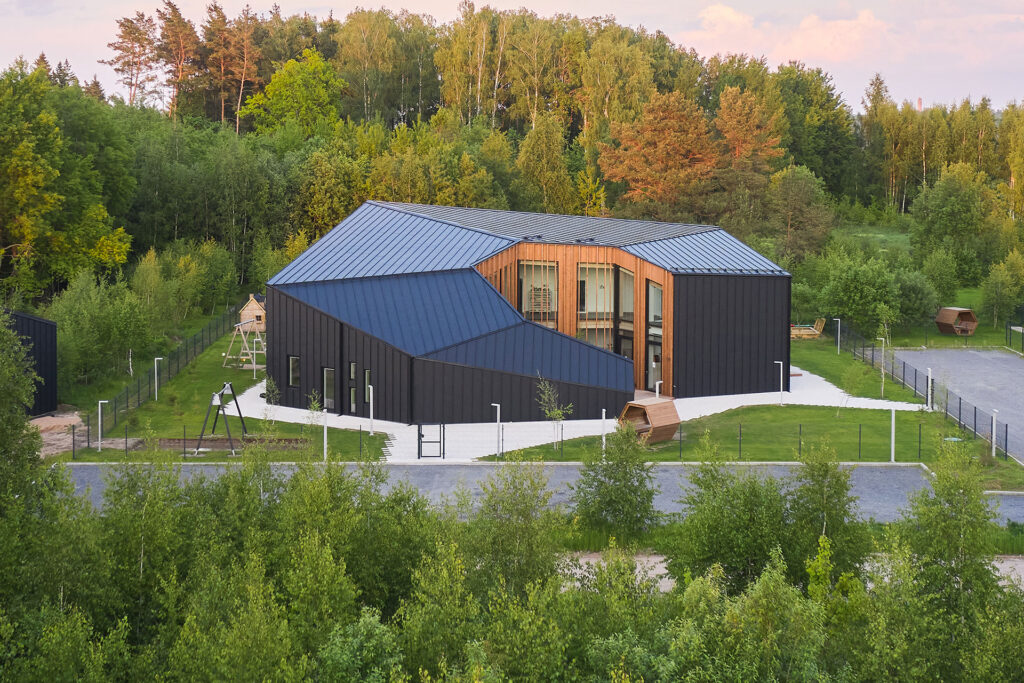
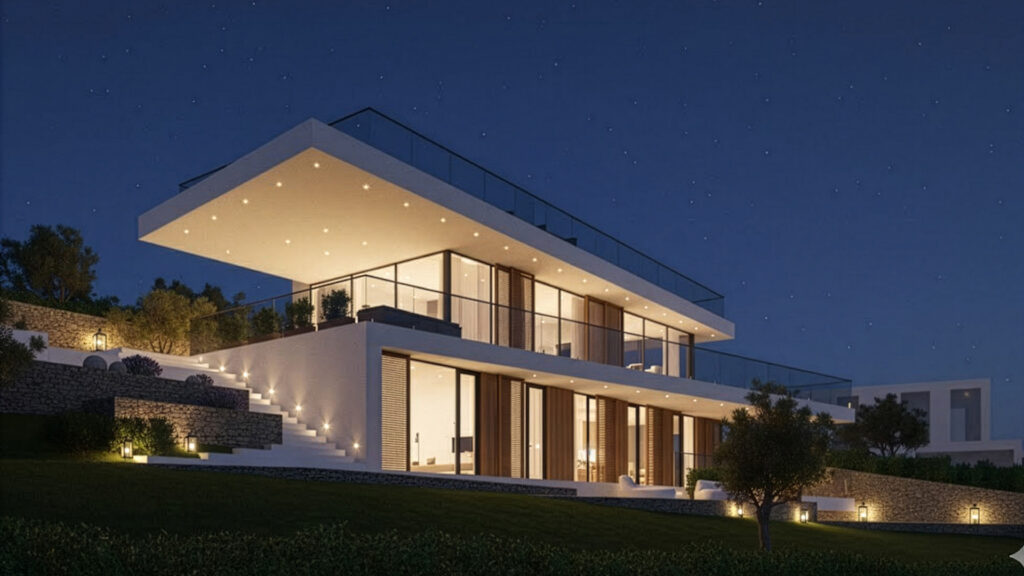
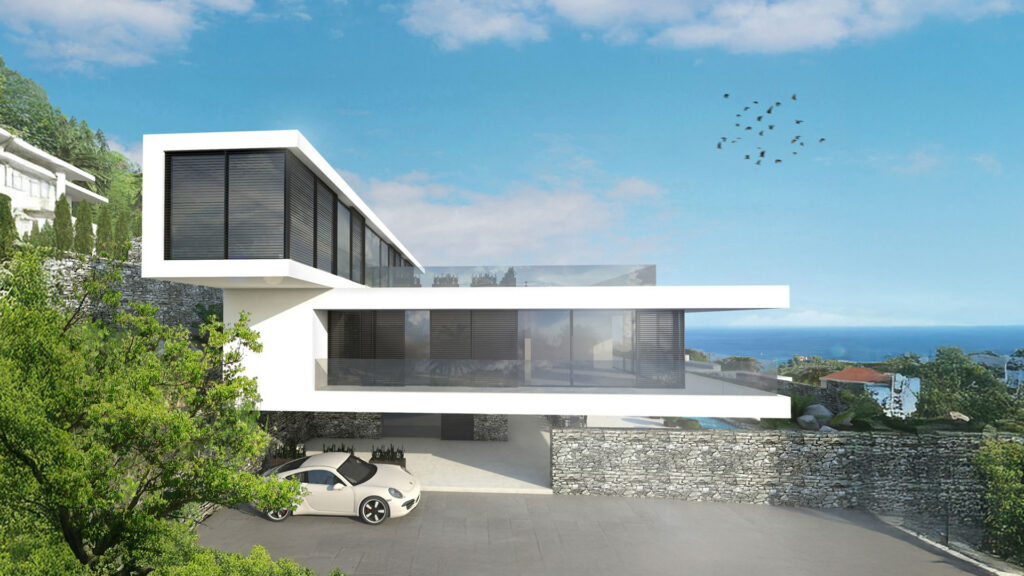
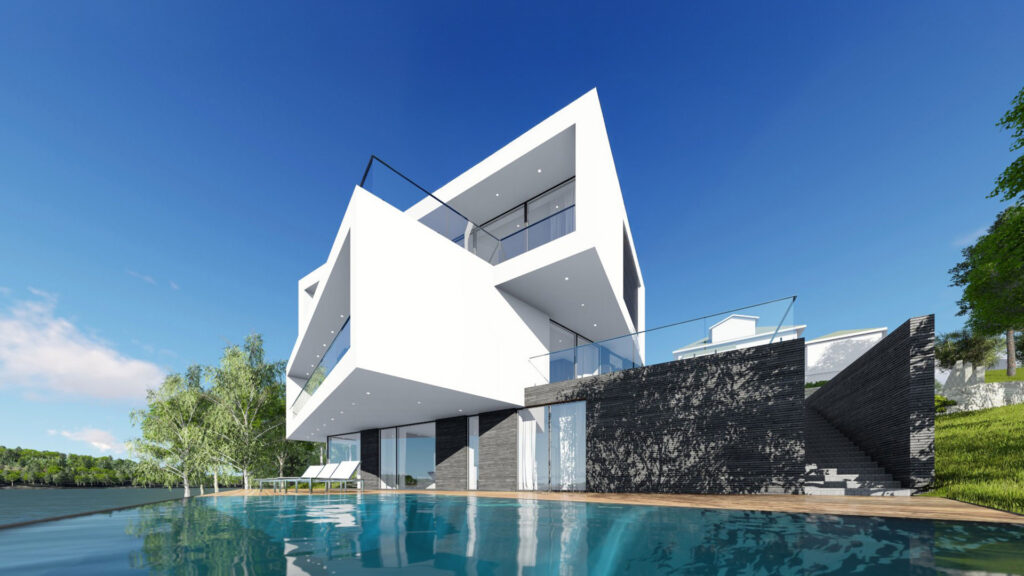
Vilos architektūra įkvėpta horizontalios kraštovaizdžio struktūros – upės ir abipus jos esančių miškų, kurie formuoja natūralų fono horizontą. The villa is therefore designed in three long white horizontal planes that almost seem to be floating due to the neutral black wall tiles that blend to the dark woods behind the house. The South facade is designed with vertical timber slates in betwee black wall tiles that blend to the dark woods behind the house. The South facade is designed with vertical timber slates in between the glazing that he South facade
ARCHITECTURE & MASSING
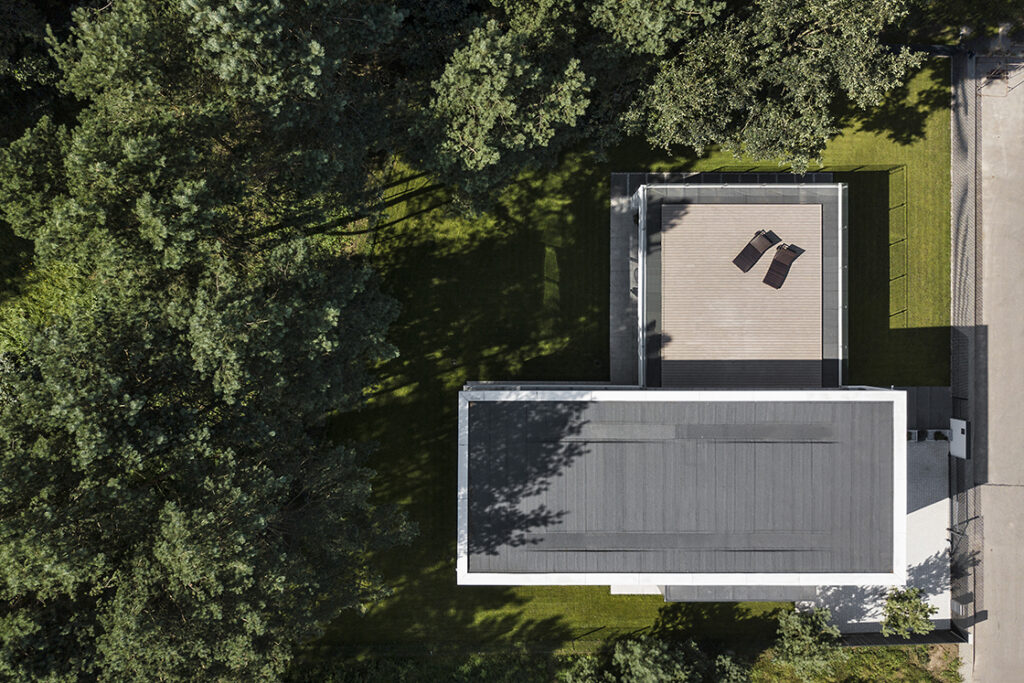
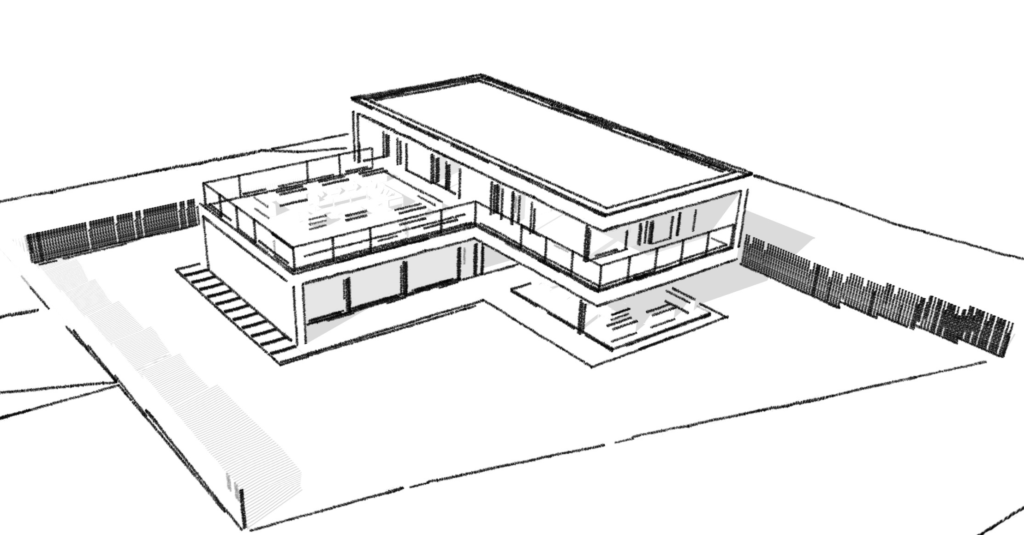
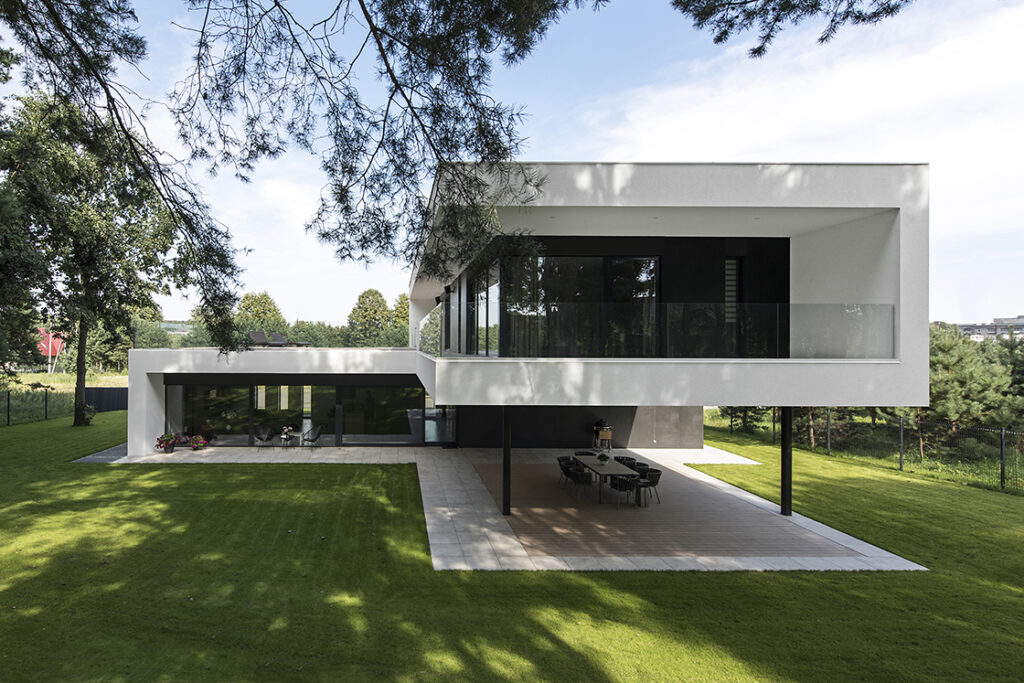
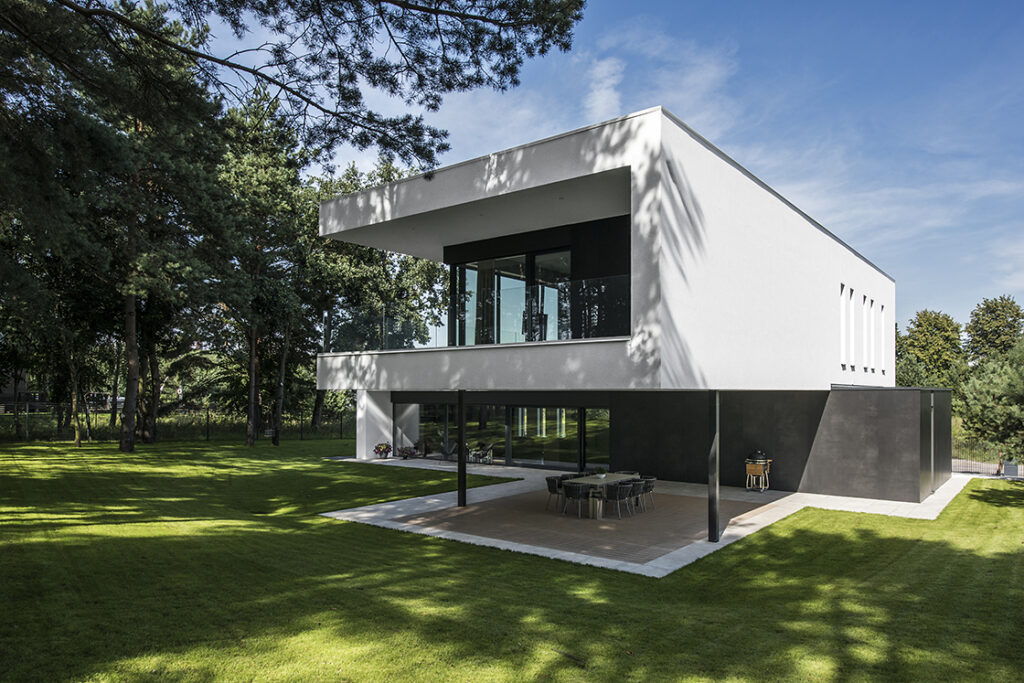
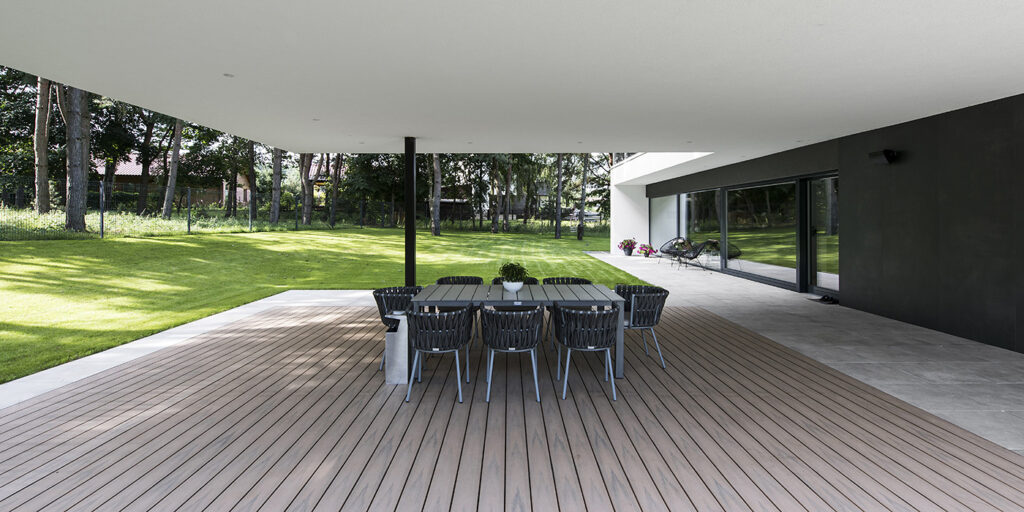
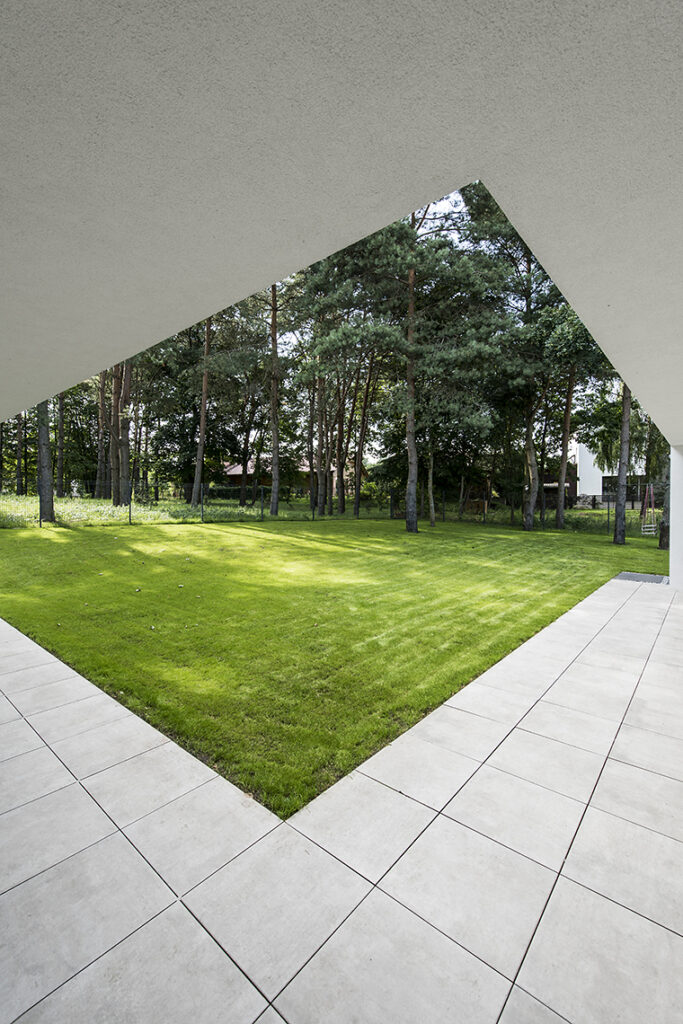
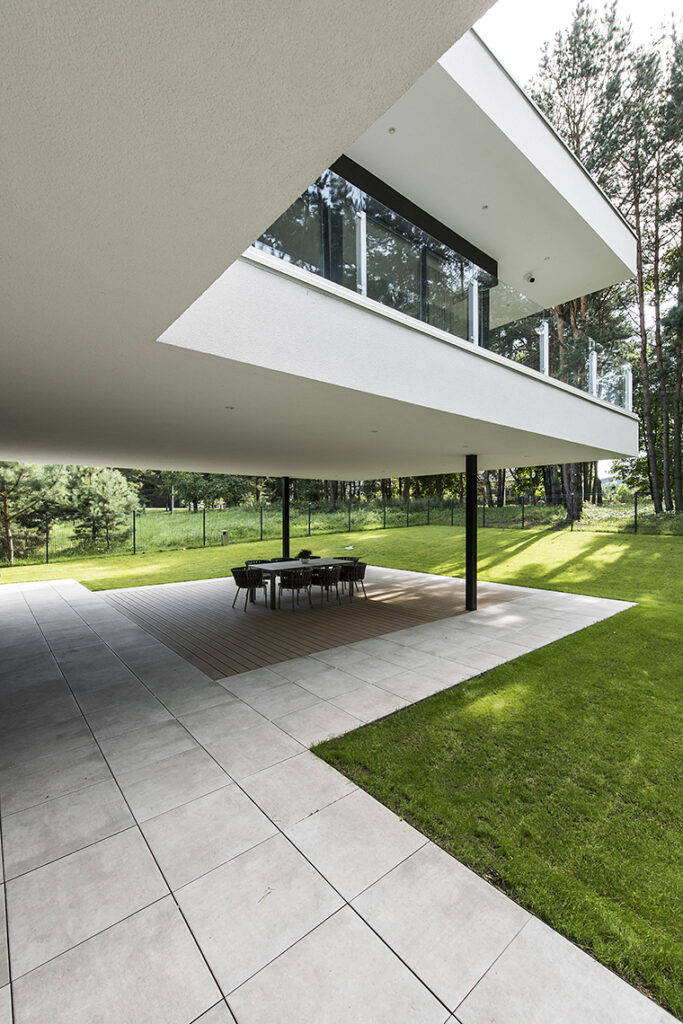
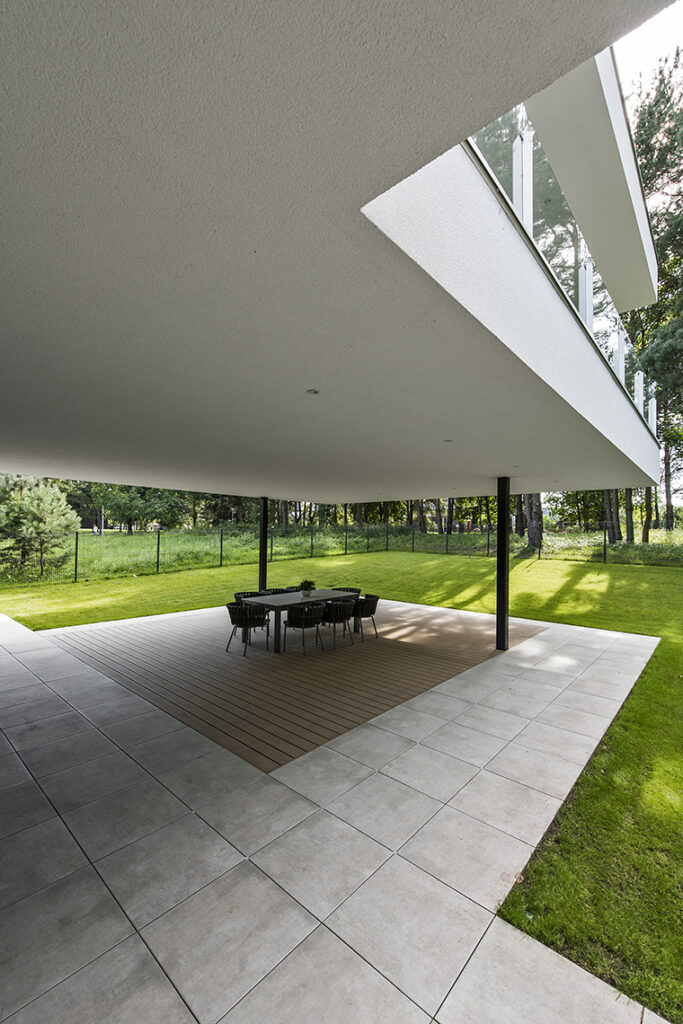
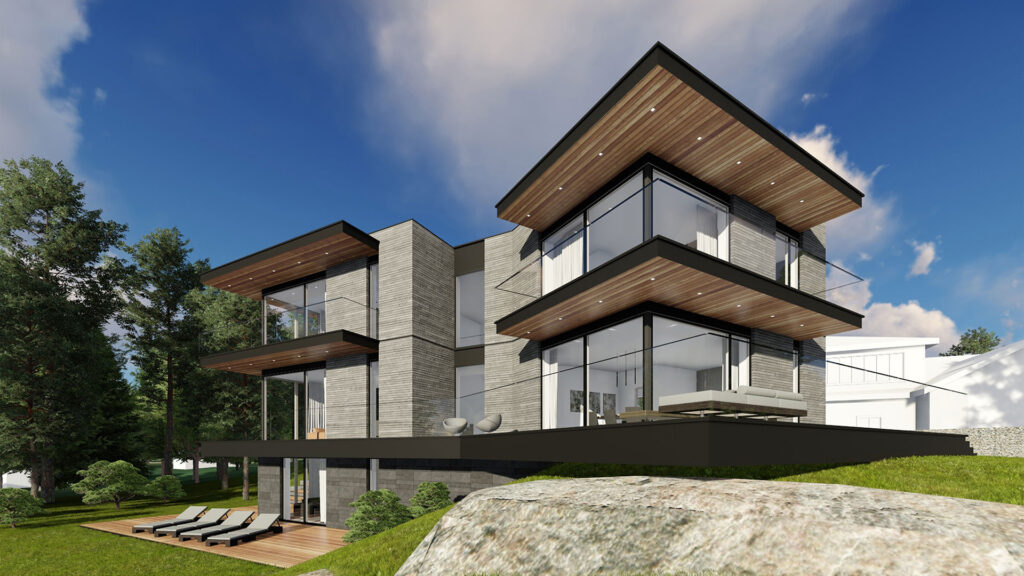
The architectural concept is based on a clear horizontal hierarchy. A compact upper volume is positioned above a recessed ground floor, creating a sense of lightness and visual depth. This arrangement allows the upper level to extend outward, forming deep overhangs that define covered exterior spaces below.
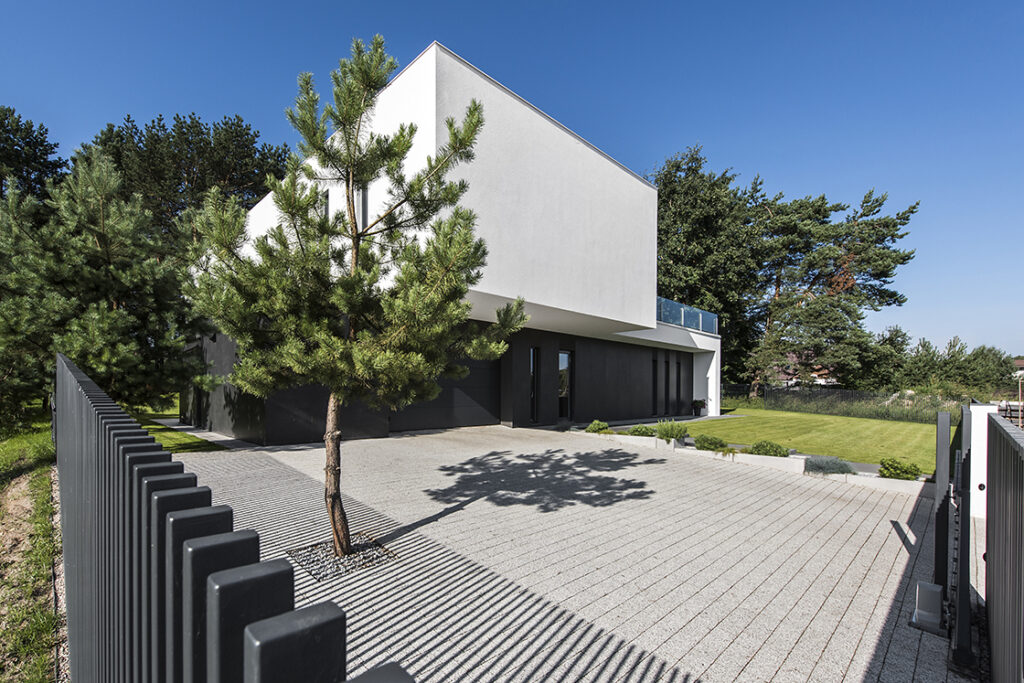
The contrast between solid and transparent elements reinforces the reading of the building as a composition of planes rather than a single object. Openings are aligned and proportioned to frame views toward the river landscape, while the massing remains restrained when viewed from the street. Geometry is kept precise, ensuring that the architectural idea remains legible from all sides of the site.
APPROACH & ARRIVAL
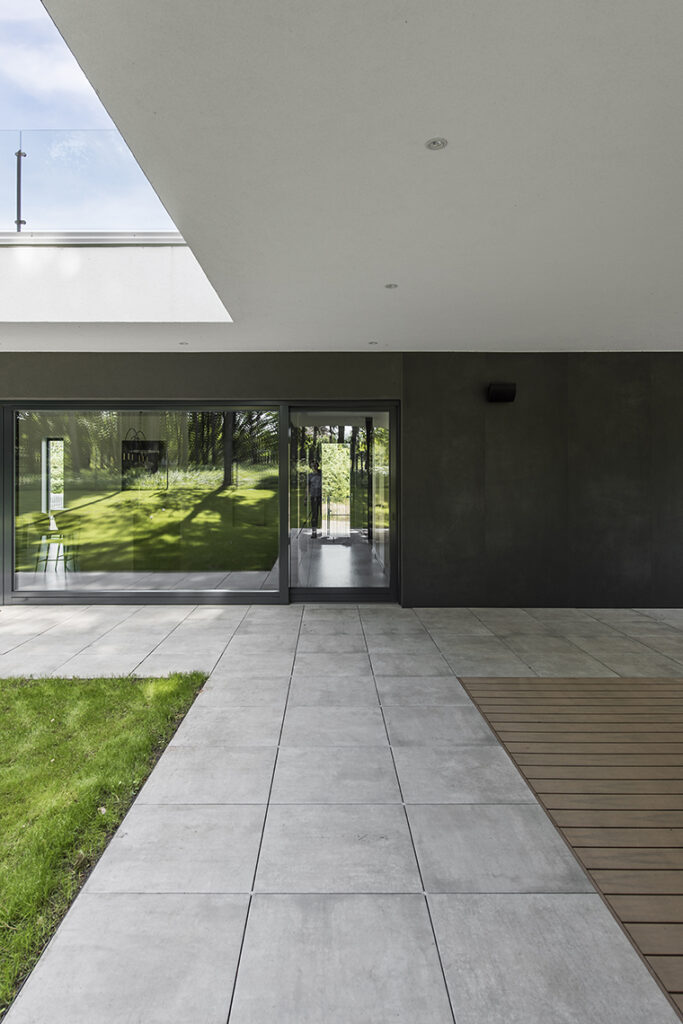
Arrival is understated and indirect. The entrance is integrated beneath the projecting upper volume, allowing the approach to unfold gradually. This recessed condition establishes a clear threshold, where movement shifts from open landscape to a more contained architectural space.
RELATIONSHIP TO LANDSCAPE
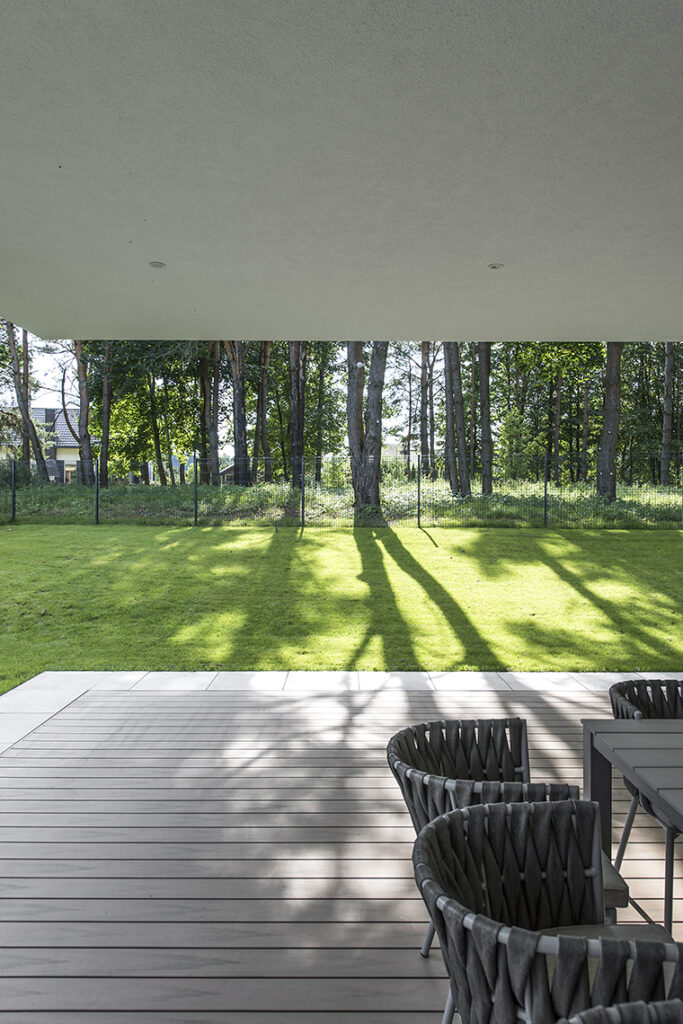
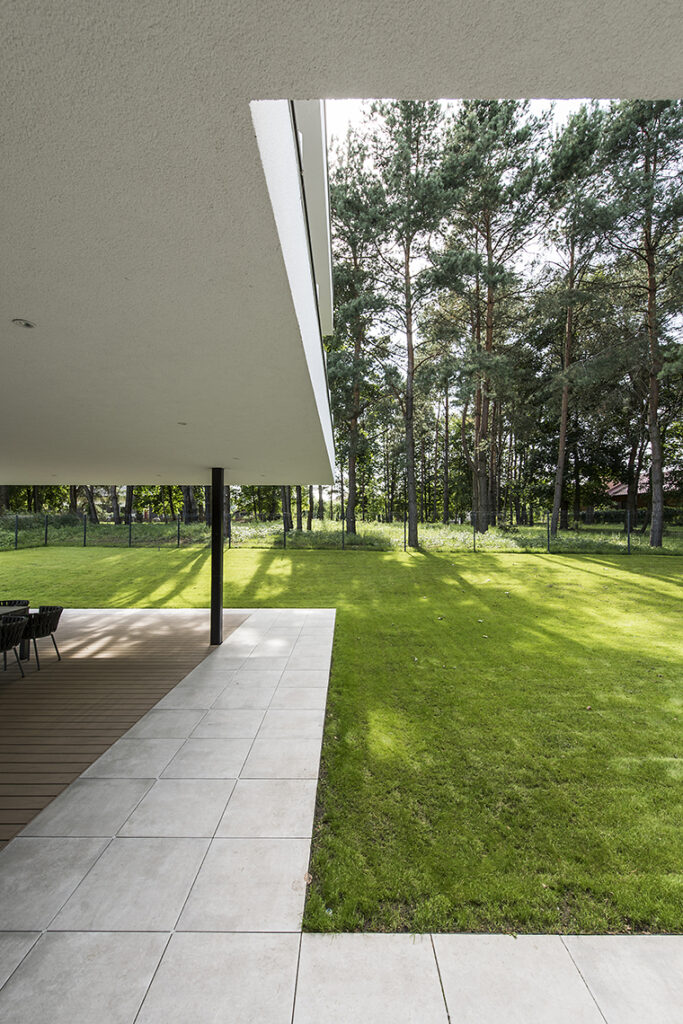
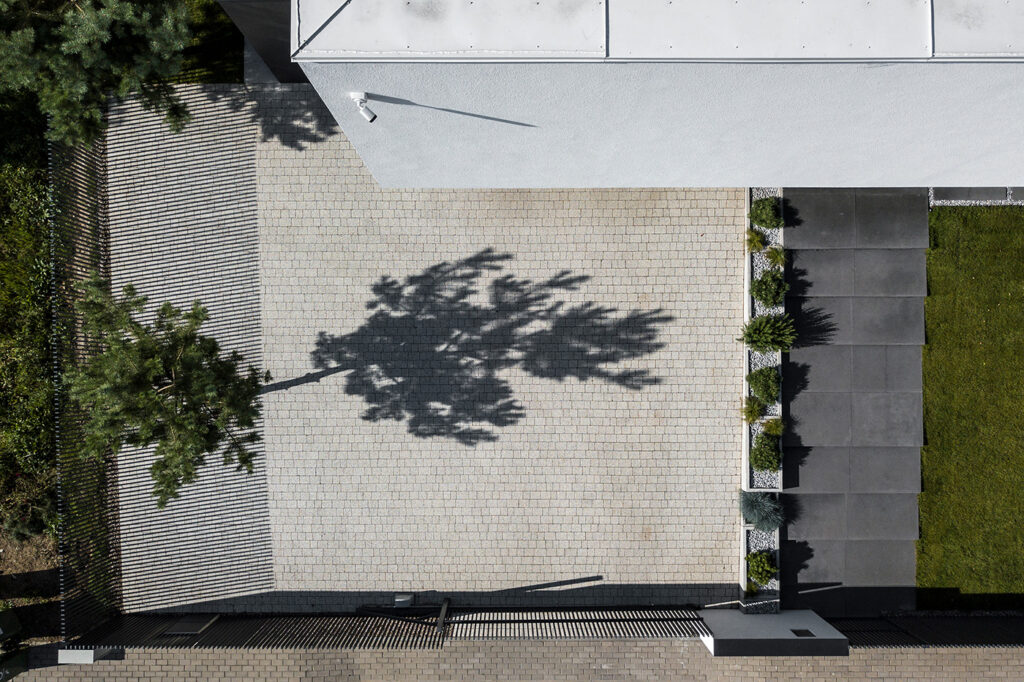
The house is placed within the existing landscape rather than imposed upon it. Mature trees are retained and become part of the spatial composition, filtering views and light. The ground floor opens toward the garden, allowing exterior spaces to function as an extension of the interior. The building’s horizontal lines echo the natural layering of the site, reinforcing continuity between architecture and landscape.
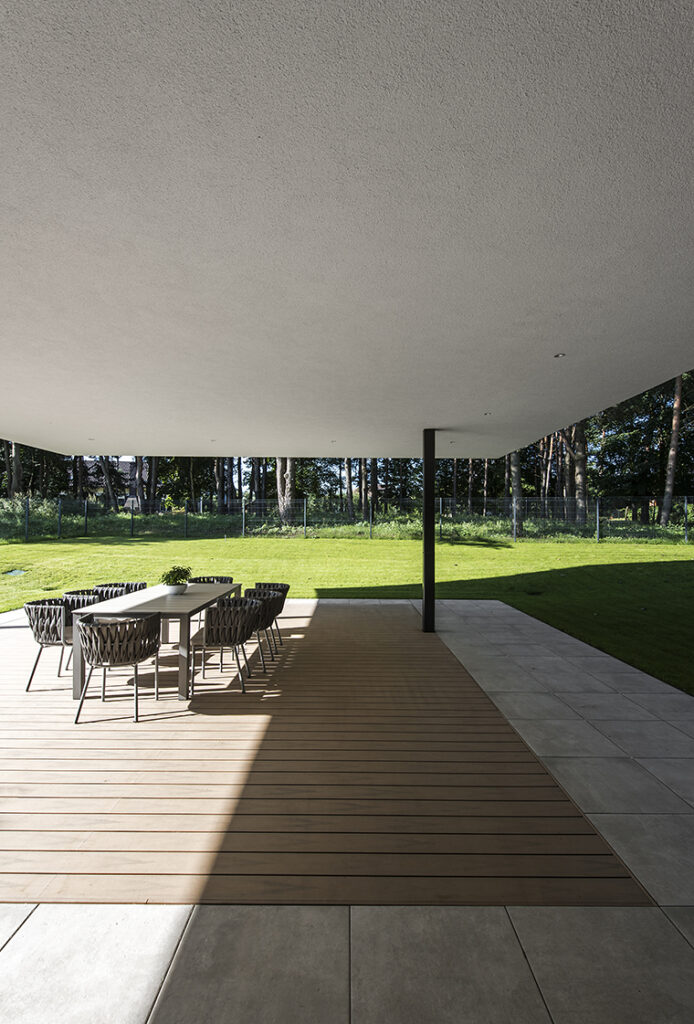
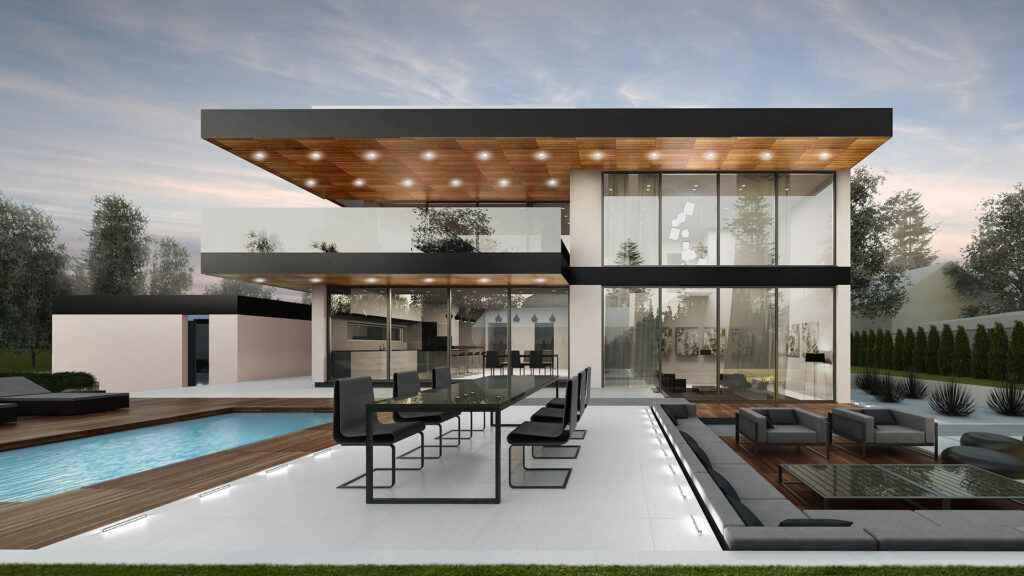
Covered terraces mediate between interior spaces and the surrounding greenery.
INTERIOR–EXTERIOR CONTINUITY
The ground floor is conceived as a continuous spatial field that extends outward beneath the upper volume. Large glazed openings dissolve the boundary between inside and outside, allowing daily activities to shift naturally between interior rooms and covered terraces. The overhanging upper level provides shade and enclosure, moderating light and climate throughout the day.
Interior spaces remain visually connected to the landscape, with views directed toward the river and garden rather than neighboring buildings. This arrangement supports a calm spatial experience shaped by depth, alignment, and controlled openness rather than decorative elements.
MATERIALITY & DETAIL
Material choices reinforce the clarity of the architectural composition. Light surfaces emphasize the geometry of the upper volume, while darker elements anchor the ground floor to the site. Details are integrated into the overall form, allowing materials to support proportion and shadow rather than attract attention.
PLAN & SPATIAL ORGANIZATION
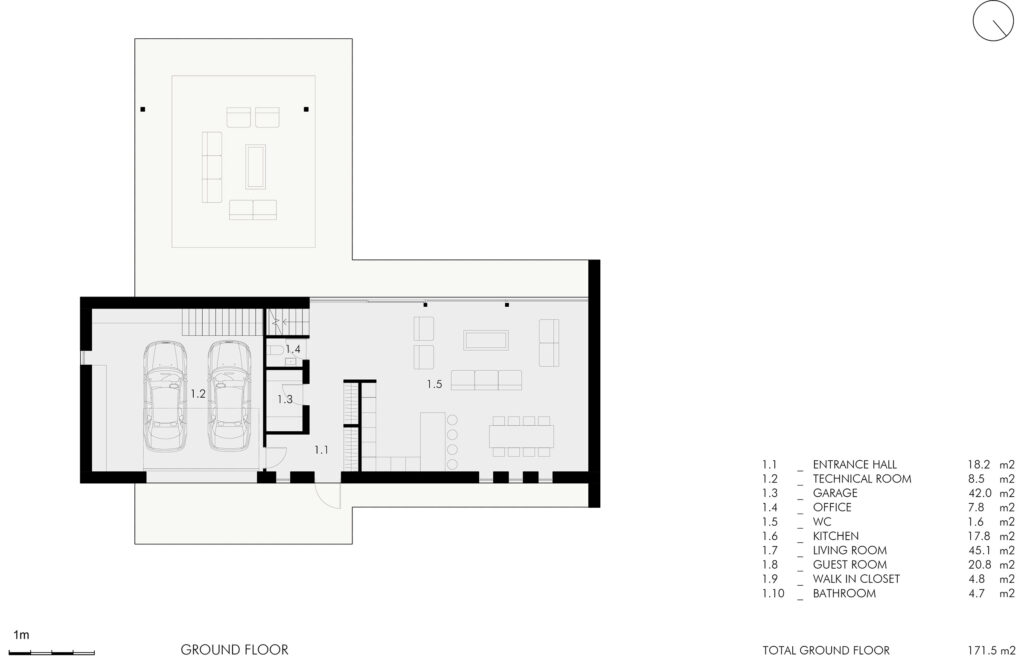
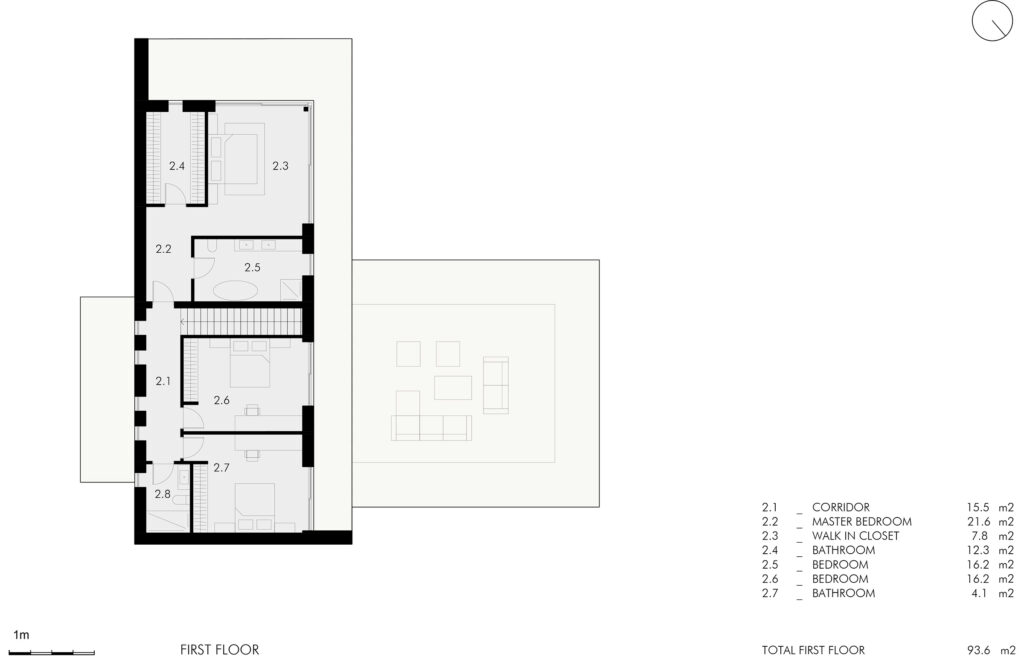
The plan is organized to separate public and private functions across levels. Living spaces occupy the ground floor and open directly to the landscape, while private rooms are placed above, benefiting from extended views and increased privacy. Circulation is direct and legible, reinforcing the building’s clear spatial structure.
EXTERIOR CHARACTER
Vilos architektūra įkvėpta horizontalios kraštovaizdžio struktūros – upės ir abipus jos esančių miškų, kurie formuoja natūralų fono horizontą. The villa is therefore designed in three long white horizontal planes that almost seem to be floating due to the neutral black wall tiles that blend to the dark woods behind the house. The South facade is designed with vertical timber slates in betwee black wall tiles that blend to the dark woods behind the house. The South facade is designed with vertical timber slates in between the glazing that he South facade