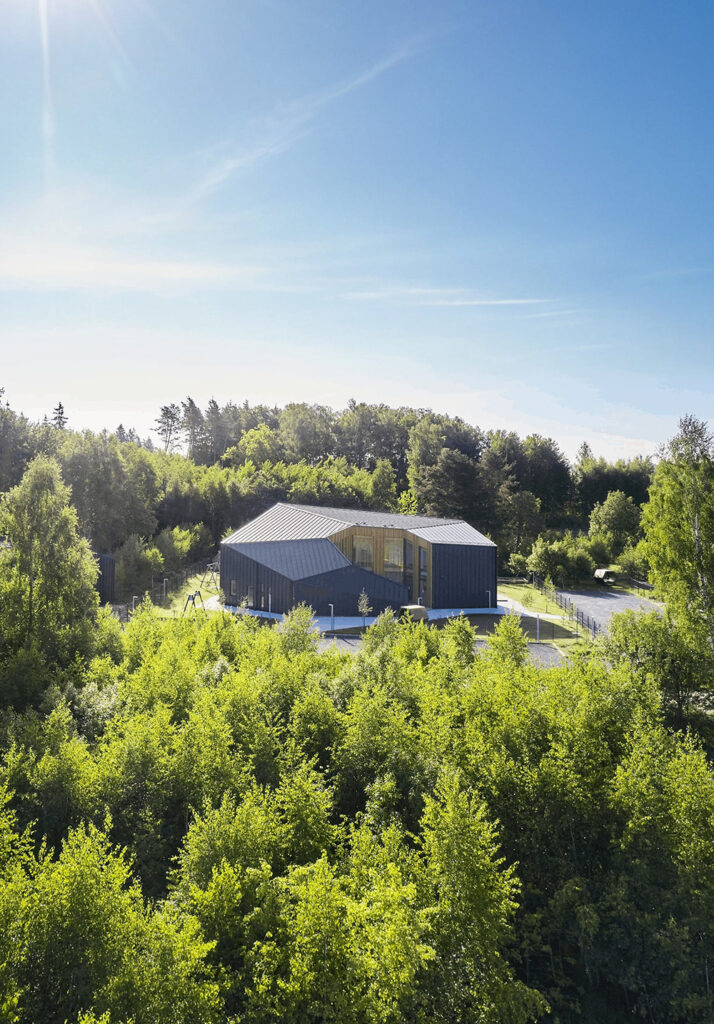
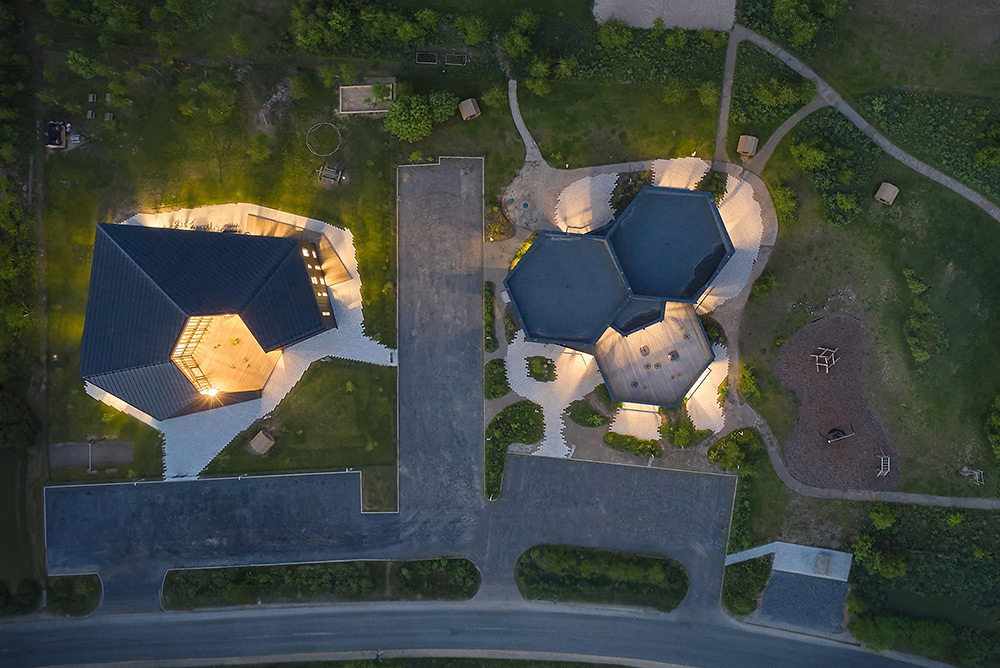
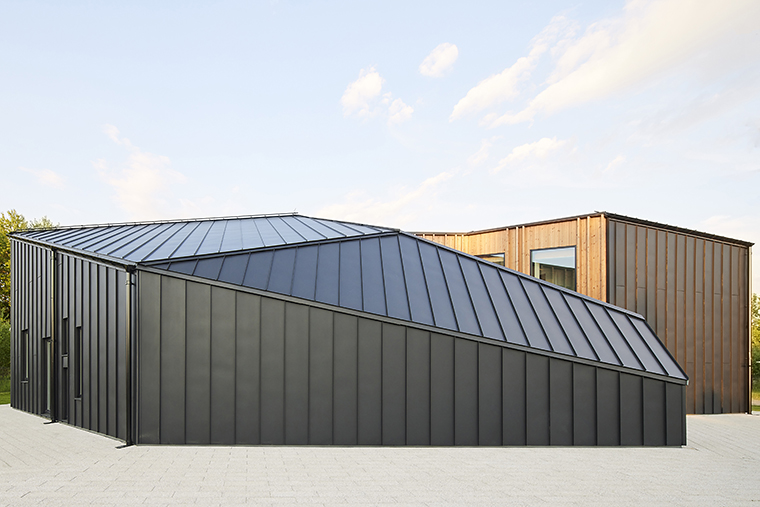
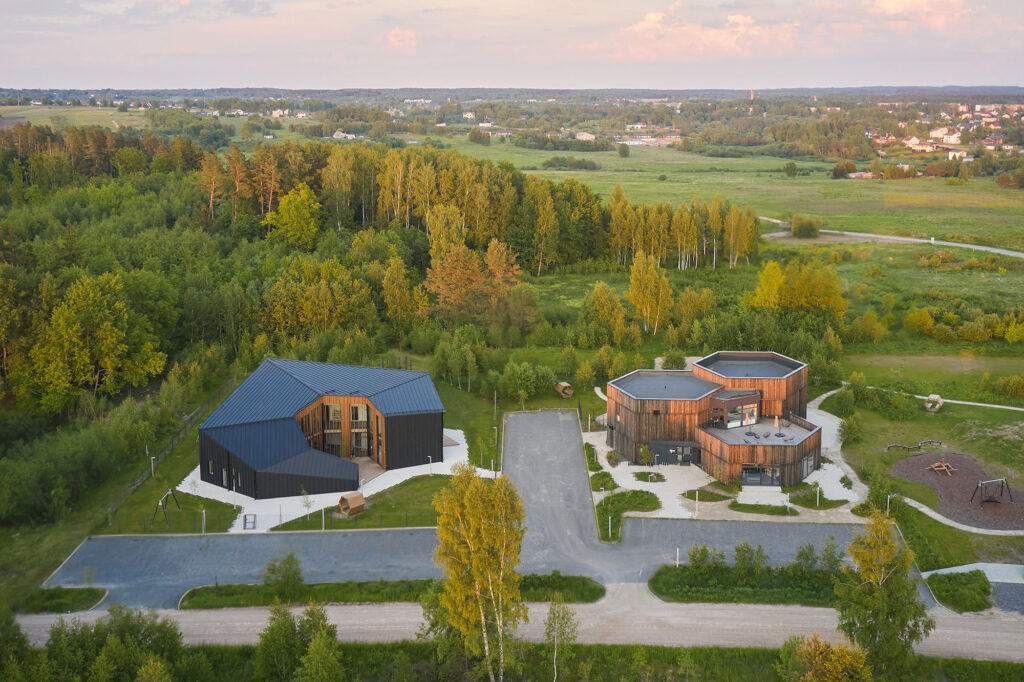
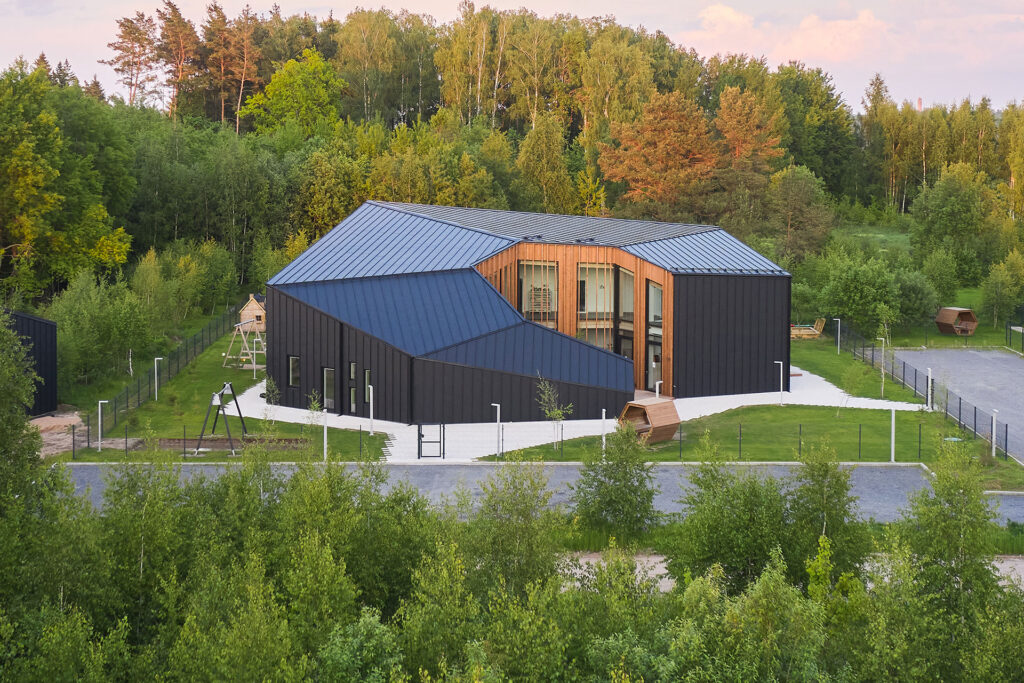
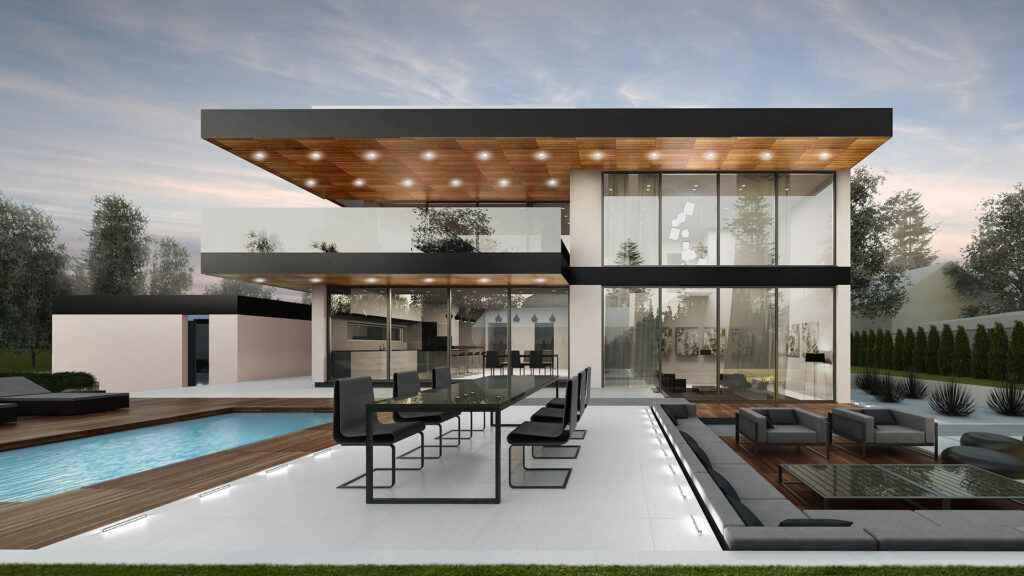
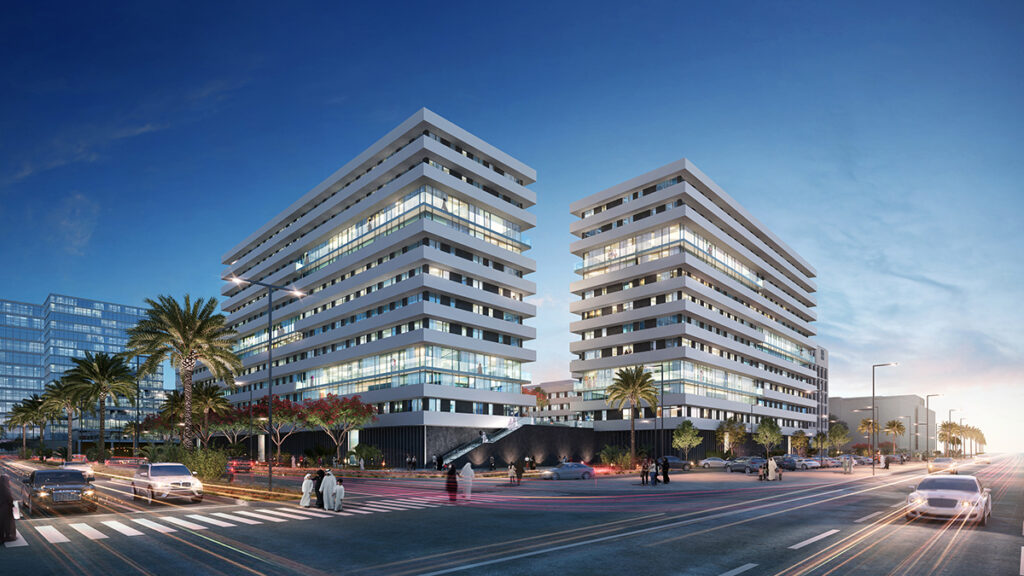
The private kindergarten is conceived as an integral part of the 44-hectare residential and public development Uogų slėnis, forming a key social and educational anchor within the growing community. Positioned at the edge of a Baltic forest, the building is designed as more than a place of care — it is an environment that actively supports learning, curiosity, and emotional development. Architecture, landscape, and daily routines are interwoven to create a setting where children engage naturally with space, light, and nature, establishing a strong foundation for early education through experience rather than instruction.

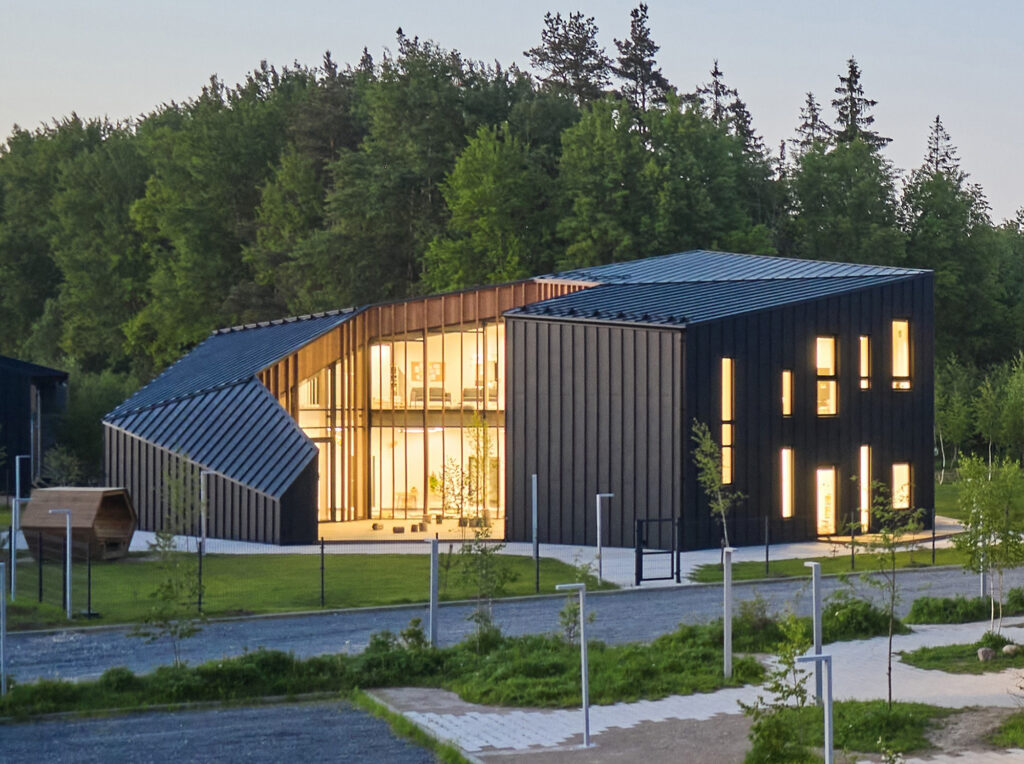
Located alongside mature birch and pine trees, the kindergarten occupies a carefully selected site where built form meets untouched landscape. This proximity to the forest defines both the atmosphere and the architectural response. As part of a broader network of educational and public buildings, the kindergarten sits at the heart of the development while remaining visually and spatial connected to nature. The surrounding greenery provides calmness, seasonal variation, and a constant visual dialogue between interior spaces and the outdoors.
The architectural concept is driven by the idea that a child’s environment plays a critical role in shaping curiosity, confidence, and creativity. The building is designed as a sequence of spaces that encourage exploration, offering varied scales, changing perspectives, and a close relationship with the landscape. Rather than isolating learning indoors, the architecture blurs the boundaries between inside and outside, allowing nature to become an everyday part of the educational experience.
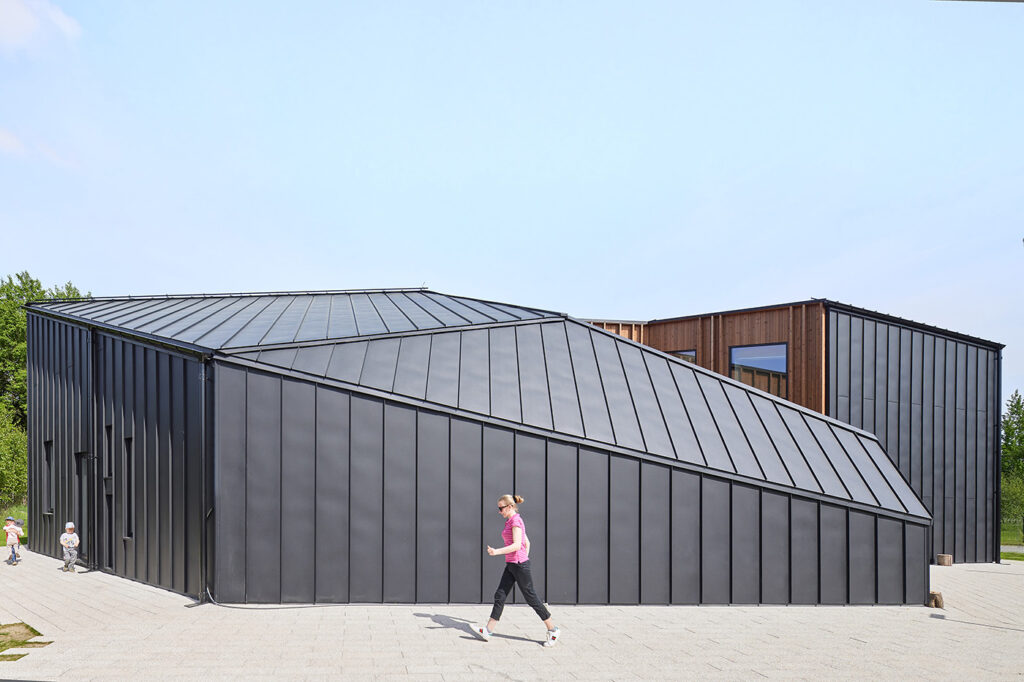
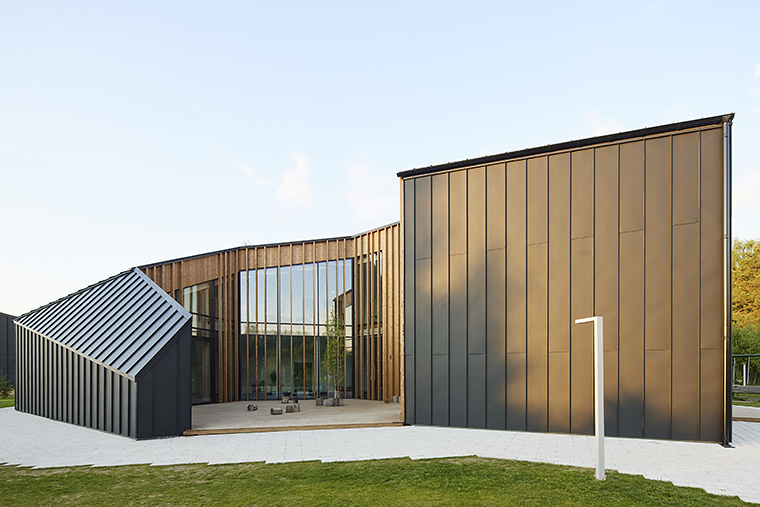
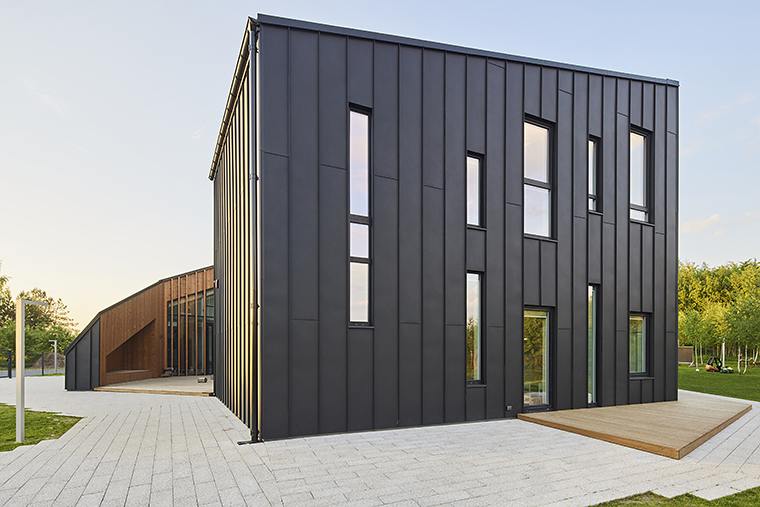
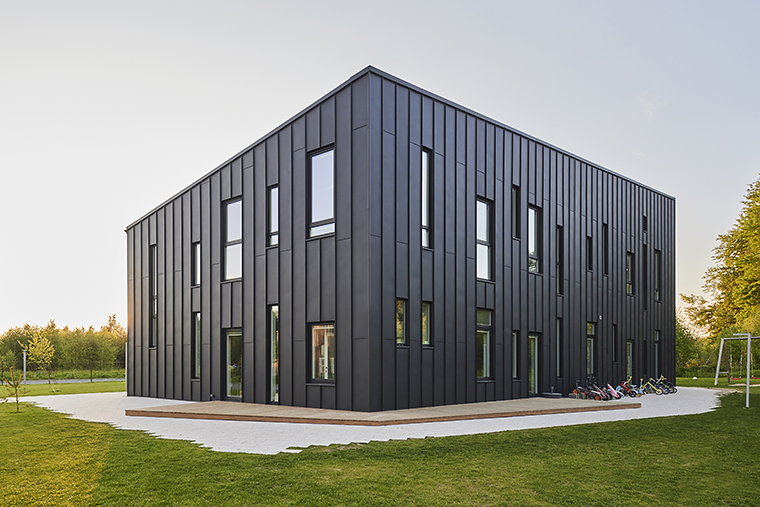
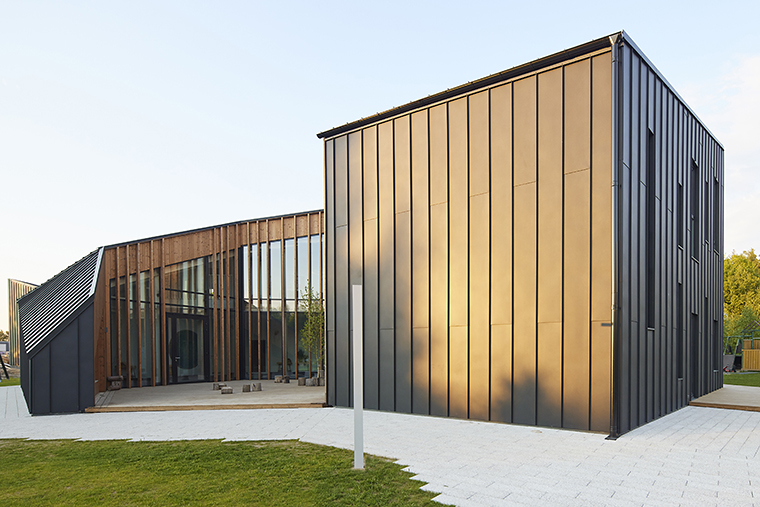
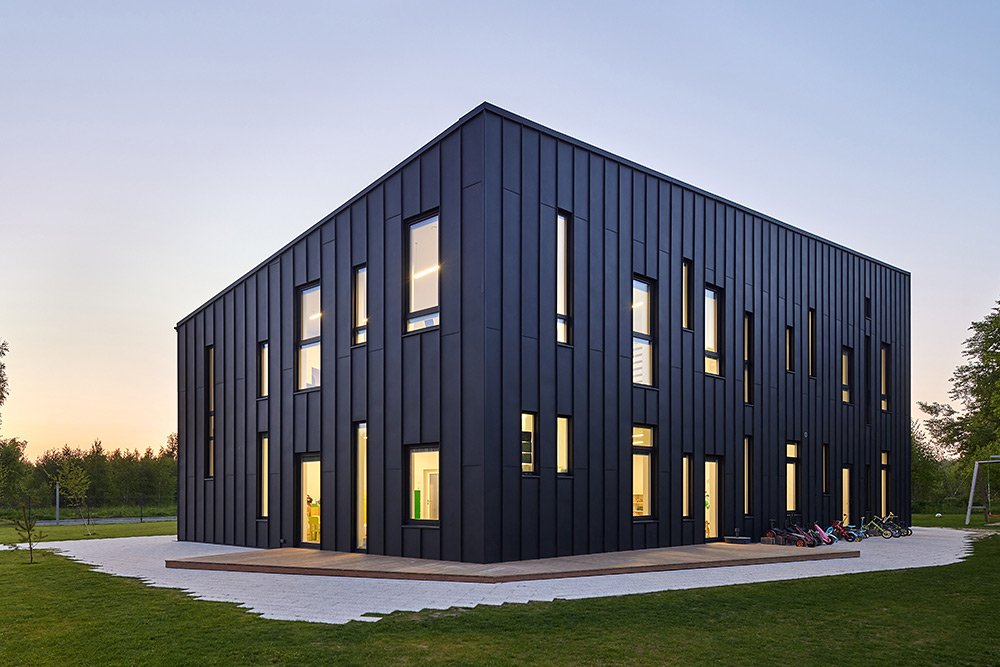
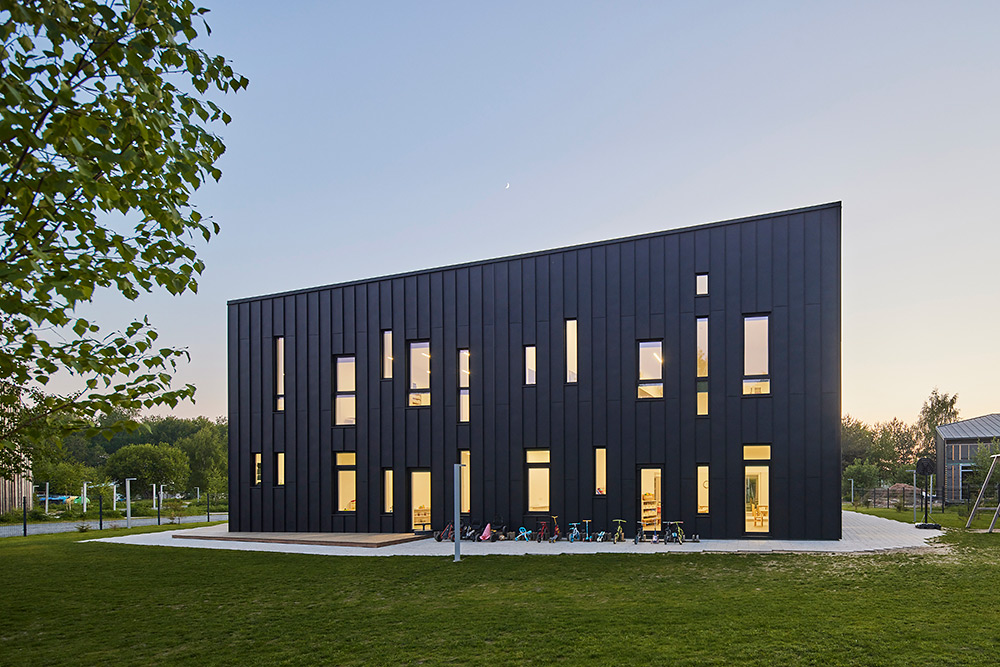
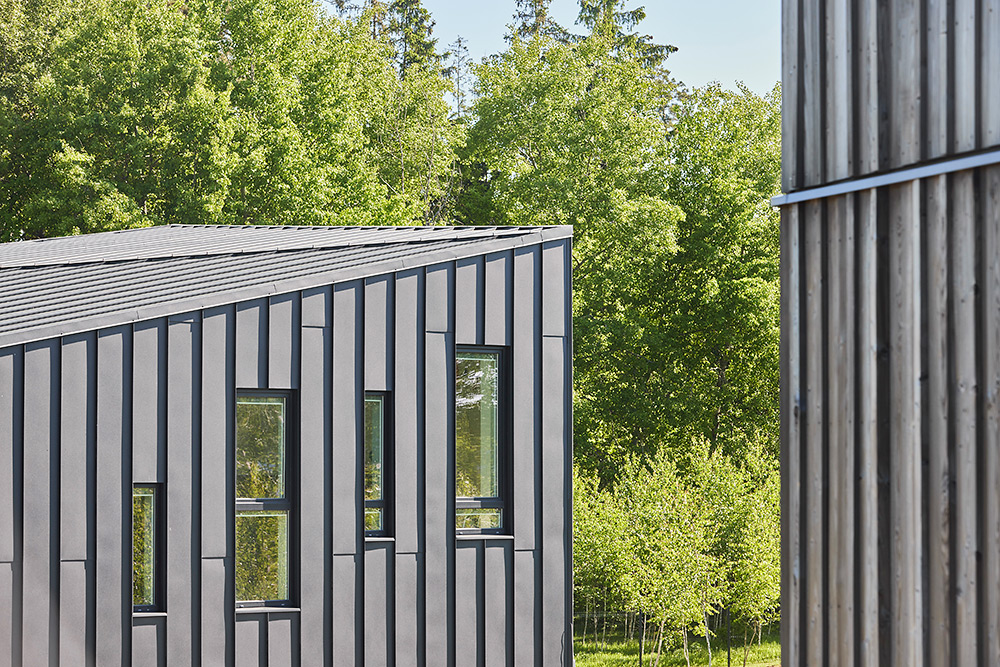
The kindergarten is defined by a dynamic, sculptural volume that distinguishes it within the larger development. The composition is compact yet expressive, balancing strong geometric clarity with carefully articulated openings. Dark exterior cladding creates a pronounced contrast against the surrounding forest, allowing the building to stand out while still remaining grounded within its natural context. The massing responds to both functional requirements and the scale of children, creating a structure that is readable, welcoming, and visually engaging.
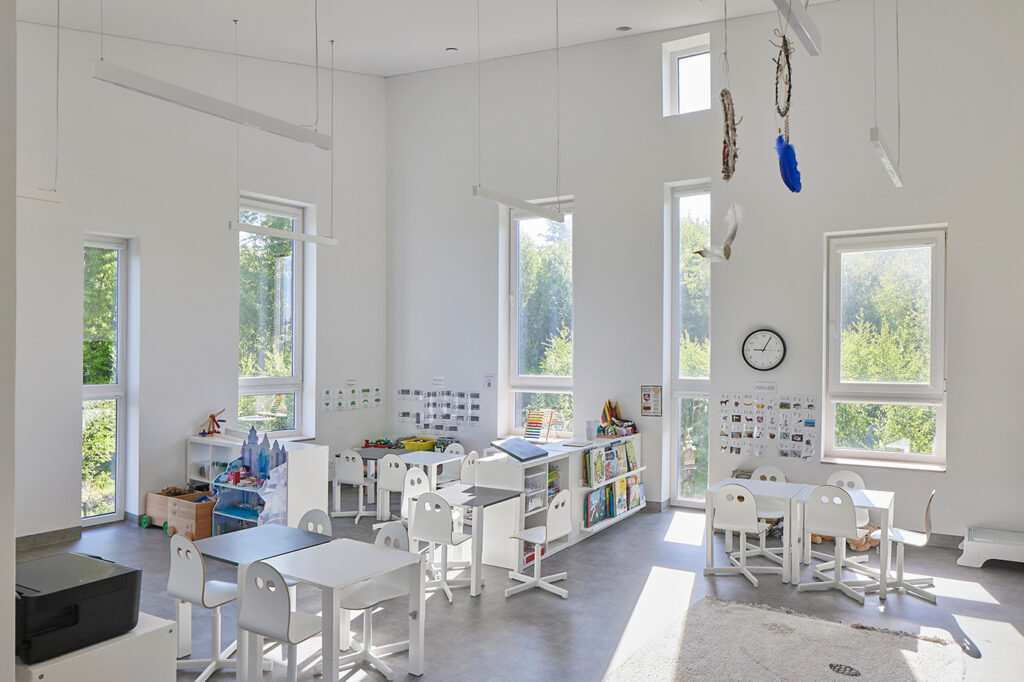
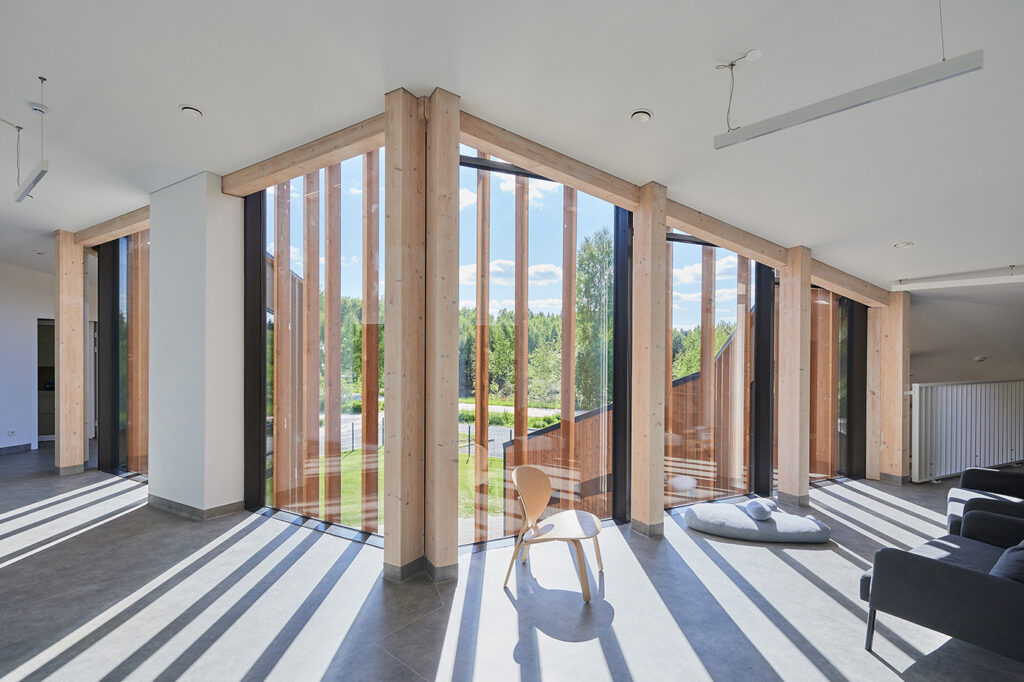
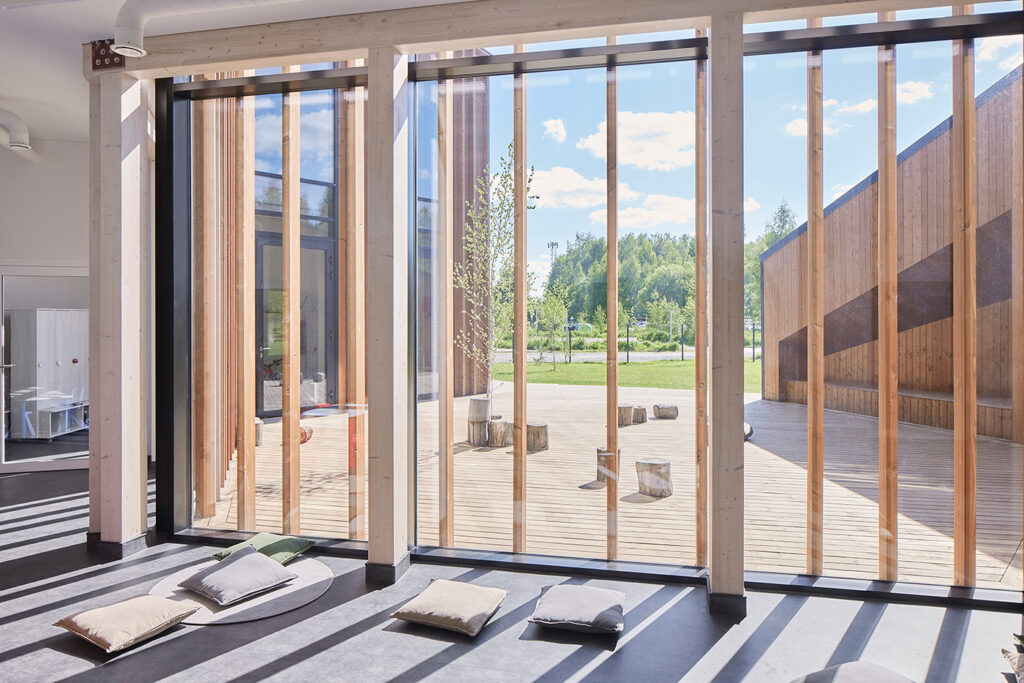
Tall, narrow windows extend from floor level, framing views of trees, sky, and seasonal change. These vertical openings ensure generous daylight penetration while maintaining a sense of enclosure and safety. For children, the windows act as constantly changing frames of the natural world, reinforcing a visual connection to the outdoors throughout the day and across seasons.
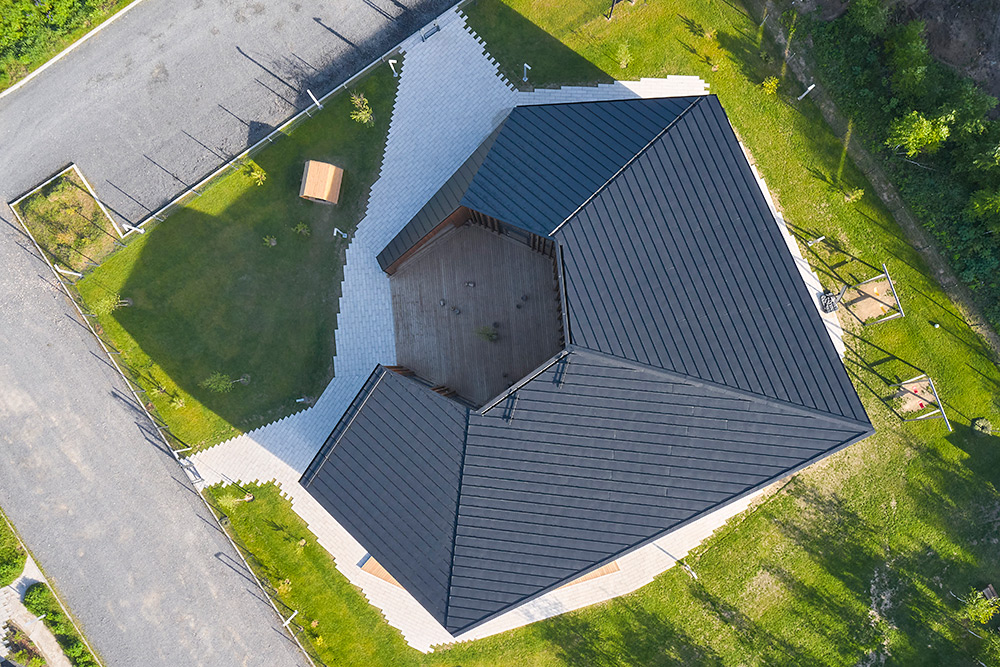
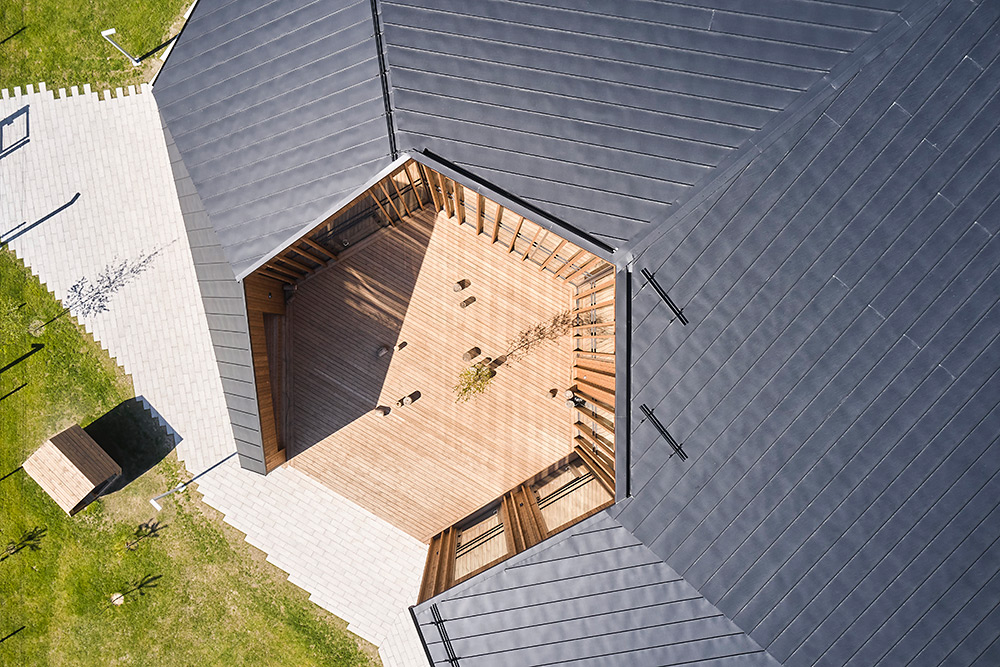
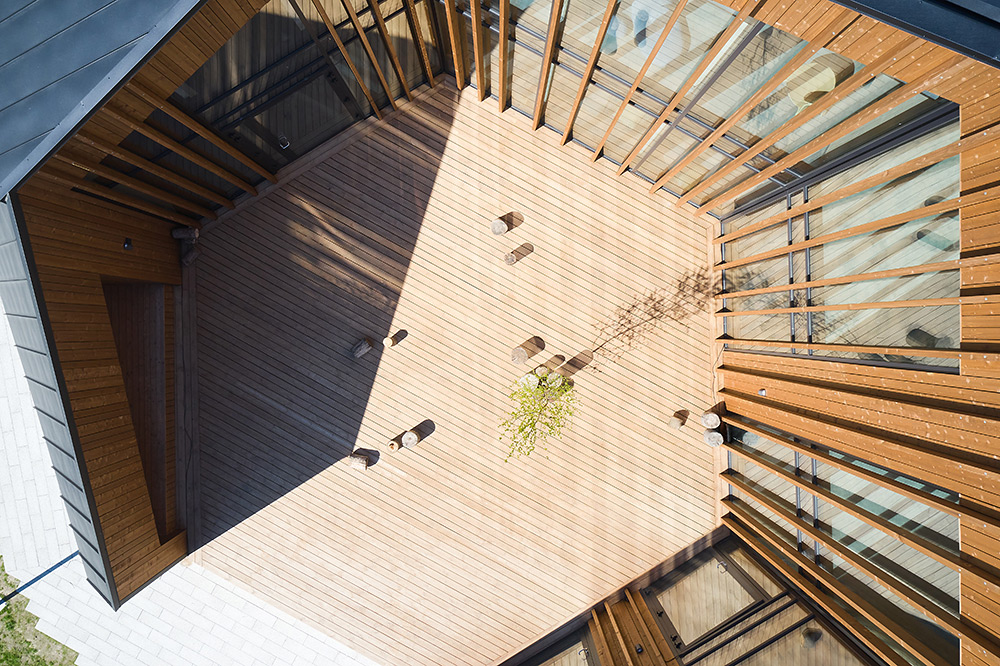
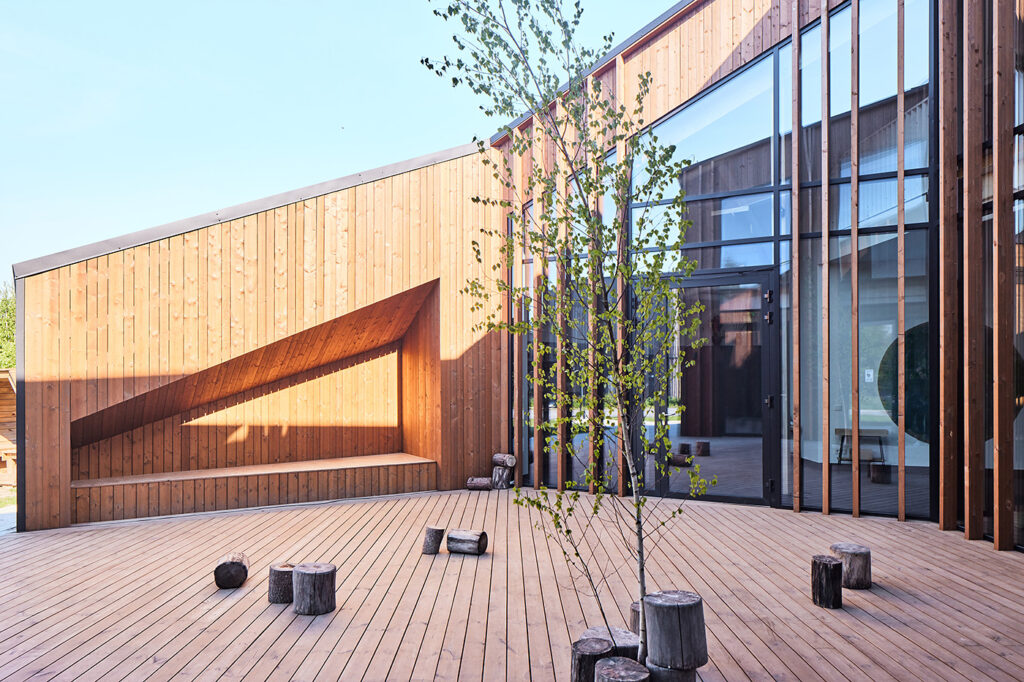
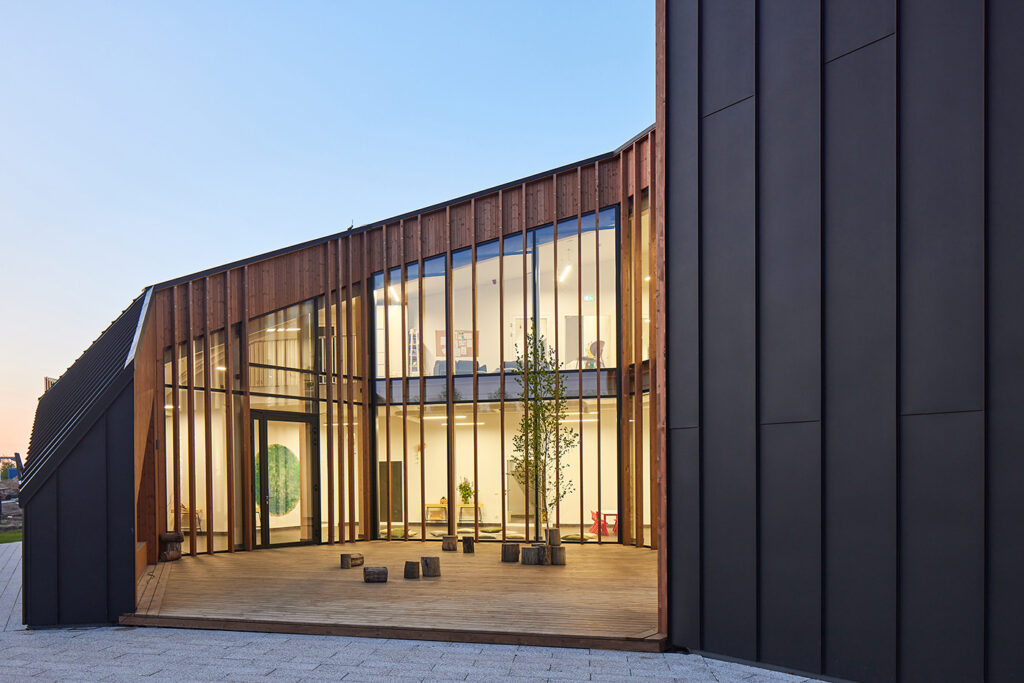
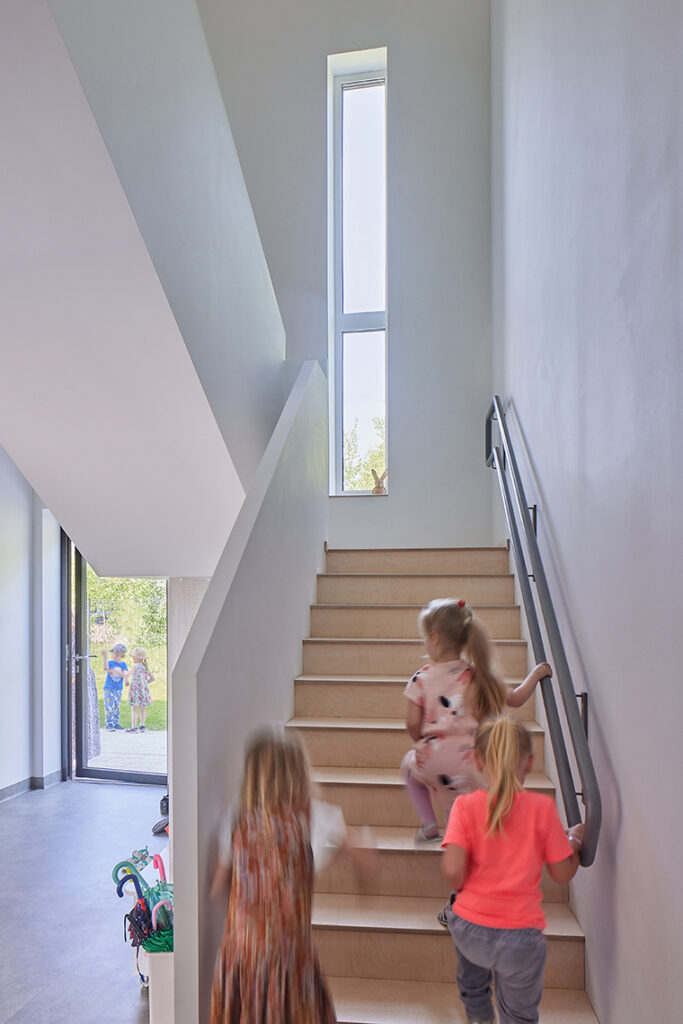
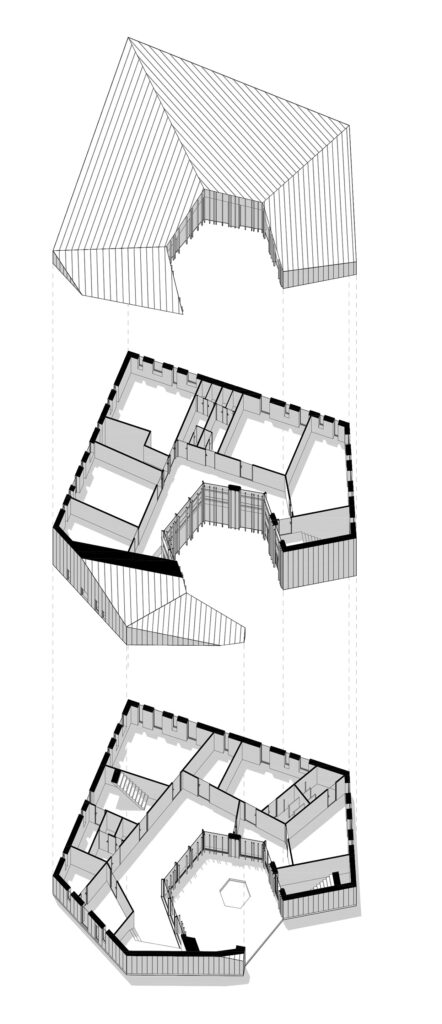
The main entrance leads directly into an inner courtyard that forms the spatial and emotional heart of the kindergarten. This protected outdoor room serves as a place of orientation, gathering, and play. From the first moment of arrival, children and adults are welcomed into a space that feels both safe and stimulating, mediating between interior classrooms and the surrounding forest landscape.
From an adult perspective, the courtyard reads as a simple geometric form. For children, it becomes a world of play, discovery, and shared experience.
Material choices emphasize warmth, tactility, and durability. Locally sourced wood is used extensively, particularly in areas where children interact most closely with surfaces. Wooden flooring in the courtyard and interior spaces provides a soft, comfortable surface for movement and play. The contrast between the robust exterior materials and the warm interior finishes reinforces a sense of protection while maintaining a welcoming, human scale throughout the building.
Interior spaces are designed to be calm, light-filled, and adaptable. Large openings allow daylight to penetrate deep into the classrooms, while visual connections to the courtyard and forest remain constant. Materials, proportions, and color tones are carefully balanced to create an environment that feels both stimulating and reassuring. The interiors support concentration, play, and rest, adapting naturally to different activities throughout the day.
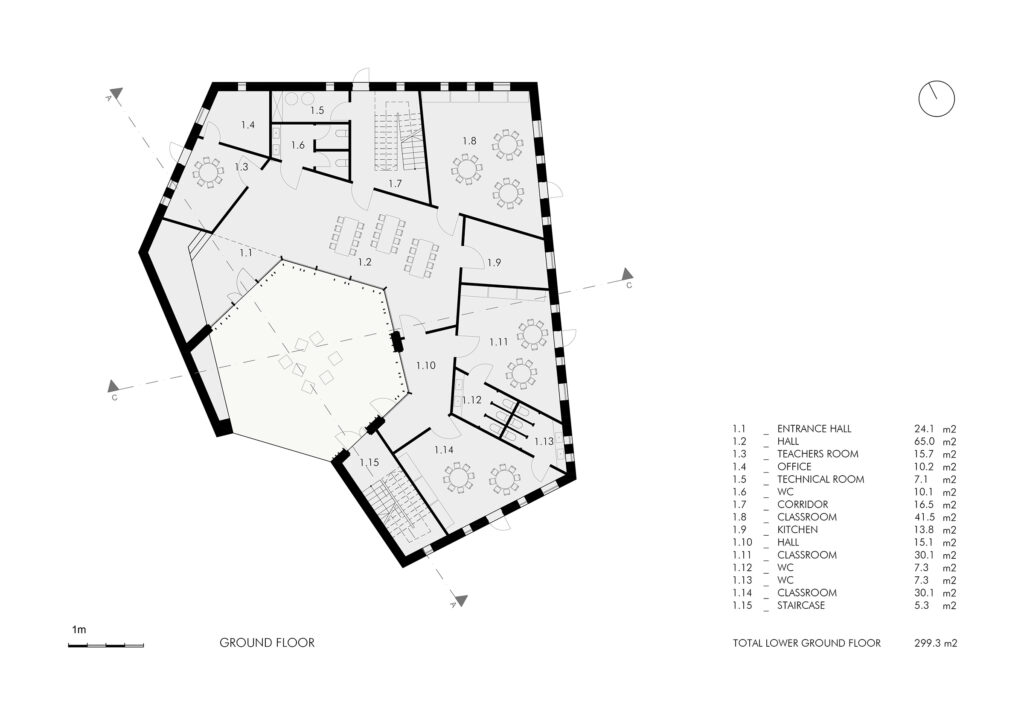
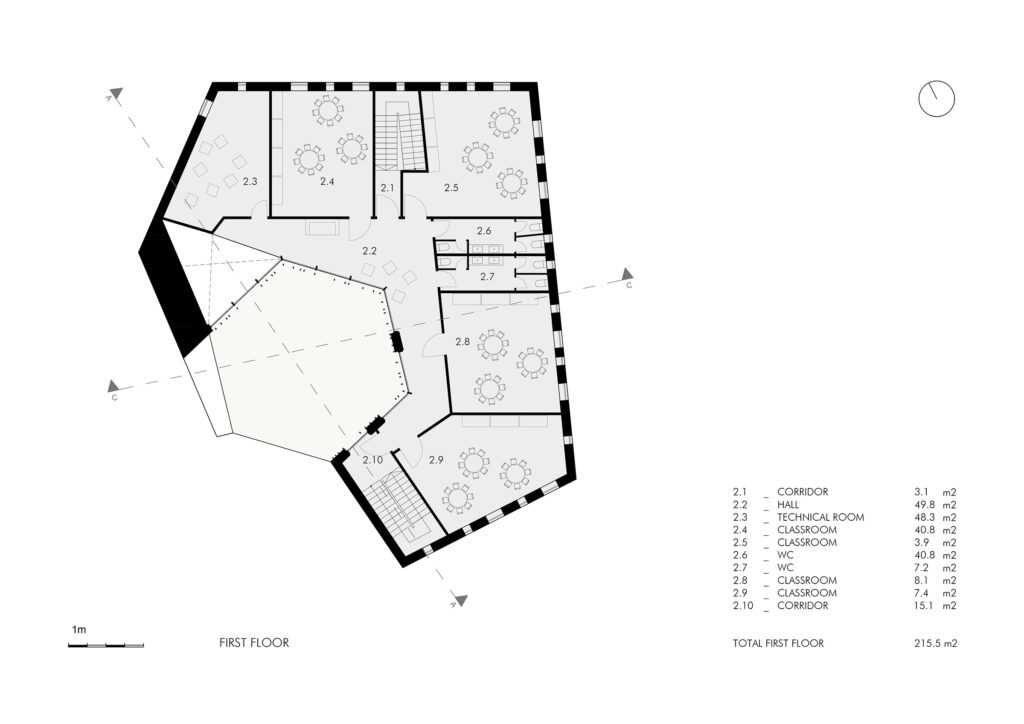
With a total area of 557 square meters, the kindergarten accommodates seven classrooms, including two specifically designed for very young children. The plan allows for a clear separation between quieter learning zones and more active shared spaces. Two independent entrances enable parts of the building to function autonomously, providing flexibility, privacy, and controlled access. This organization supports both the daily routines of children and the operational needs of staff, ensuring clarity and ease of movement throughout the building.
The diagrams illustrate the relationship between classrooms, courtyard, and circulation, revealing the clear spatial logic behind the building’s compact form.
The private kindergarten in Uogų slėnis demonstrates how architecture can actively contribute to early childhood development. By combining a strong relationship with nature, carefully considered spatial organization, and a child-centered design approach, the building offers more than functional accommodation. It creates a supportive, inspiring environment where children can grow, explore, and build their first meaningful connections with the world around them.

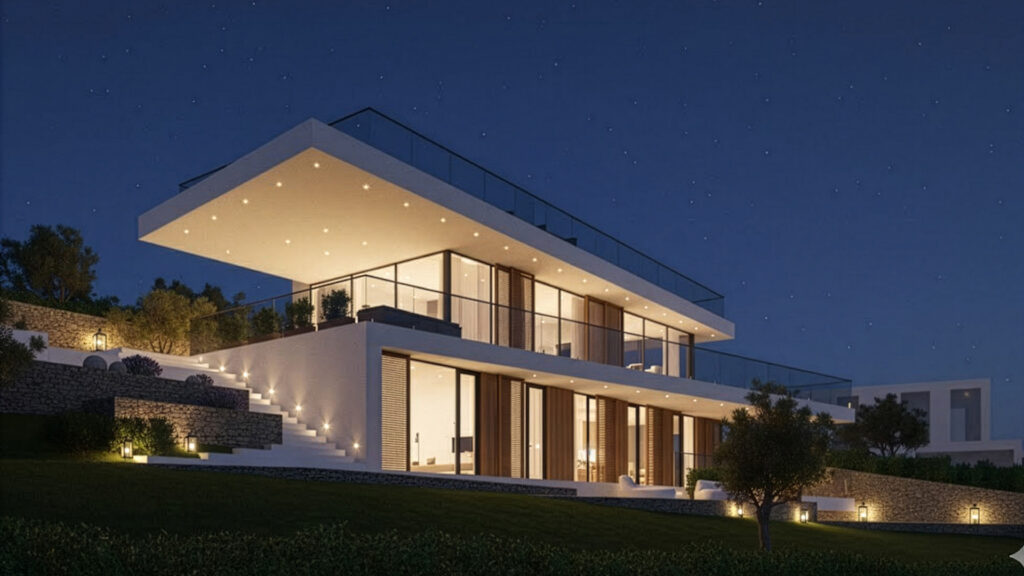
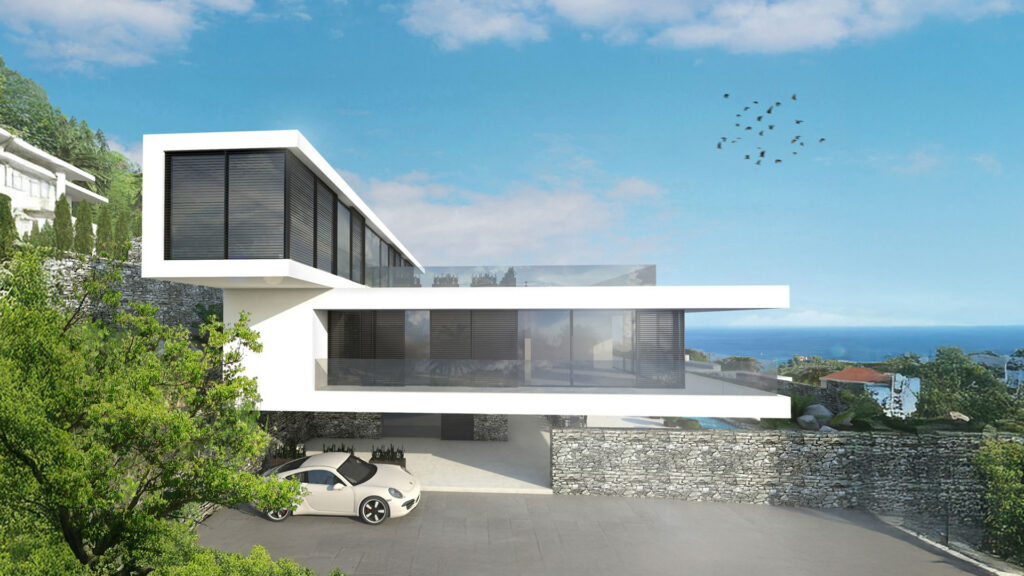
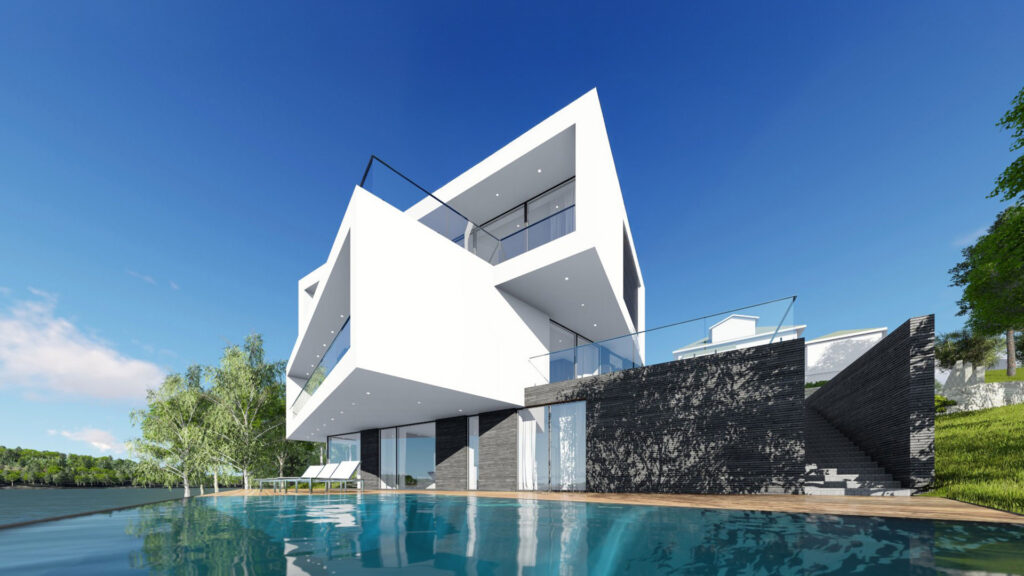
The architecture of the villa takes its clues from the horizontal lines of the landscape: the river with the woods in the background on its both sides. The villa is therefore designed in three long white horizontal planes that almost seem to be floating due to the neutral black wall tiles that blend to the dark woods behind the house. The South facade is designed with vertical timber slates in betwee black wall tiles that blend to the dark woods behind the house. The South facade is designed with vertical timber slates in between the glazing that he South facade
Recognized internationally for excellence in contemporary architecture.
Featured by leading global architecture and design media.
Architectural Elegance and Environmental Responsibility: A Conversation with Ignas Vengalis
Italy 2025 A’ Design Award: Hear the call of design Let inspiration speak out on the stage watched by the world