NORTHERN LIGHTS

Townhouse Development in Vilnius

LOCATION

Vilnius, Lithuania

TYPE

Residential

SIZE

7000 m2

STAGE

Built

YEAR

2018

PRINCIPAL ARCHITECT

Ignas Vengalis

LEAD ARCHITECT

Arūnas Proberkas

PHOTOGRAPHER

Norbert Tukaj

STRUCTURAL ENG.

LT projektai

PROJECT OVERWIEW

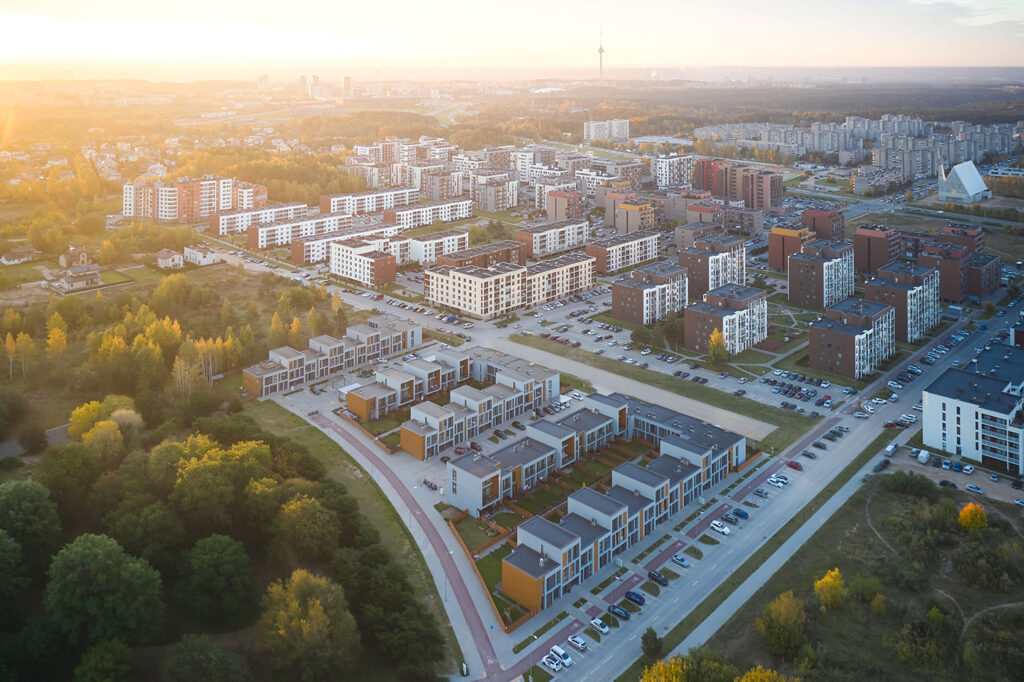
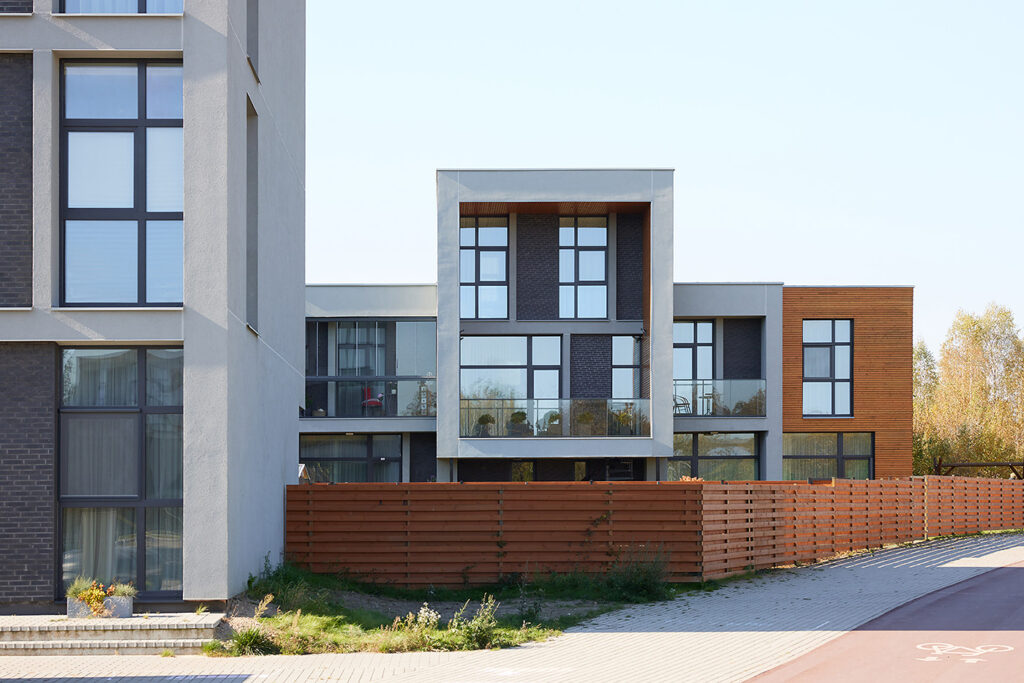
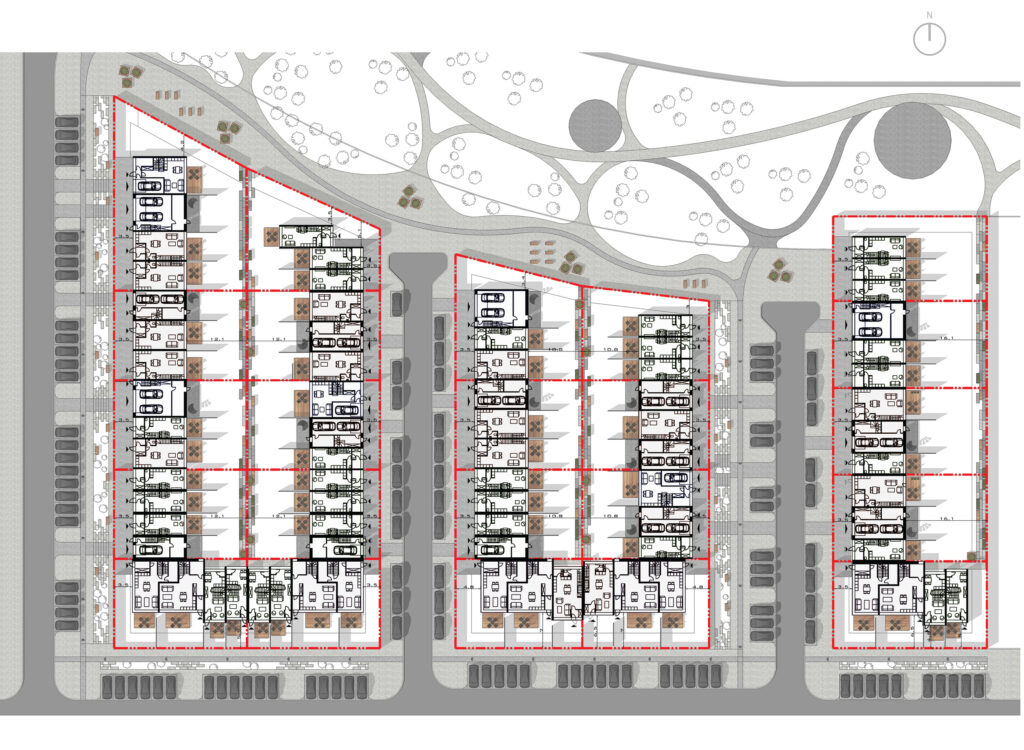
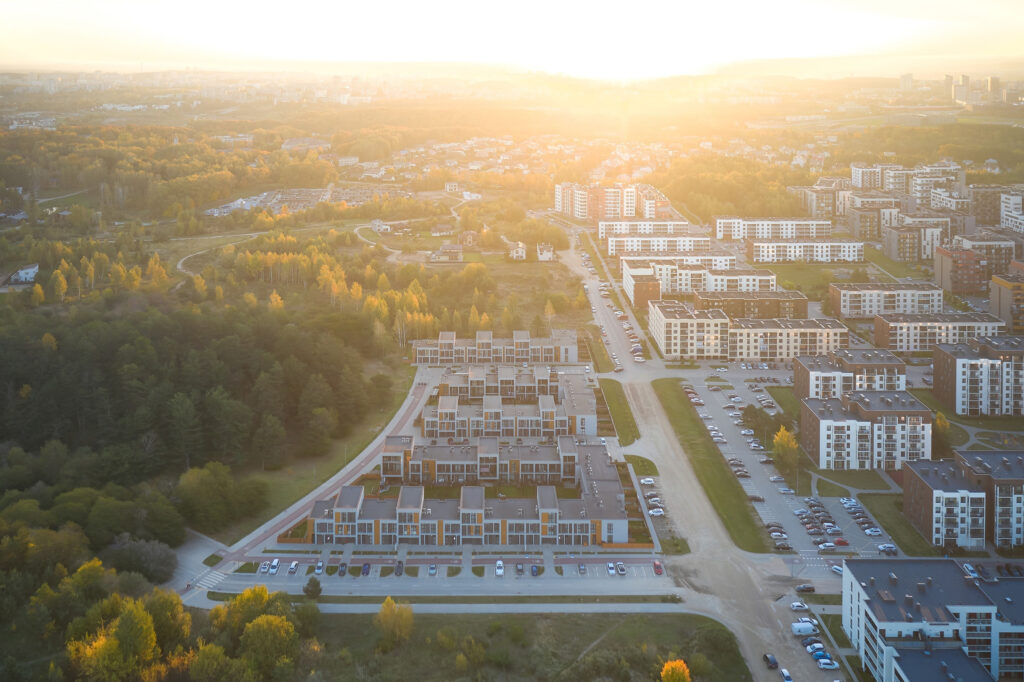
Northern Lights is a contemporary townhouse development in Vilnius, designed as a compact yet spacious residential ensemble that balances urban density with landscape-oriented living. The project comprises 78 townhouses arranged in a clear perimetric structure, creating a calm and cohesive neighborhood environment. By combining varied housing typologies with shared outdoor spaces, the development offers a diverse yet unified residential identity, responding to the growing demand for high-quality, family-oriented housing within the expanding city fabric.

CONTEXT

Located within a developing residential district of Vilnius, the site is characterized by low-rise housing, generous green areas, and a suburban scale. The project responds to this context by maintaining a moderate building height and a clearly defined urban edge, while opening inward toward protected courtyards. This strategy allows the development to integrate naturally into its surroundings while offering residents a sense of enclosure, privacy, and community.

CONCEPT

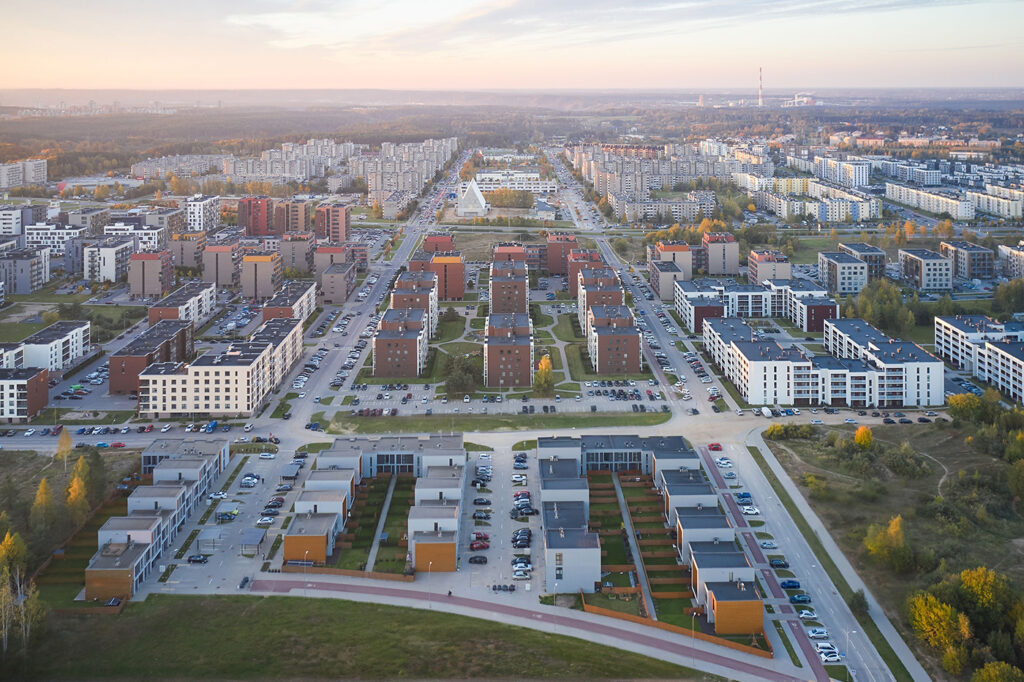
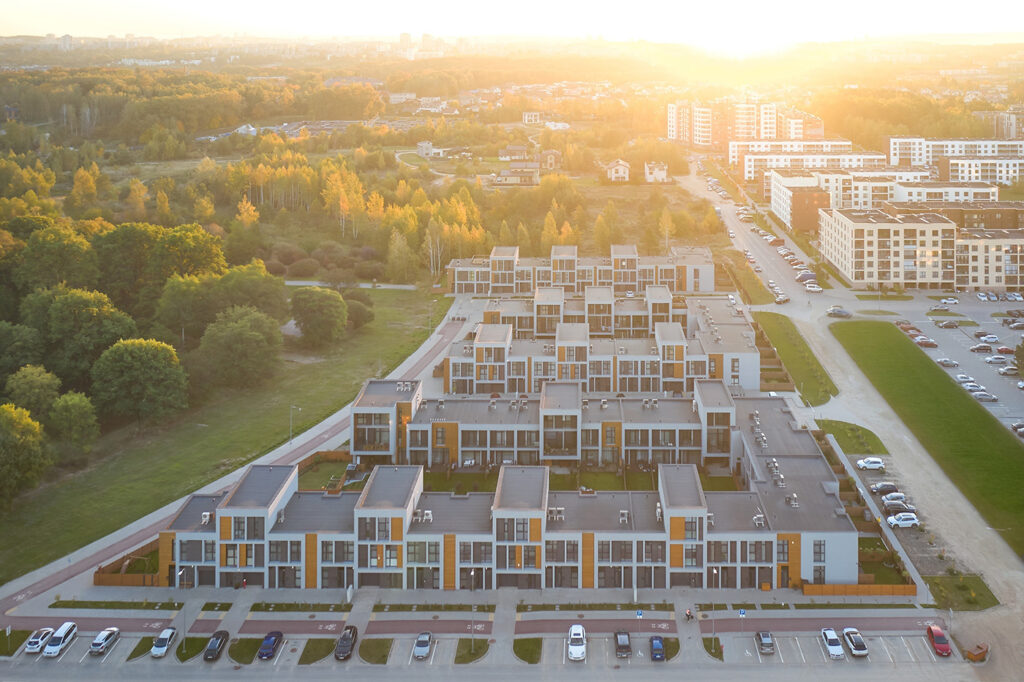
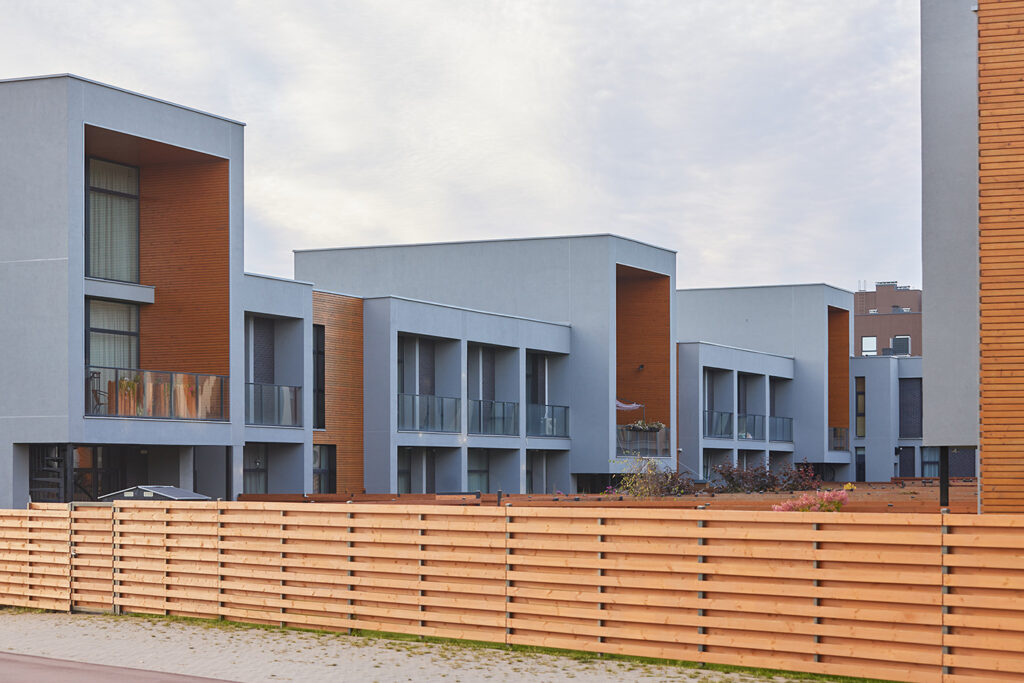
The core concept is based on a perimetric layout that forms three semi-enclosed courtyards at the heart of the development. These shared spaces function as social and recreational zones, enhancing everyday interaction while improving microclimatic comfort. The inward-focused organization creates a protected residential atmosphere without isolating the project from the broader urban fabric.

ARCHITECTURE

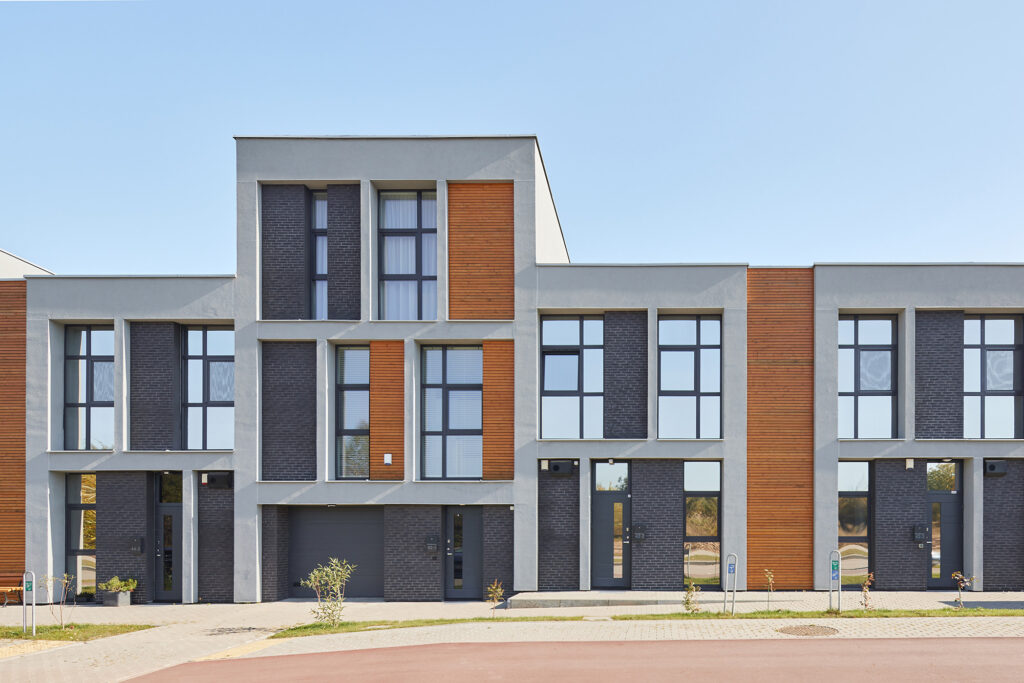
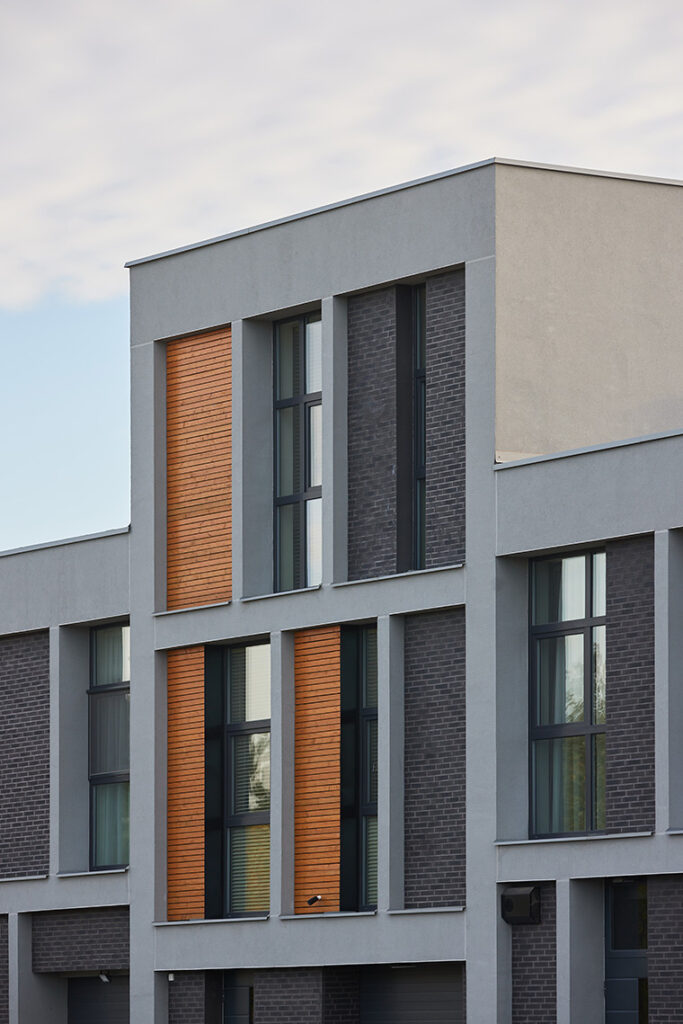
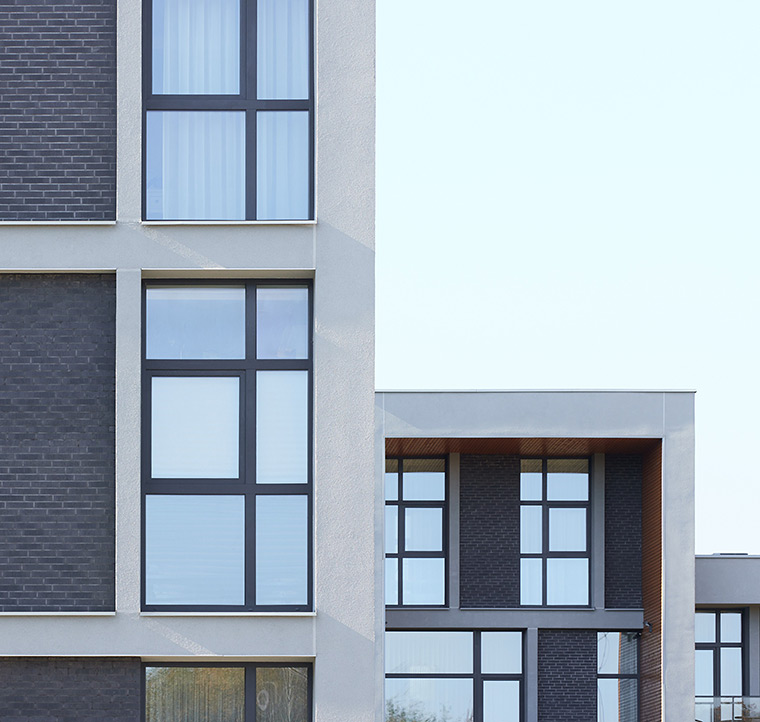
Architecturally, the townhouses are composed as a rhythmic sequence of volumes, carefully scaled to maintain a human-centered streetscape. The façades are articulated to reflect the internal layouts while preserving a consistent overall expression. Variation between units is achieved through subtle shifts in proportions, window groupings, and entrances, ensuring visual diversity within a coherent architectural language. This approach reinforces the identity of the neighborhood while avoiding monotony often associated with large residential developments.

The inner courtyards form the social heart of the development.
A semi-enclosed spatial structure creates a protected environment where daily life unfolds at a slower pace, balancing privacy with visual openness and shared green space.

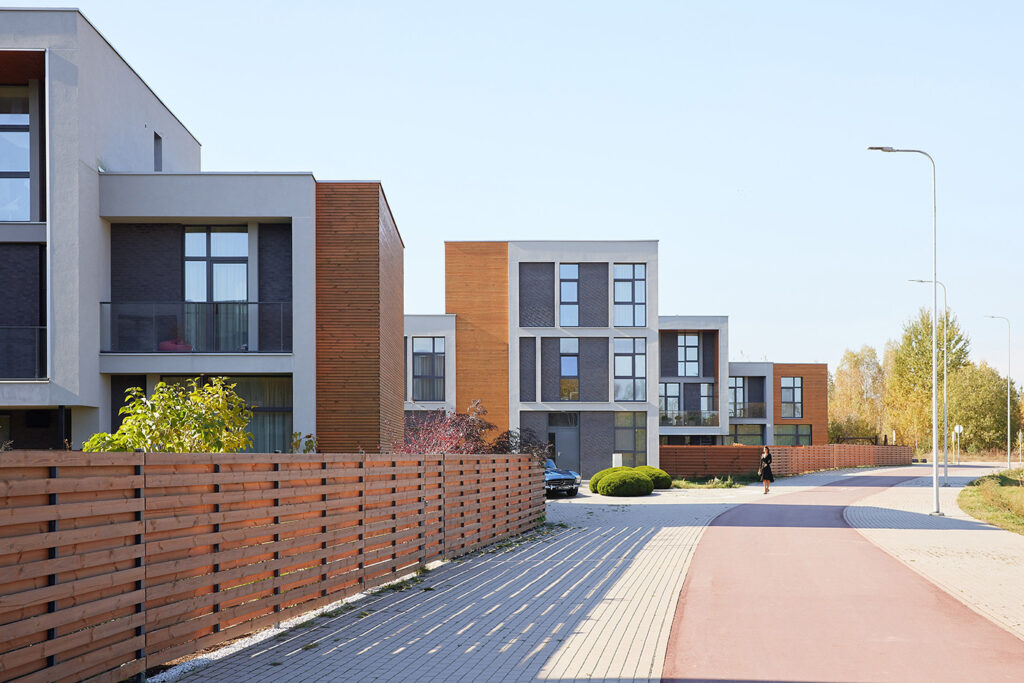
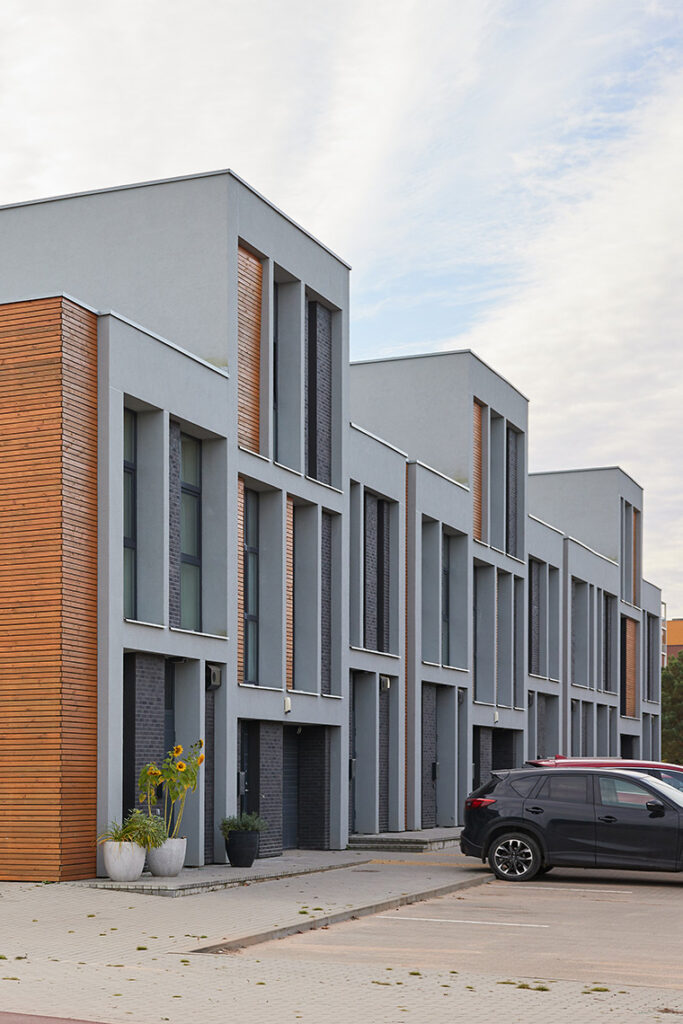
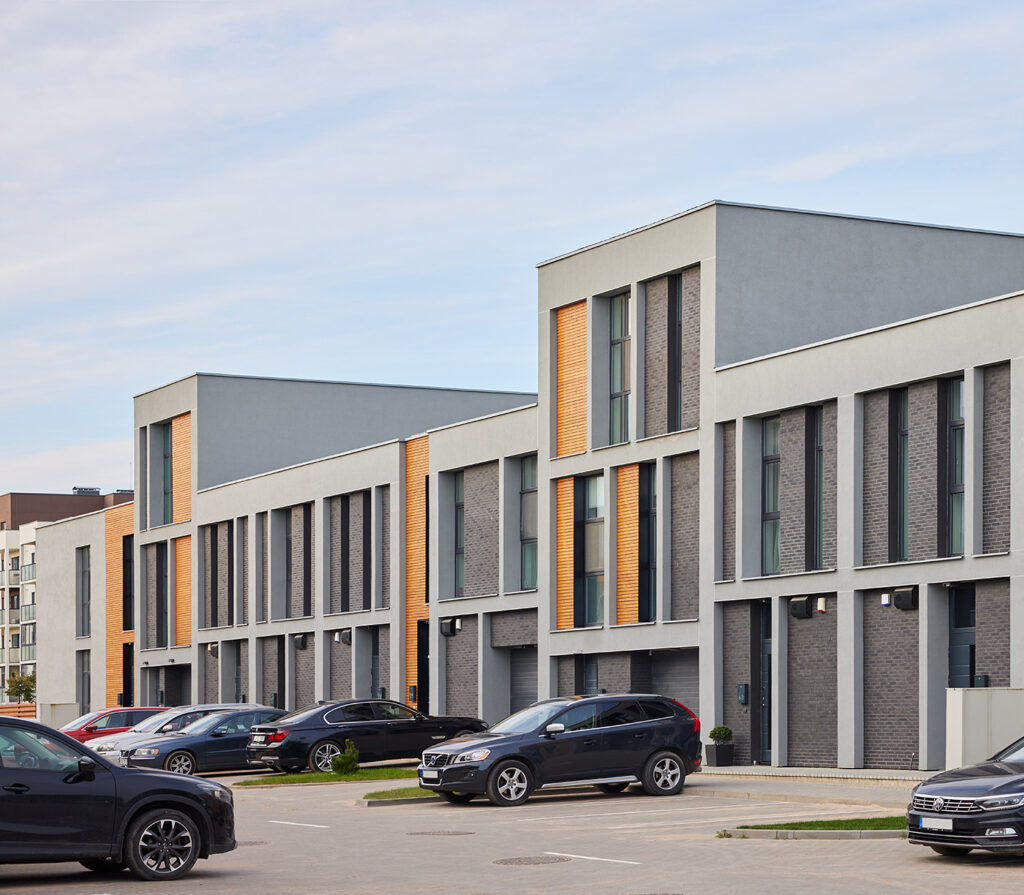
The street façade establishes the public identity of the Northern Lights development.
A clear architectural rhythm and carefully controlled proportions respond to the surrounding urban fabric, ensuring a cohesive yet distinctive presence along the street. Vertical articulation and material contrasts define individual entrances, while maintaining a unified architectural language across the entire perimeter.

MATERIALITY

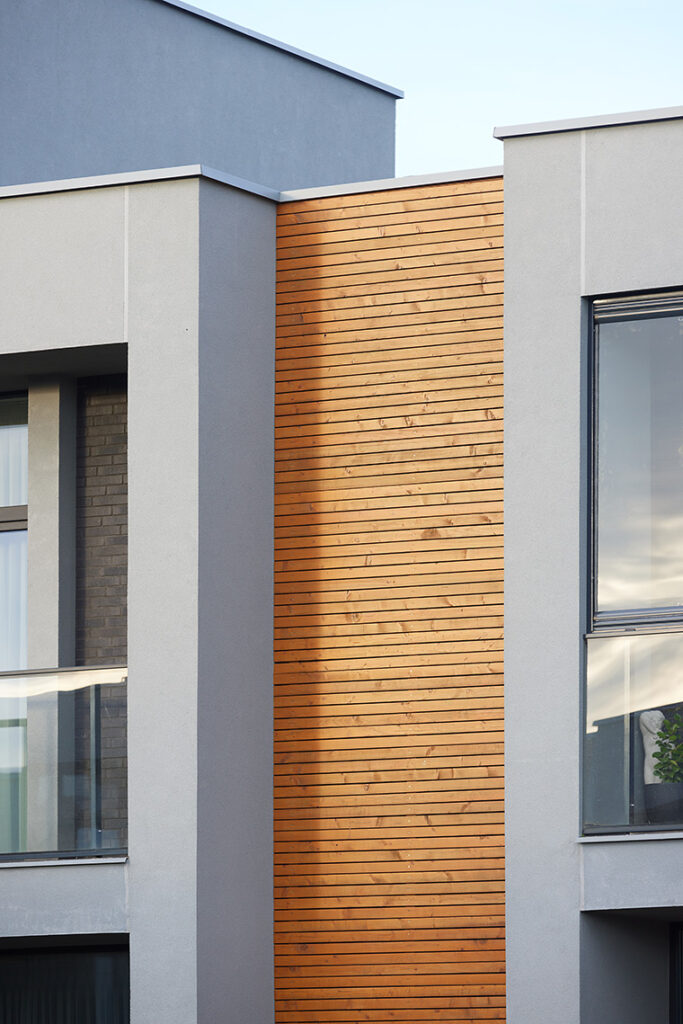
Material choices focus on durability, clarity, and timelessness. Light plaster surfaces are combined with klinker brick elements, creating contrast and depth across the façades. This restrained palette ensures long-term performance while reinforcing the architectural rhythm and tactile quality of the residential environment.

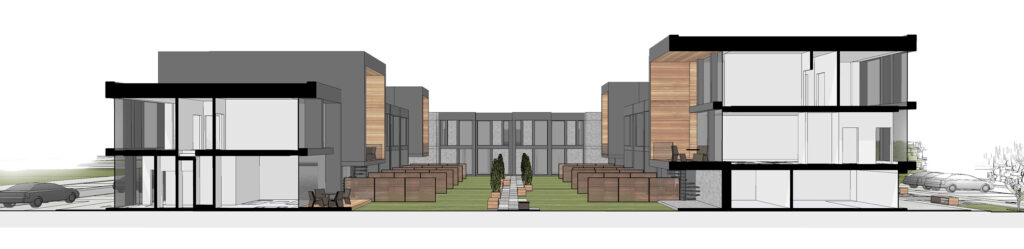
The sections illustrate how the townhouses are designed around everyday life.
Living spaces open towards the courtyards, creating bright interiors with a strong connection to the outdoors. Bedrooms and private areas are positioned above, offering a quieter atmosphere. Subtle changes in section allow for generous ceiling heights and well-balanced proportions across all layouts.

Five townhouse typologies ranging from 65 to 180 m² provide flexibility for different household needs, while a consistent planning logic ensures spatial clarity and efficient use of area across all units.

EXTERIOR CHARACTER

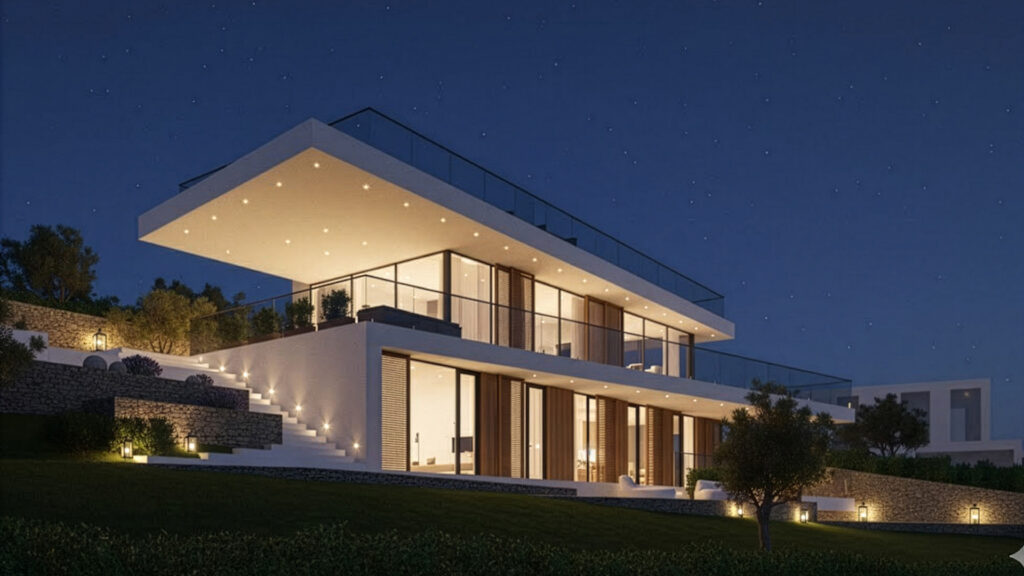
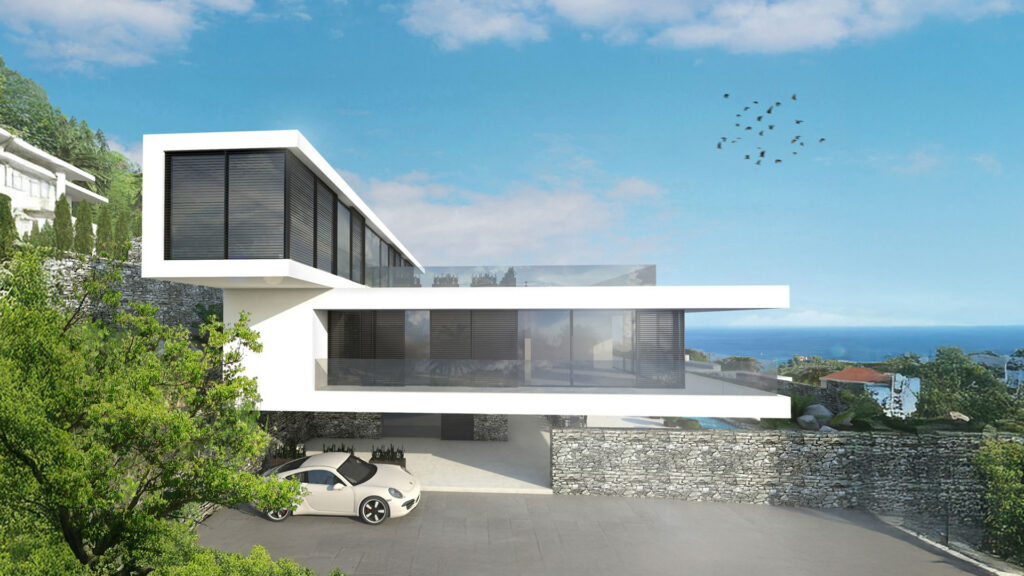
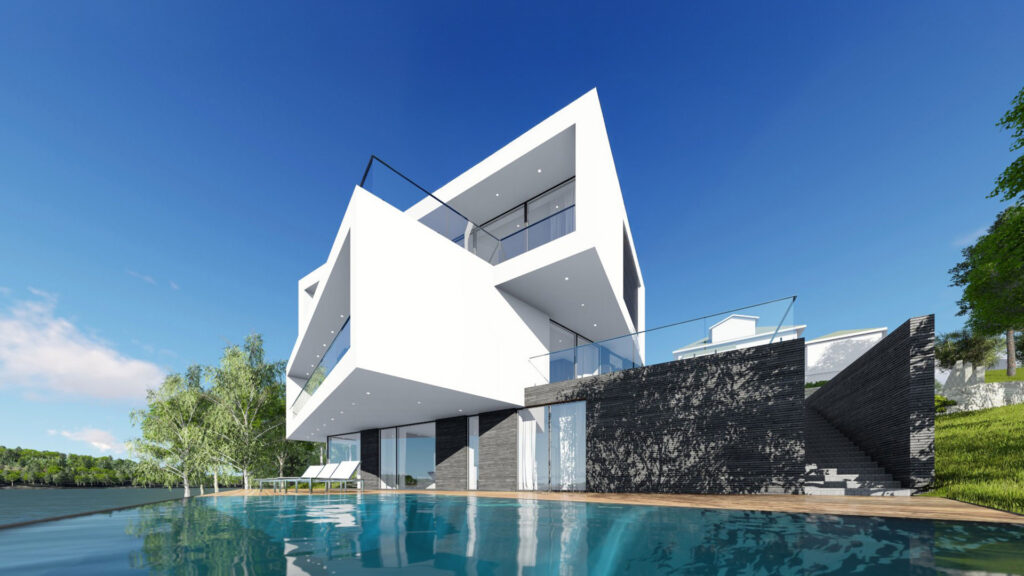
The architecture of the villa takes its clues from the horizontal lines of the landscape: the river with the woods in the background on its both sides. The villa is therefore designed in three long white horizontal planes that almost seem to be floating due to the neutral black wall tiles that blend to the dark woods behind the house. The South facade is designed with vertical timber slates in betwee black wall tiles that blend to the dark woods behind the house. The South facade is designed with vertical timber slates in between the glazing that he South facade

EXTERIOR CHARACTER

The architecture of the villa takes its clues from the horizontal lines of the landscape: the river with the woods in the background on its both sides. The villa is therefore designed in three long white horizontal planes that almost seem to be floating due to the neutral black wall tiles that blend to the dark woods behind the house. The South facade is designed with vertical timber slates in betwee black wall tiles that blend to the dark woods behind the house. The South facade is designed with vertical timber slates in between the glazing that he South facade

The architecture of the villa takes its clues from the horizontal lines of the landscape: the river with the woods in the background on its both sides. The villa is therefore designed in three long white horizontal planes that almost seem to be floating due to the neutral black wall tiles that blend to the dark woods behind the house. The South facade is designed with vertical timber slates in betwee black wall tiles that blend to the dark woods behind the house. The South facade is designed with vertical timber slates in between the glazing that he South facade

SIMILAR PROJECTS

Lets bring your vision to life!